


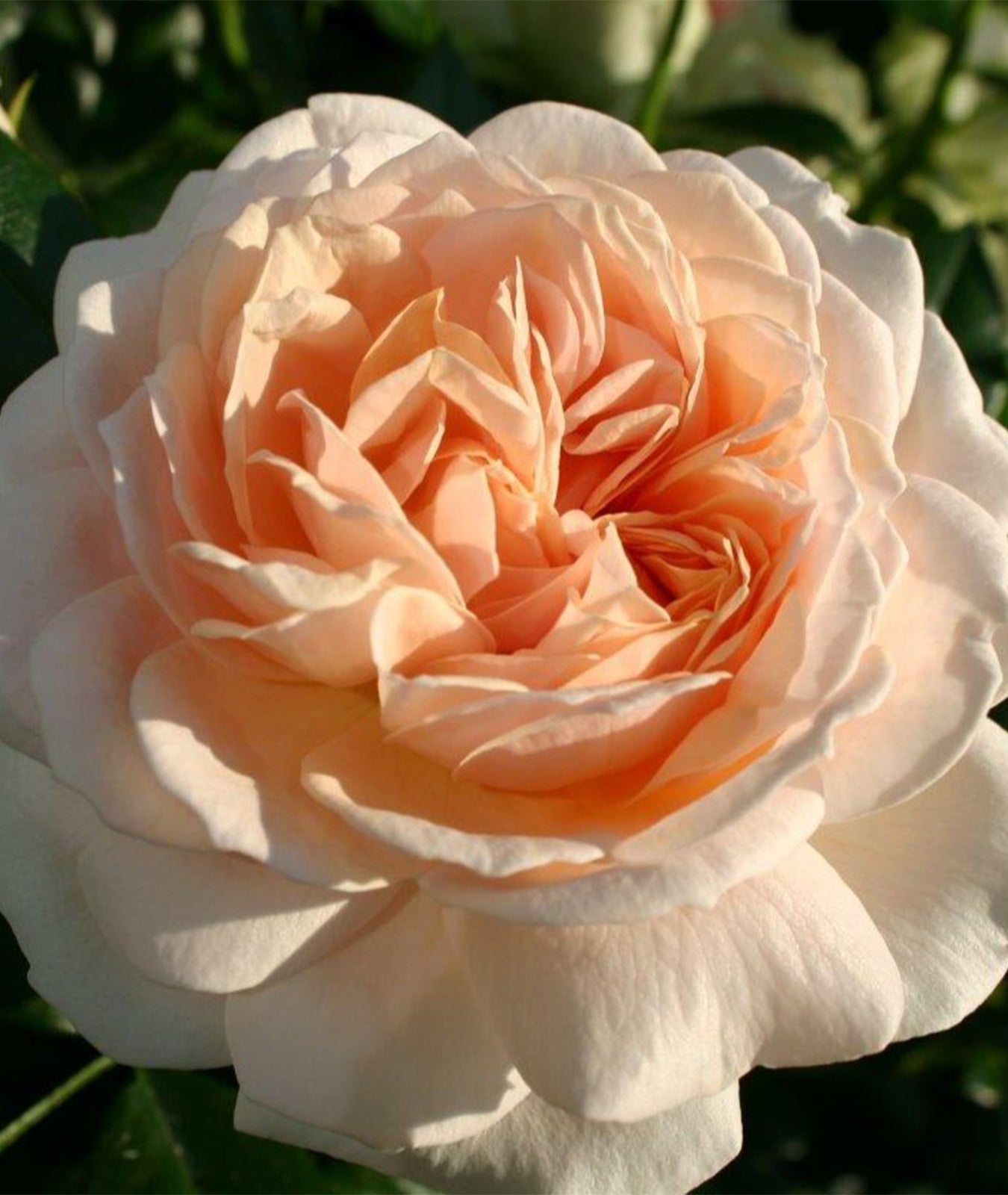
Rosa 'Joie de Vivre'
Floribunda rose
Couldn't load pickup availability
Supplied as an established plant in a 3 litre pot
Aspect
Full sun
Hardiness
Fully hardy
Flowers
June - October
Soil
Fertile, loamy, well-drained soil
About this plant
Peach and pink rosettes, all summer long
-
Description
Rosa 'Joie de Vivre' is a compact, exceptionally healthy floribunda rose bearing clusters of beautifully formed, full rosette blooms in soft, old-fashioned tones of peach and pale pink that fade towards cream at the edges. Voted Rose of the Year in 2011, it flowers repeatedly from early summer right through to the frosts on a neat, bushy plant with glossy dark green foliage. Outstanding disease resistance and a long flowering season make it one of the easiest and most reliable roses for beds, borders and patio containers.
-
Why we like it
Key features
What makes it special
Blooms into late summer
Easy care, low effort
Fully hardy — comes back every year
Good for cutting
Specs & details
The particulars
- Botanical name
- Rosa 'Joie de Vivre'
- Common name
- Floribunda rose
- Supplied as
- 3 litre pot
- Flower colour
- Pink
- Eventual height
- 60-90cm
- Eventual spread
- 45-60cm
- Flowering period
- June - October
- Habit
- Forms a compact, rounded bush that stays tidy and manageable throughout the season.
- Life cycle
- Deciduous shrub
- Hardiness
- Fully hardy
- Aspect
- Full sun
- Soil type
- Fertile, loamy, well-drained soil
- Moisture
- Moist but well-drained
- Position
- It suits a sunny, sheltered position—perfect near seating areas or along paths where it can be admired up close.
- Plant spacing
- Space around 45 to 50cm apart, or grow singly in a large pot.
- Growing skill
- Easy to grow
Plant calendar
When to plant, when it performs
Planting & care
Help it thrive
Planting guide
Plant in an open, sunny position in fertile, humus-rich, moist but well-drained soil, improved with plenty of well-rotted organic matter. Avoid ground where roses have grown in recent years, to reduce the risk of rose replant problems. Set the graft union at soil level, water in well, and keep watered through the first season. It performs very well in a large container using a loam-based compost such as John Innes No. 3.
Care tips
Water deeply at the base once or twice a week in dry spells, keeping water off the foliage, and paying special attention to plants in pots. Feed with a rose or high-potash fertiliser in early spring and again in early summer for the best flowering. Deadhead spent blooms promptly through the season to keep it flowering, and remove any suckers from below the graft union.
Winter care
Prune lightly in late winter to maintain a tidy shape and promote healthy new growth. Apply a mulch layer after pruning to insulate roots and retain moisture.