



Fuchsia 'Mrs Popple'
Hardy fuchsia
Couldn't load pickup availability
Supplied as an established plant in a 3 litre pot
Aspect
Full sun to partial shade
Hardiness
One of the hardiest fuchsia cultivars
Flowers
Summer to autumn
Soil
Loam, sand, clay
About this plant
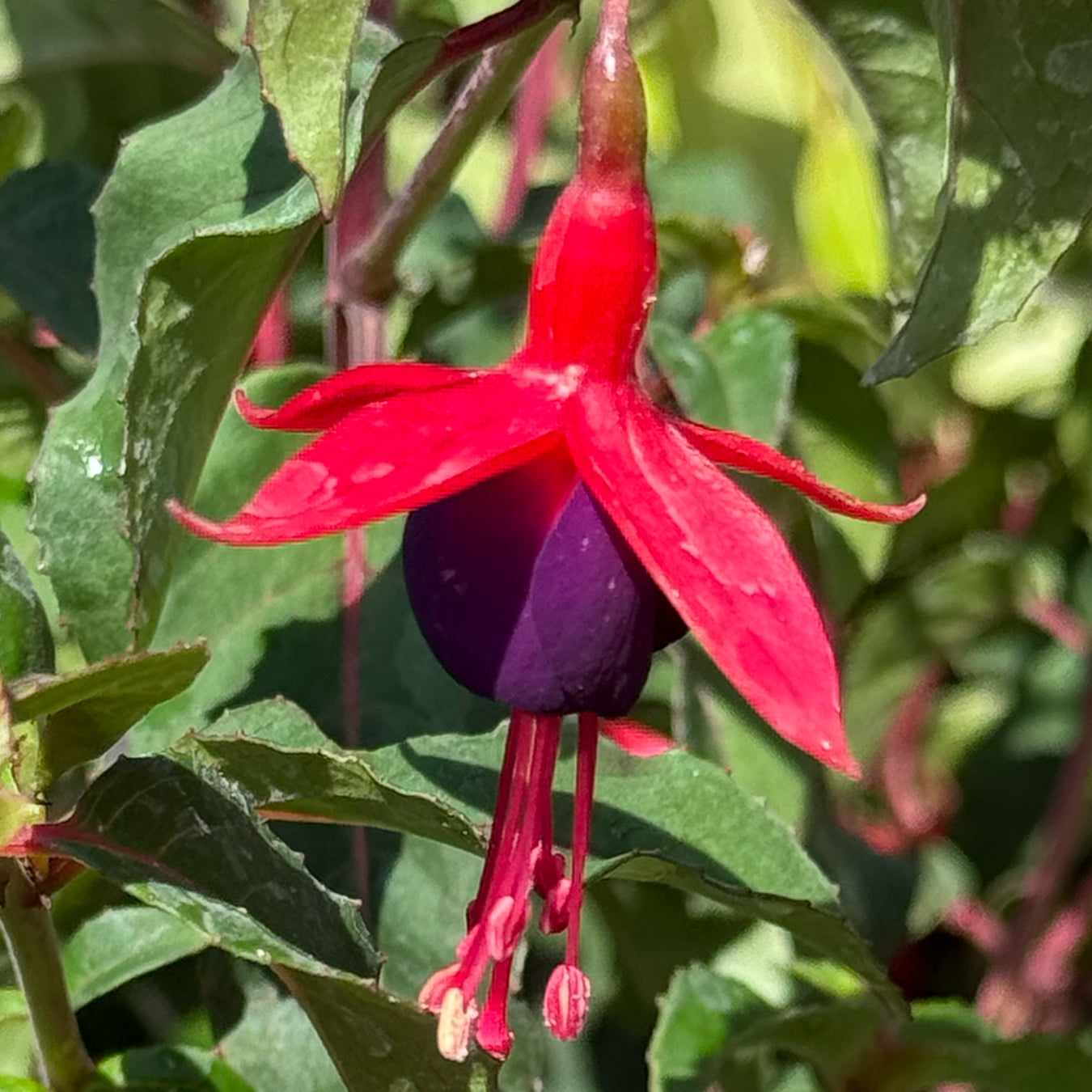
Scarlet and violet flowers, hardy enough for hedging
-
Description
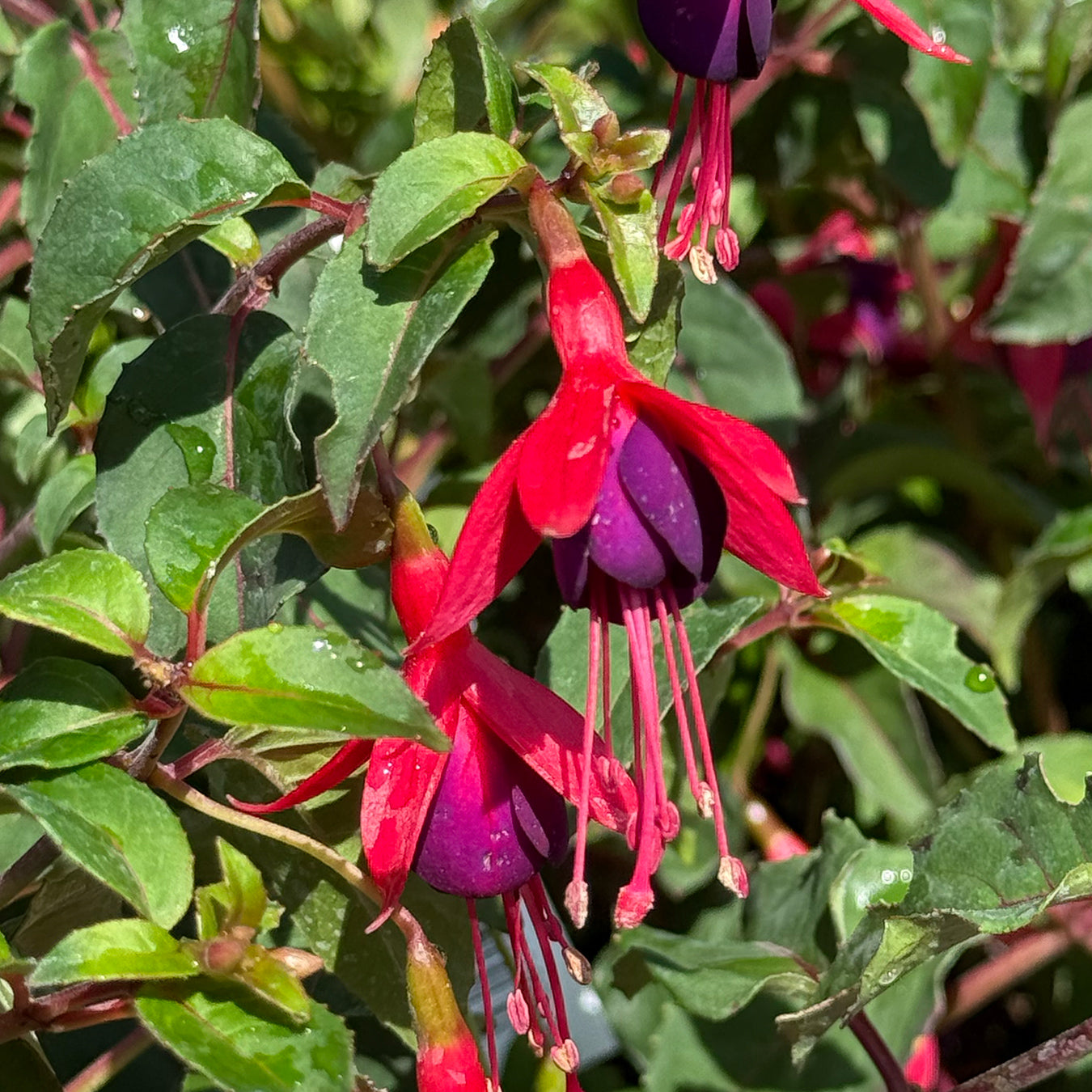
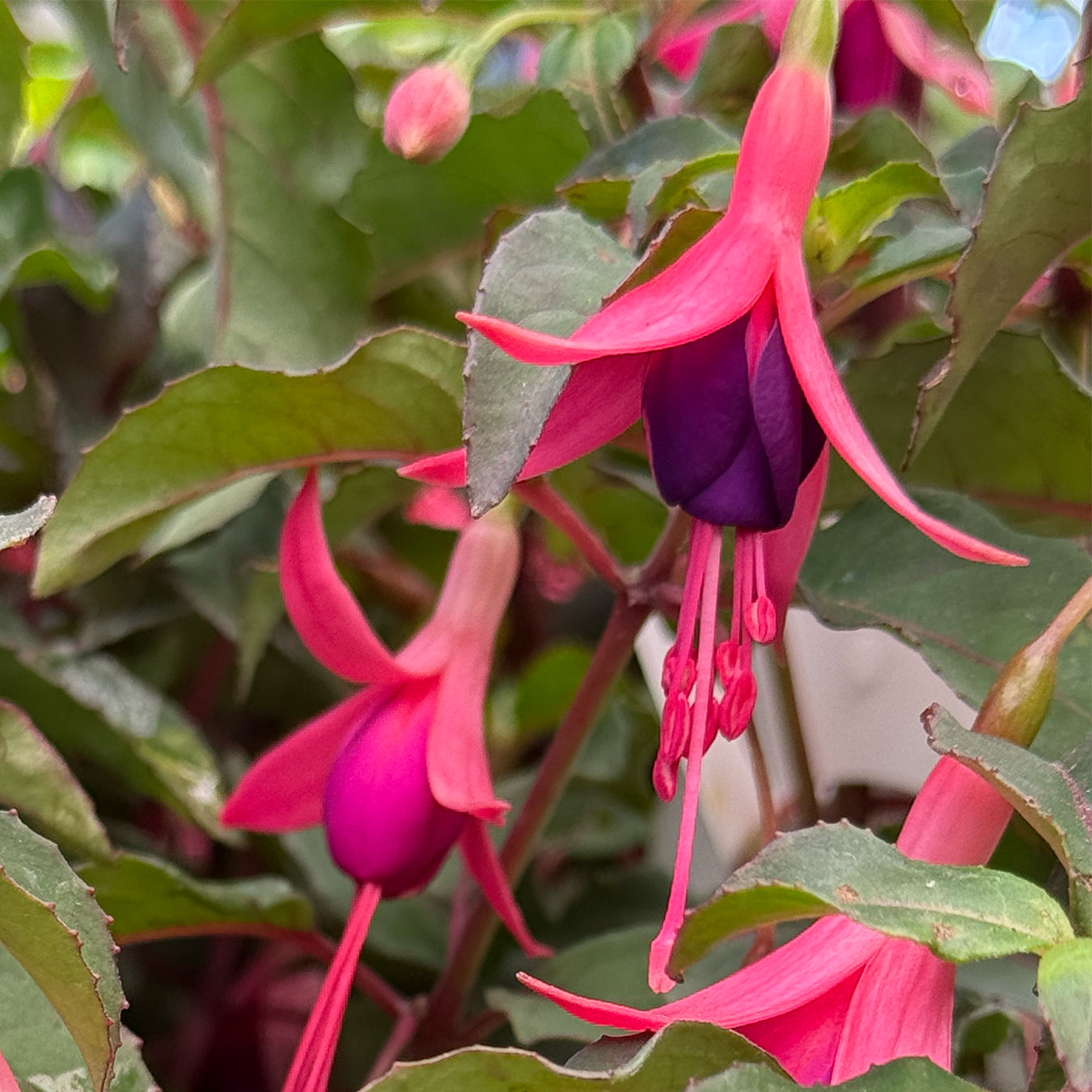
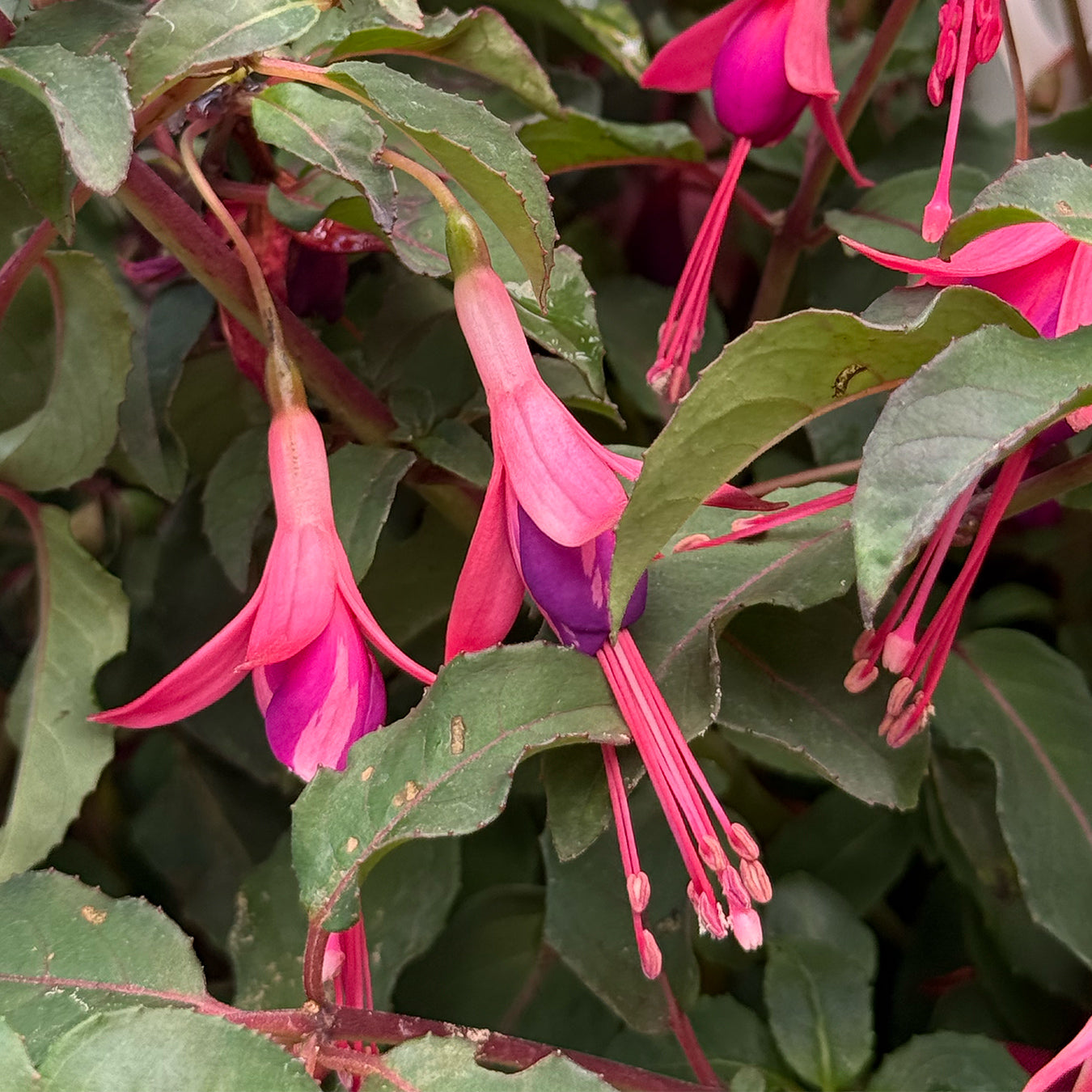
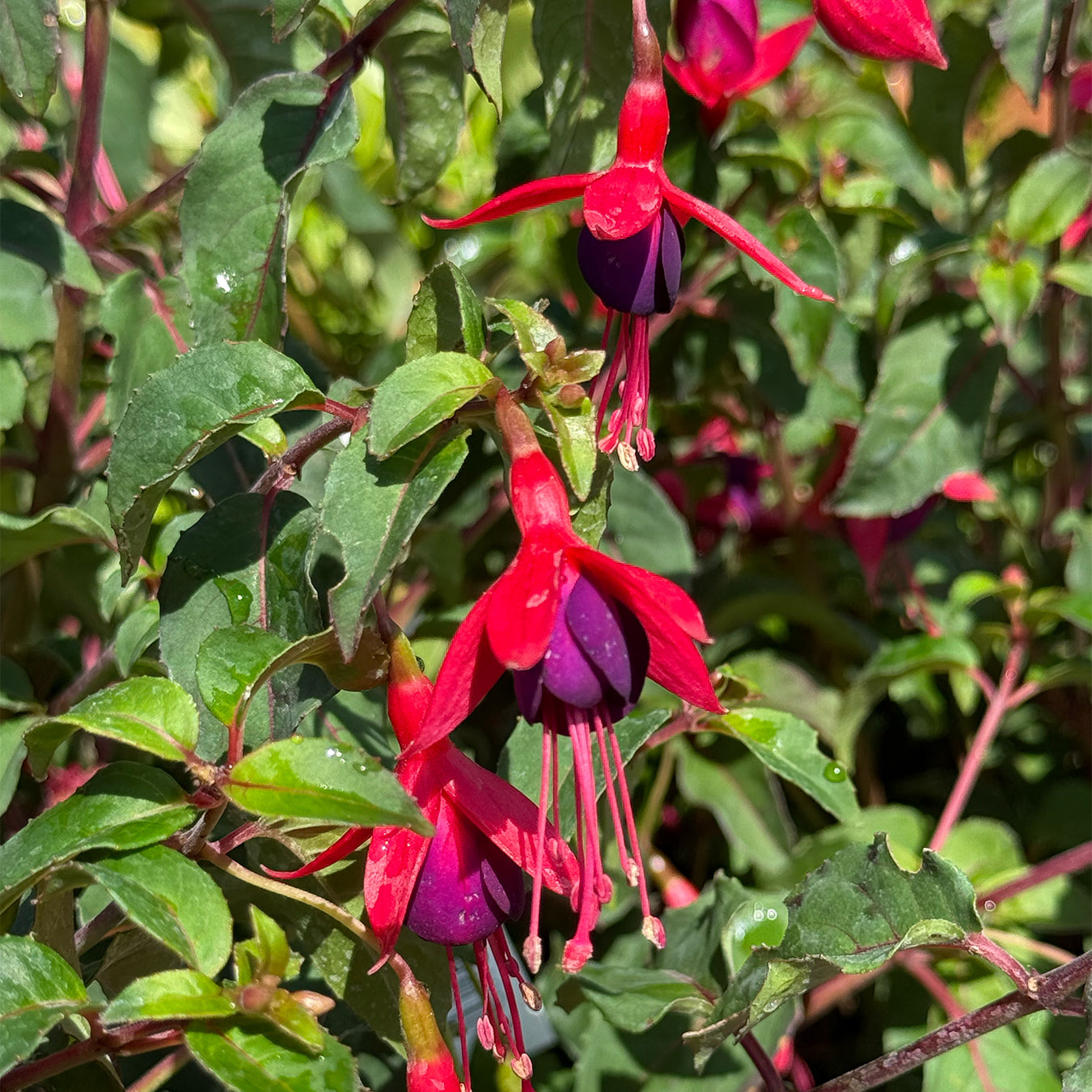
Fuchsia 'Mrs Popple' is a vigorous, bushy hardy fuchsia producing a generous and continuous succession of medium-sized single flowers with vivid scarlet-red sepals and a rich violet-purple corolla throughout summer and well into autumn. One of the most reliably hardy fuchsia cultivars available, it is widely used as informal flowering hedging as well as in mixed borders, and its strong constitution means it returns from the base year after year in most parts of the UK. The mid-green foliage provides an attractive backdrop to the richly coloured flowers, and the plant's naturally bushy, well-branched habit requires little training or support. -
Why we like it
Key features
What makes it special
Loved by bees & pollinators
Long-lasting blooms that persist for months
Specs & details
The particulars
- Botanical name
- Fuchsia 'Mrs Popple'
- Common name
- Hardy fuchsia
- Supplied as
- 3 litre pot
- Flower colour
- Red
- Eventual height
- 75–100 cm
- Eventual spread
- 75–100 cm
- Flowering period
- Summer to autumn
- Habit
- Vigorous bushy upright shrub
- Life cycle
- Deciduous shrub
- Hardiness
- One of the hardiest fuchsia cultivars
- Aspect
- Full sun to partial shade
- Soil type
- Loam, sand, clay
- Moisture
- Moist but well-drained
- Position
- Mid-border, informal flowering hedge, patio container
- Plant spacing
- 2–3 plants per m²
- Growing skill
- Easy to grow
Plant calendar
When to plant, when it performs
Planting & care
Help it thrive
Planting guide
Choose a reasonably sheltered position in full sun or partial shade with fertile, moisture-retentive but well-drained soil. Fuchsia 'Mrs Popple' is more tolerant of exposure than many hardy fuchsias given its vigorous constitution, but still performs best away from the coldest, most exposed sites. On heavy clay soils, incorporate grit and compost to improve drainage before planting. Plant out only after the last frost, setting the crown slightly deeper than it was in the pot, around 5 cm below soil level, to protect the crown buds should the upper stems suffer frost damage. For hedging, space plants around 45–60 cm apart; for general border planting, allow 75–90 cm between plants. In containers, use a good loam-based or peat-free multipurpose compost with added grit for drainage.
Care tips
Fuchsia 'Mrs Popple' is straightforward to maintain through the growing season. Deadhead regularly to keep the display tidy and encourage further flushes of flower, though the plant is naturally prolific and will continue blooming reliably with or without deadheading. Pinch out the growing tips in late spring and early summer to encourage a bushier habit and more flowering stems, particularly important if growing as a hedge. Feed container plants with a high-potassium liquid fertiliser every two weeks from midsummer to sustain flowering; border plants need only a spring application of balanced fertiliser. Do not cut back in autumn; leave the woody stems intact as frost protection for the crown, and delay all pruning until spring when new growth confirms which stems have survived. For hedging, trim lightly in spring to maintain shape once new growth is established.
Winter care
Fuchsia 'Mrs Popple' is one of the hardiest fuchsia cultivars and will overwinter successfully in the ground in most parts of the UK in a reasonably sheltered position. In autumn, leave the woody stems intact rather than cutting back; they provide frost protection to the crown below. Apply a generous dry mulch of bark, straw, or bracken over the base of the plant before the first hard frosts arrive, particularly in colder or more exposed gardens. In spring, once new growth is visible low on the stems or at the crown, cut back to just above the lowest healthy shoots. Even with its good hardiness, taking semi-ripe cuttings in late summer as insurance is a sensible precaution in colder regions or during a particularly severe winter. Container plants should be moved into a frost-free greenhouse or cool conservatory before the first frosts.