



Nepeta × faassenii 'Purrsian Blue'
Catmint
Couldn't load pickup availability
Supplied as an established plant in a 3 litre pot
Aspect
Full sun
Hardiness
Fully hardy in most parts of the UK.
Flowers
Late spring to autumn
Soil
Loam, sand, chalk
About this plant
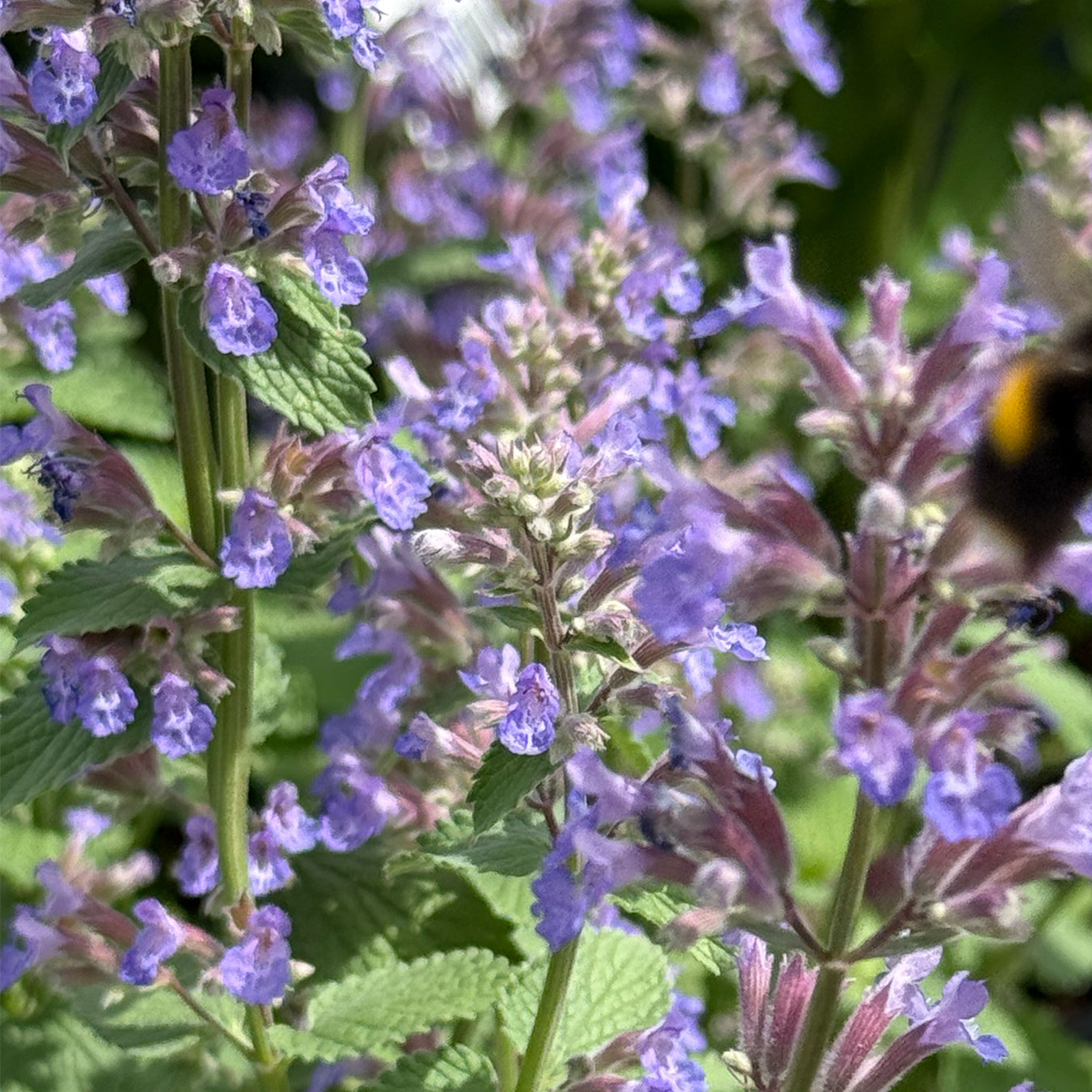
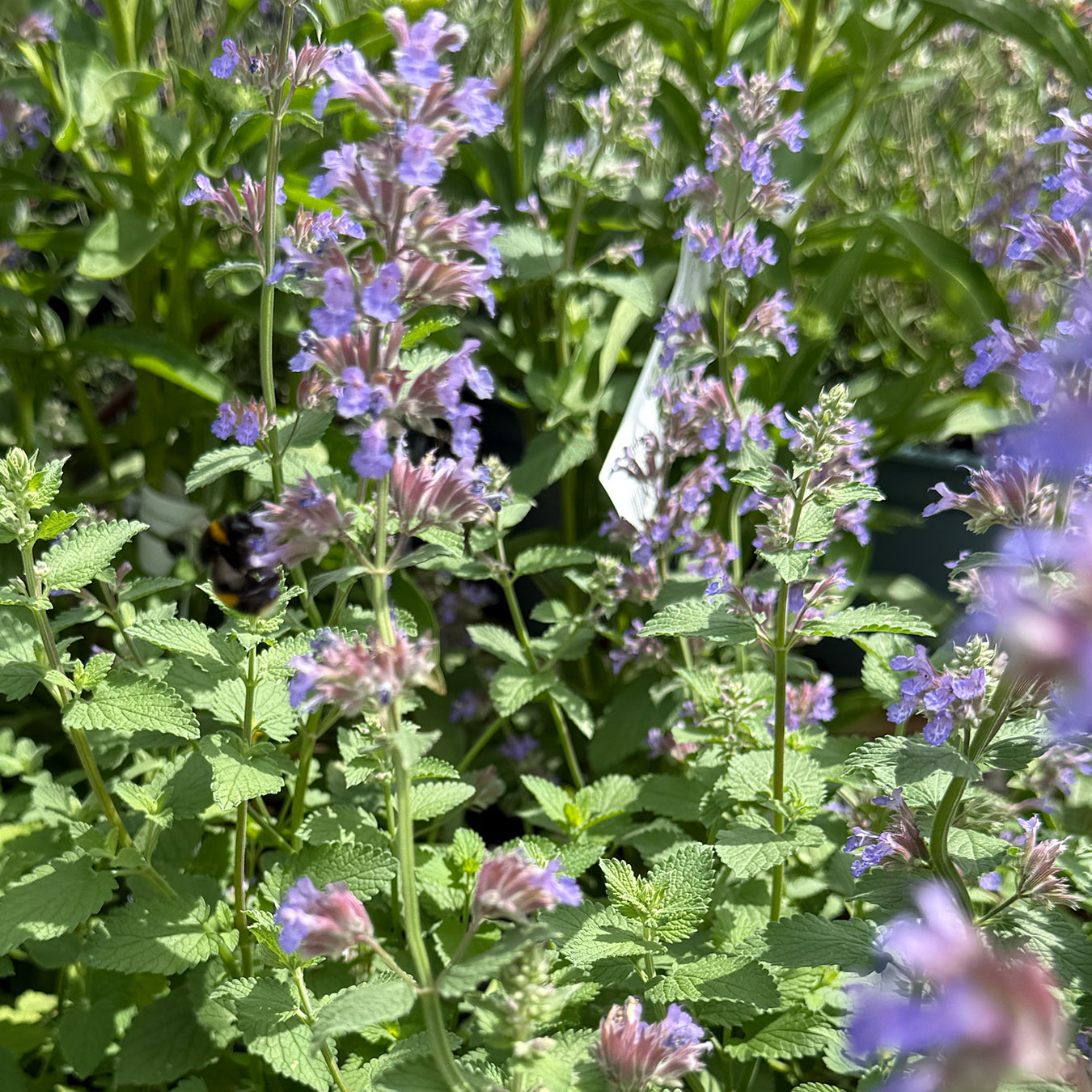
Violet-blue clouds of bloom, loved by bees
-
Description
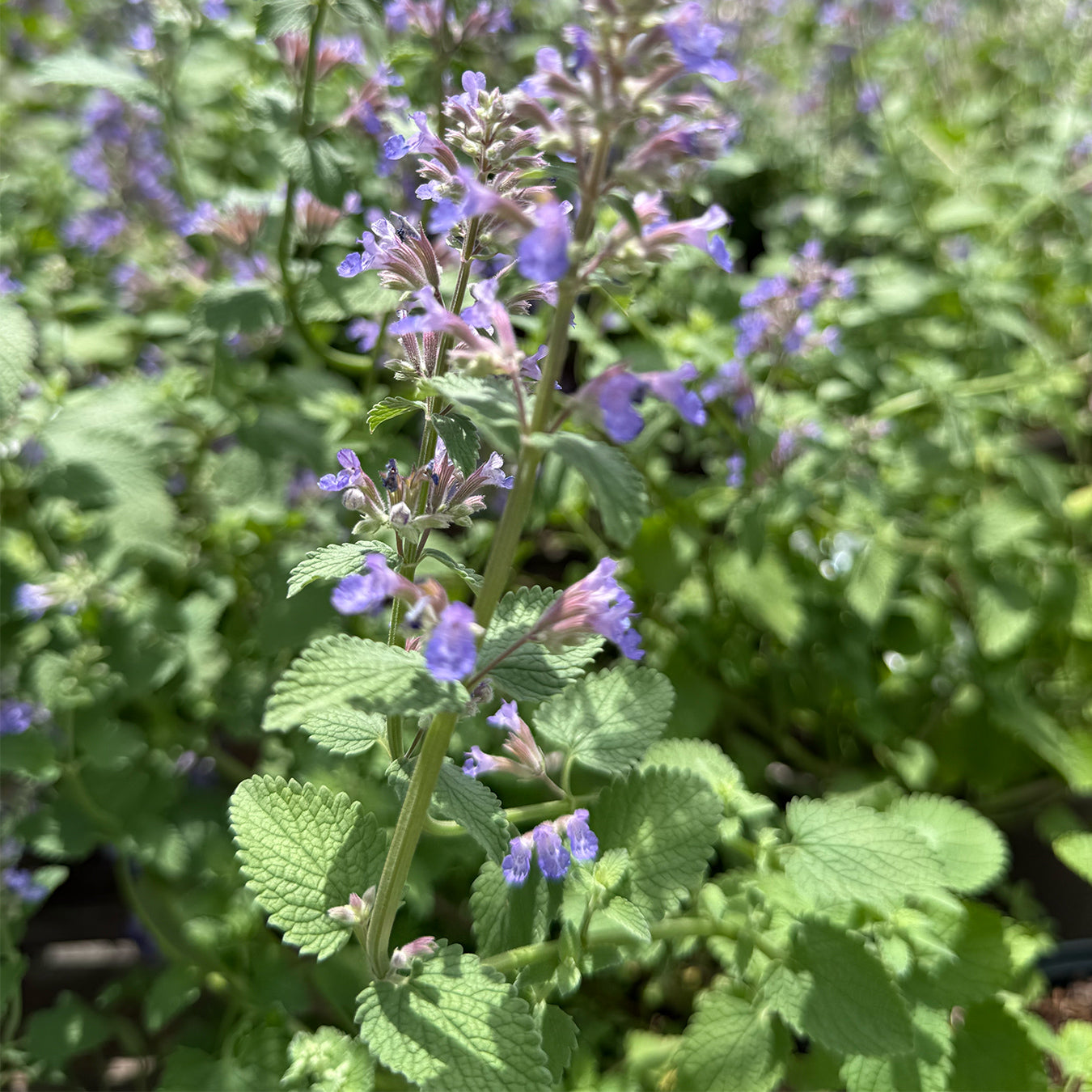
Nepeta × faassenii 'Purrsian Blue' is a compact, mound-forming herbaceous perennial producing a profuse mass of small, tubular, deep violet-blue flowers on slender upright spikes above soft, aromatic, grey-green foliage. It flowers freely from late spring and, if cut back after the first flush, reliably produces a strong second and sometimes third wave of bloom through summer and into early autumn. More compact and tidier in habit than many catmints, it holds its shape well without flopping and suits the front of a sunny border, gravel gardens, and the edges of paths where the aromatic foliage can be appreciated at close hand. It is an outstanding pollinator plant, particularly beloved by bees. -
Why we like it
Key features
What makes it special
Loved by bees & pollinators
Long flowering, late spring into summer
Fully hardy — comes back every year
Drought tolerant
Specs & details
The particulars
- Botanical name
- Nepeta × faassenii 'Purrsian Blue'
- Common name
- Catmint
- Supplied as
- 3 litre pot
- Flower colour
- Purple
- Eventual height
- 30–45 cm
- Eventual spread
- 45–60 cm
- Flowering period
- Late spring to autumn
- Habit
- Compact mound-forming herbaceous perennial
- Life cycle
- Herbaceous perennial
- Hardiness
- Fully hardy in most parts of the UK.
- Aspect
- Full sun
- Soil type
- Loam, sand, chalk
- Moisture
- Well-drained
- Position
- Front of border, gravel garden, path edge, patio container
- Plant spacing
- 5–6 plants per m²; or allow 40–50 cm between plants
- Growing skill
- Easy to grow
Plant calendar
When to plant, when it performs
Planting & care
Help it thrive
Planting guide
Nepeta × faassenii 'Purrsian Blue' thrives in a well-drained to dry soil in full sun and is an excellent choice for gravel gardens, raised beds, path edges, and the front of sunny borders. Good drainage is more important than soil fertility; it performs well on poor, thin soils where more demanding plants struggle, and on rich, moist soils it can become lax and less floriferous. On heavier soils, incorporate plenty of grit before planting to improve drainage. Set plants at the same depth as in their pot, spacing around 45 cm apart to allow for the spreading mature habit. In containers, use a free-draining loam-based compost mixed with extra grit. It establishes readily and needs little additional watering once settled.
Care tips
The most important maintenance task for 'Purrsian Blue' is cutting back promptly after each flowering flush. Once the first main flush of flowers begins to fade in June, shear the whole plant back to the basal mound of foliage; within two to three weeks fresh growth will appear and a second flush of flowers will follow. Repeat after the second flush if conditions and season allow. In late autumn or early spring, cut all stems back to the basal rosette. No regular feeding is needed; on fertile soils feeding encourages lush, floppy growth at the expense of flowers. Divide congested clumps every three to four years in spring to keep the plant vigorous and well-shaped.
Winter care
Nepeta × faassenii 'Purrsian Blue' is fully hardy and requires no winter protection anywhere in the UK. In late autumn, cut the plant back to the low mound of basal foliage, which often remains semi-evergreen through milder winters and provides some ground-level interest until new growth begins in spring. Alternatively, leave the stems standing until early spring if you prefer to tidy the garden in one pass; cut back to the base as new growth begins to show. Divide congested clumps every three to four years in spring to maintain vigour.