



Canna 'Happy Carmen'
Canna lily
Couldn't load pickup availability
Supplied as an established plant in a 3 litre pot



Aspect
Full sun
Hardiness
Not frost-hardy
Flowers
Summer to autumn
Soil
Loam, sand, clay
About this plant
Bold tropical flowers for a long summer season
-
Description
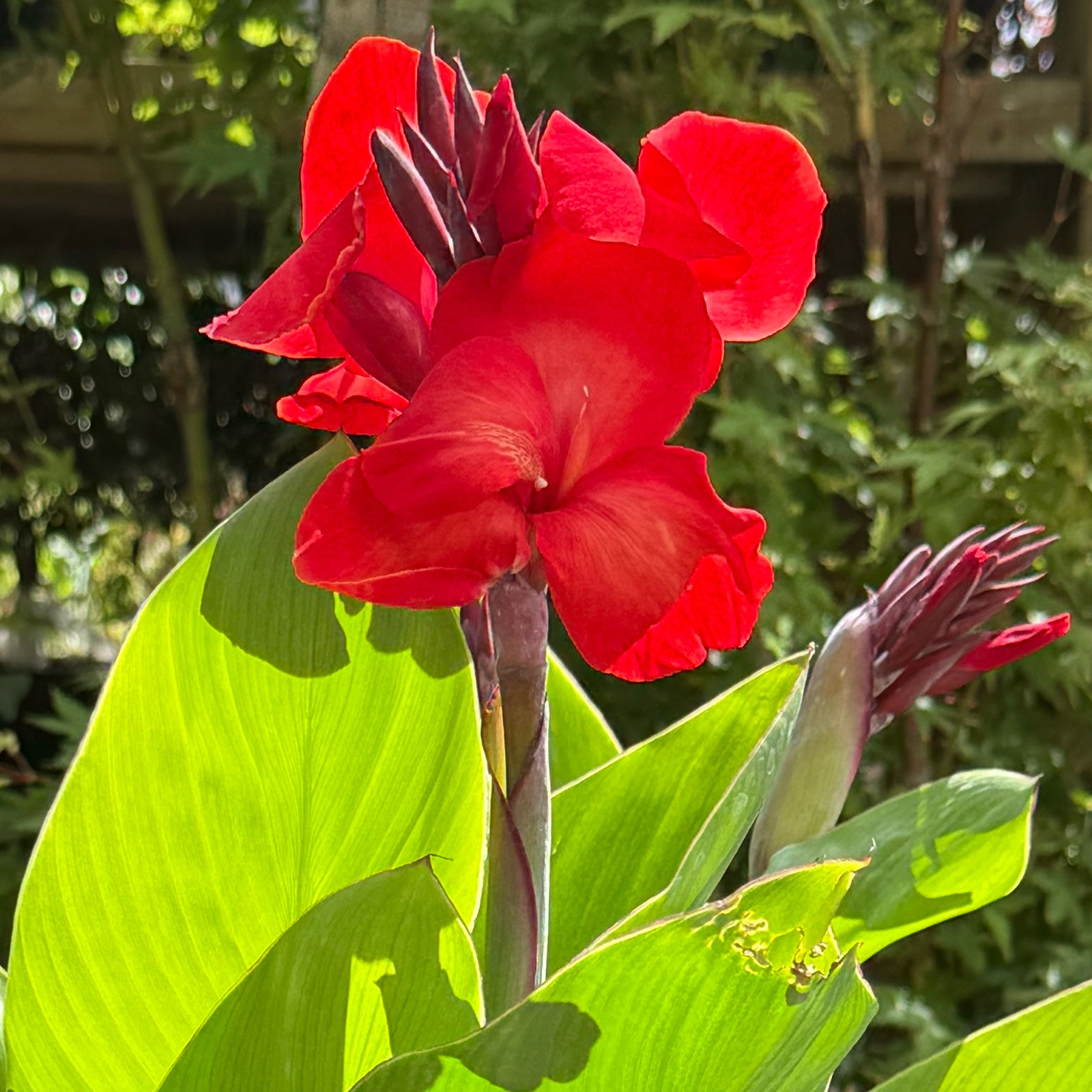
Canna 'Happy Carmen' is a striking, upright, rhizomatous perennial grown for its bold, paddle-shaped foliage and large, exotic-looking red flowers carried on sturdy stems above the foliage from midsummer through to the first autumn frosts. Part of the Cannasol series, bred for a more compact and weather-resistant habit than older canna cultivars, it performs reliably in the variable conditions of a UK summer without the flopping and wind damage that can affect taller varieties. It brings an unmistakably tropical quality to a sunny border or large container and is a reliable and rewarding choice for summer bedding, patio planting, and mixed border schemes. -
Why we like it
Key features
What makes it special
Colourful foliage
Fully hardy — comes back every year
Easy to grow & low maintenance
Specs & details
The particulars
- Botanical name
- Canna 'Happy Carmen'
- Common name
- Canna lily
- Supplied as
- 3 litre pot
- Flower colour
- Red
- Eventual height
- 80–120 cm
- Eventual spread
- 50–70 cm
- Flowering period
- Summer to autumn
- Habit
- Upright, clump-forming rhizomatous perennial
- Life cycle
- Rhizomatous perennial
- Hardiness
- Not frost-hardy
- Aspect
- Full sun
- Soil type
- Loam, sand, clay
- Moisture
- Moist but well-drained
- Position
- Mid-border, patio container, summer bedding scheme, tropical-style planting
- Plant spacing
- 3–4 plants per m²
- Growing skill
- Easy to grow, though annual lifting and storage is required in most UK gardens
Plant calendar
When to plant, when it performs
Planting & care
Help it thrive
Planting guide
Canna 'Happy Carmen' requires a warm, sheltered position in full sun and a fertile, moisture-retentive soil. Before planting, incorporate generous quantities of garden compost or well-rotted manure to improve fertility and moisture retention, as cannas are hungry, thirsty plants that respond dramatically to good soil preparation. Do not plant out until all risk of frost has passed, typically from late May onwards. For the longest possible display, start rhizomes under glass in pots of compost in late March or April, keeping them warm and moist, and plant out the growing plants after the last frost. Set rhizomes horizontally about 8–10 cm deep, or plant pot-grown plants at the same depth as in the pot. Space around 50–60 cm apart. In containers, use a large pot of at least 40 cm diameter filled with a rich, moisture-retentive compost.
Care tips
Water generously through the growing season, particularly during hot, dry spells, as moisture stress causes the flowers to be smaller and fewer and the foliage to lose some of its lushness. Feed container-grown plants with a balanced fertiliser in spring as growth begins, then switch to a high-potassium liquid feed every two weeks through the flowering period. Border plants benefit from a dressing of balanced fertiliser in spring and a mulch of garden compost to retain moisture. Deadhead spent flowers by removing the entire spent flower stem back to the next emerging bud or lateral stem to keep the display tidy and encourage further flowers. After the first frost blackens the foliage, cut the stems back to around 15 cm, lift the rhizomes carefully, allow them to dry for a day or two, then store in barely moist compost or dry sand in a frost-free place through winter. Check the stored rhizomes periodically through winter and discard any that show signs of rot.
Winter care
Canna 'Happy Carmen' is not frost-hardy and the rhizomes will be killed by hard frost if left in the ground unprotected over winter in most parts of the UK. In mild, sheltered gardens in the south and west, the rhizomes can sometimes be overwintered in the ground under a very deep, dry mulch of bark or straw applied before the first frosts, but this is a risk and losses are common even in mild winters. The safest and most reliable approach for most UK gardens is to lift the rhizomes after the first frost has blackened the foliage, cut the stems back to around 15 cm, allow them to dry briefly, and store them in barely moist compost or dry sand in a frost-free place such as a garage or cool shed through winter. Replant or pot up in late March or April, starting them off under glass to give them a long growing season before planting out after the last frost.