



Delphinium 'Blue Lace'
Delphinium
Couldn't load pickup availability
Supplied as an established plant in a 3 litre pot

Aspect
Full sun
Hardiness
Fully hardy
Flowers
Early summer to midsummer
Soil
Loam, sand, clay, chalk
About this plant
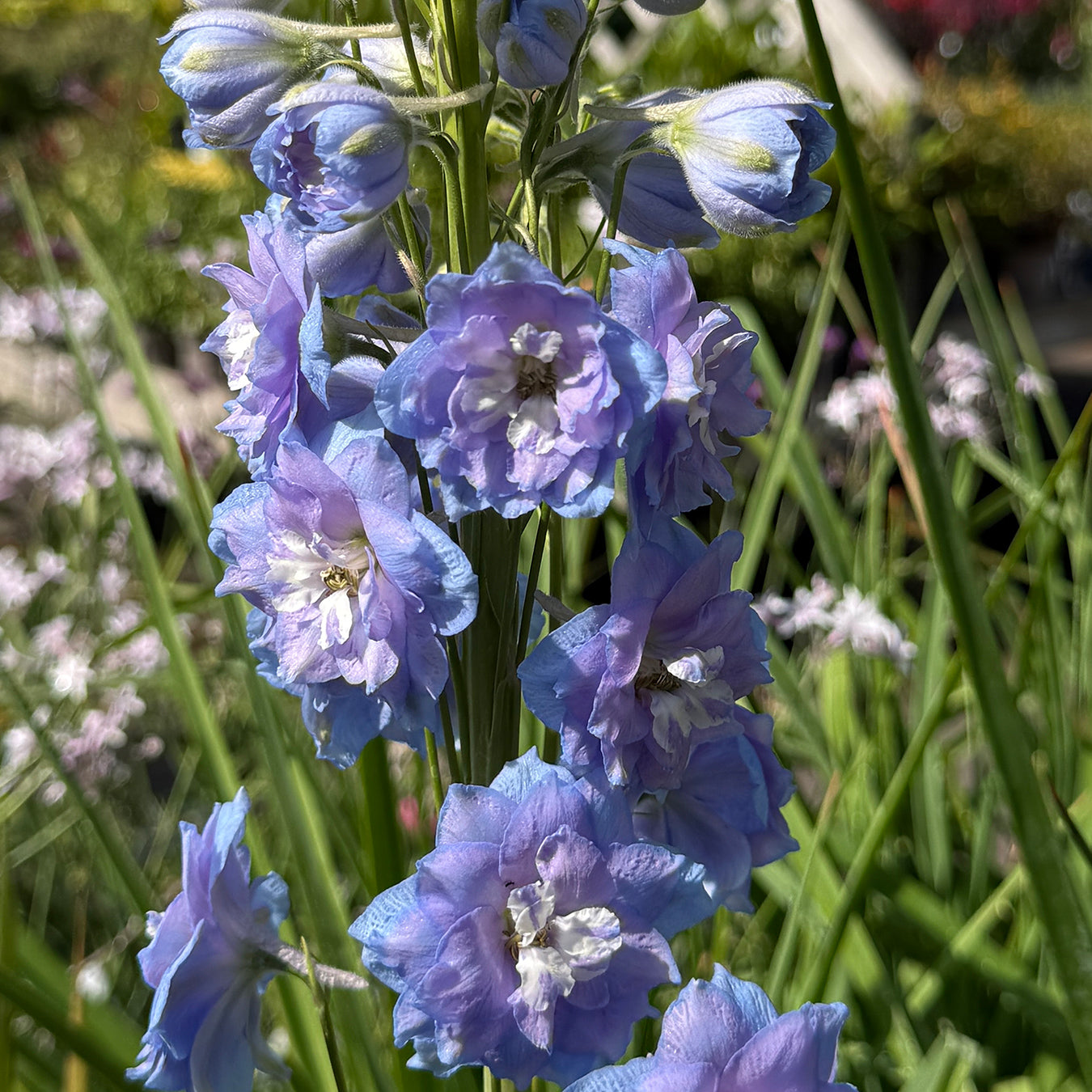
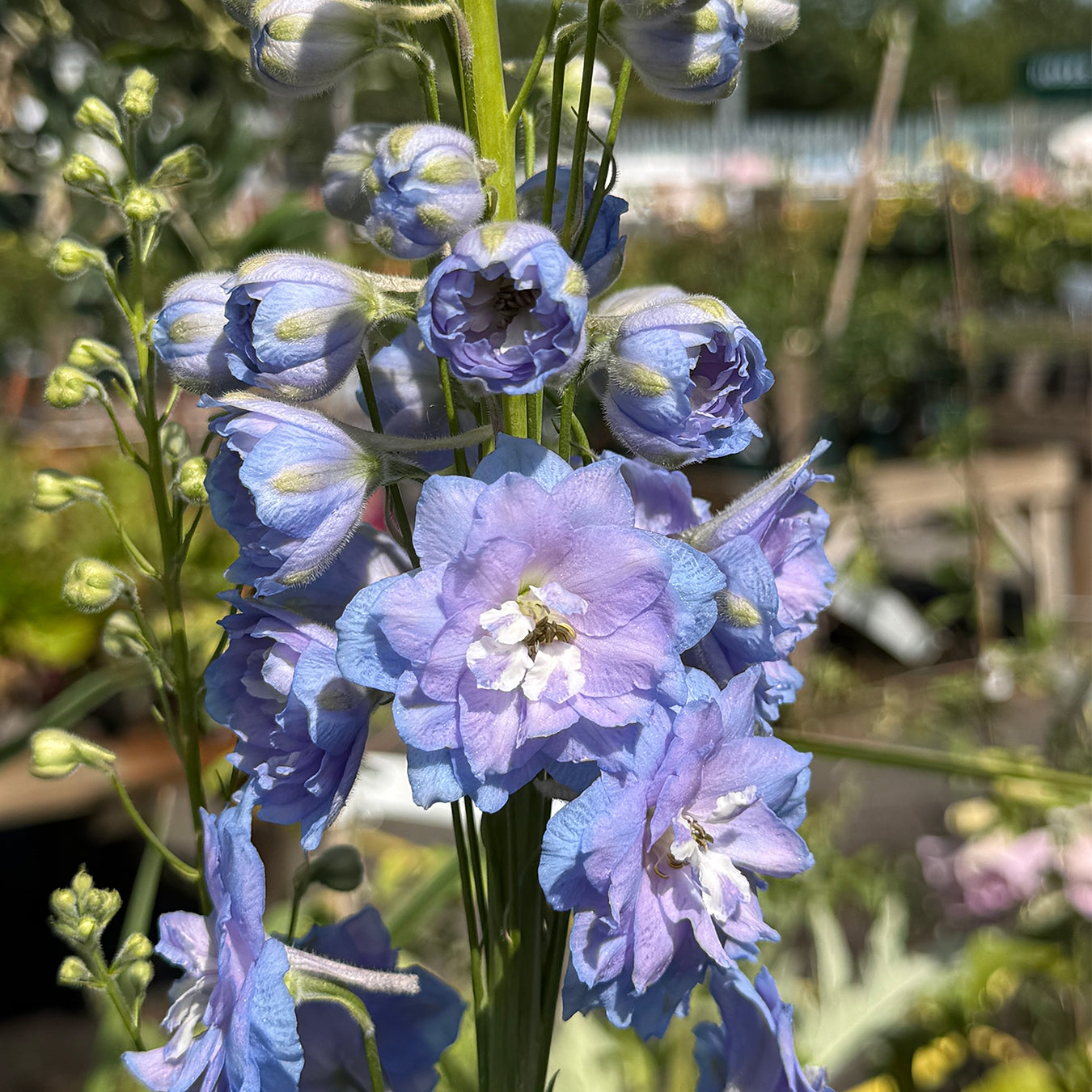
Towering blue spikes; the classic summer border plant
-
Description
Delphinium 'Blue Lace' is a tall, upright herbaceous perennial producing imposing spikes of blue to blue-purple flowers from early to midsummer. The flowers are densely packed on strong, upright stems that give the border a bold vertical presence at the height of the summer season, and the deeply divided, fresh green foliage forms an attractive mound at the base. Like all elatum delphiniums, it benefits from staking in exposed positions, and cutting back the spent spikes promptly after the first flush will often encourage a second, lighter flush of flowers in late summer or early autumn. It is an impressive and classic border plant, providing a blue vertical accent that few other perennials can match. -
Why we like it
Specs & details
The particulars
- Botanical name
- Delphinium 'Blue Lace'
- Common name
- Delphinium
- Supplied as
- 3 litre pot
- Flower colour
- Blue
- Eventual height
- 120–180 cm
- Eventual spread
- 60–90 cm
- Flowering period
- Early summer to midsummer
- Habit
- Tall, upright clump-forming herbaceous perennial
- Life cycle
- Herbaceous perennial
- Hardiness
- Fully hardy
- Aspect
- Full sun
- Soil type
- Loam, sand, clay, chalk
- Moisture
- Moist but well-drained
- Position
- Back of border, mid-border in larger plantings, cottage garden
- Plant spacing
- 2–3 plants per m²
- Growing skill
- Moderate
Plant calendar
When to plant, when it performs
Planting & care
Help it thrive
Planting guide
Delphiniums are hungry plants that perform best in a deep, fertile, moisture-retentive but well-drained soil. Before planting, incorporate generous quantities of well-rotted manure or garden compost to improve both soil fertility and moisture retention. Set plants at the same depth as in their pot, spacing around 60–75 cm apart. Stake plants early, ideally placing canes or a grow-through support as the stems emerge in spring before they reach any significant height; trying to stake a mature, wind-damaged spike is far less satisfactory than supporting from the outset. Delphiniums are attractive to slugs, particularly when young growth is emerging in spring; slug protection at this stage is strongly recommended and significantly affects the plant's performance through the season.
Care tips
Delphinium 'Blue Lace' rewards attentive care with the most impressive display. Feed generously in spring with a balanced fertiliser and again with a high-potassium feed as the flower spikes begin to develop. Water regularly through the growing season, particularly during dry spells, as moisture stress at the time of flowering significantly reduces the quality and length of the display. After the main flowering flush, cut the spent spikes back to the basal foliage; this prompts the plant to direct energy into producing new growth and a second flush of flowering stems in late summer. Protect from slugs in spring when the young shoots are most vulnerable. In late autumn, cut back all stems to ground level once the foliage has died down. Divide congested clumps every three to four years in spring to maintain vigour.
Winter care
Delphinium 'Blue Lace' is fully hardy and requires no winter protection anywhere in the UK. Cut back the flowering stems to ground level in late autumn once they have finished and the foliage has died down, or leave until early spring if you prefer to tidy the garden in one pass. The crown is reliably frost-hardy and will push fresh growth again each spring without any intervention. A light mulch of garden compost over the crown in autumn is beneficial on lighter soils and helps protect the developing growth buds through the coldest months. Divide congested clumps every three to four years in spring to maintain vigour.