



Delphinium 'Pagan Purples'
Larkspur
Couldn't load pickup availability
Supplied as an established plant in a 3 litre pot

Aspect
Full sun to partial shade
Hardiness
Fully hardy in most parts of the UK.
Flowers
Summer
Soil
Loam, sand, chalk
About this plant
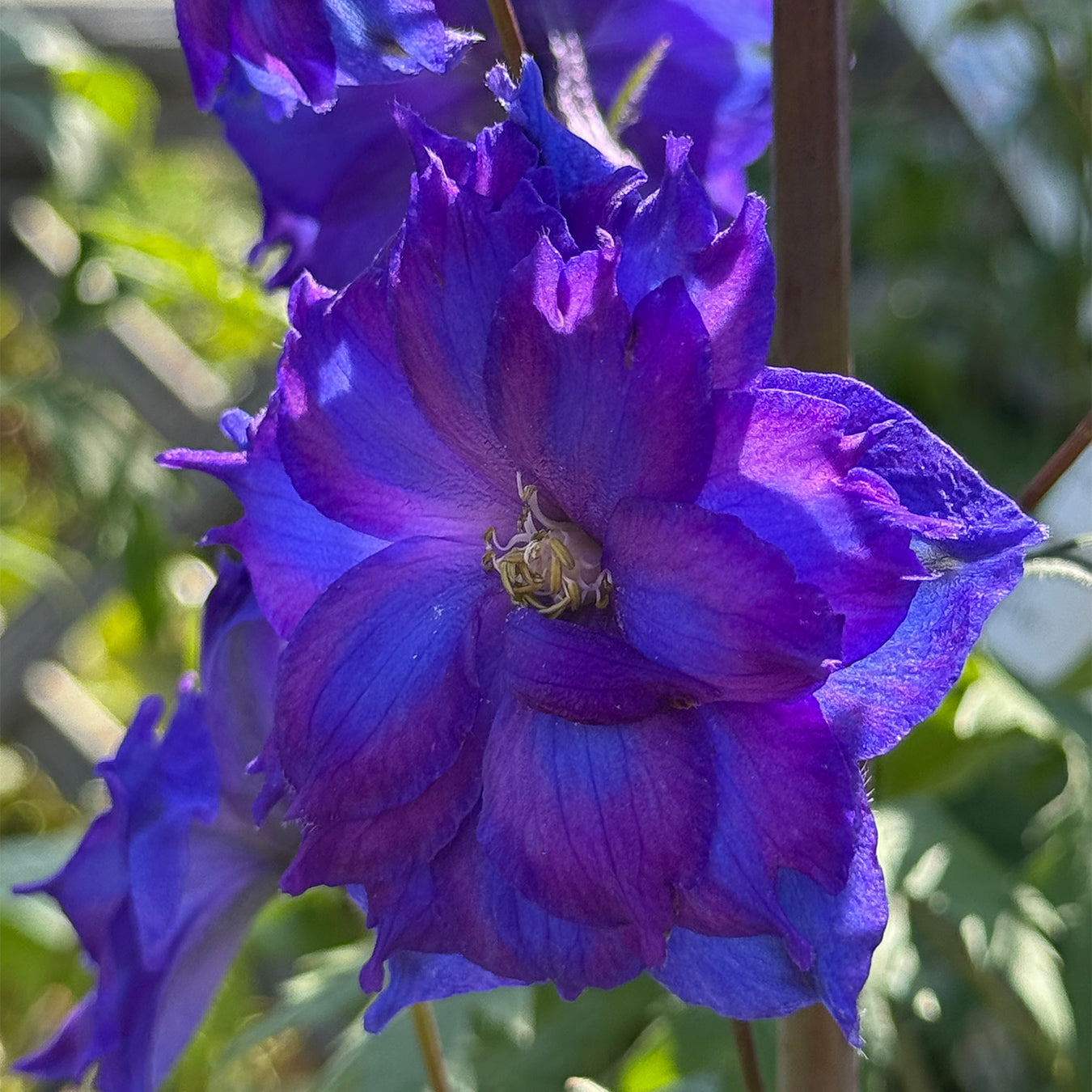
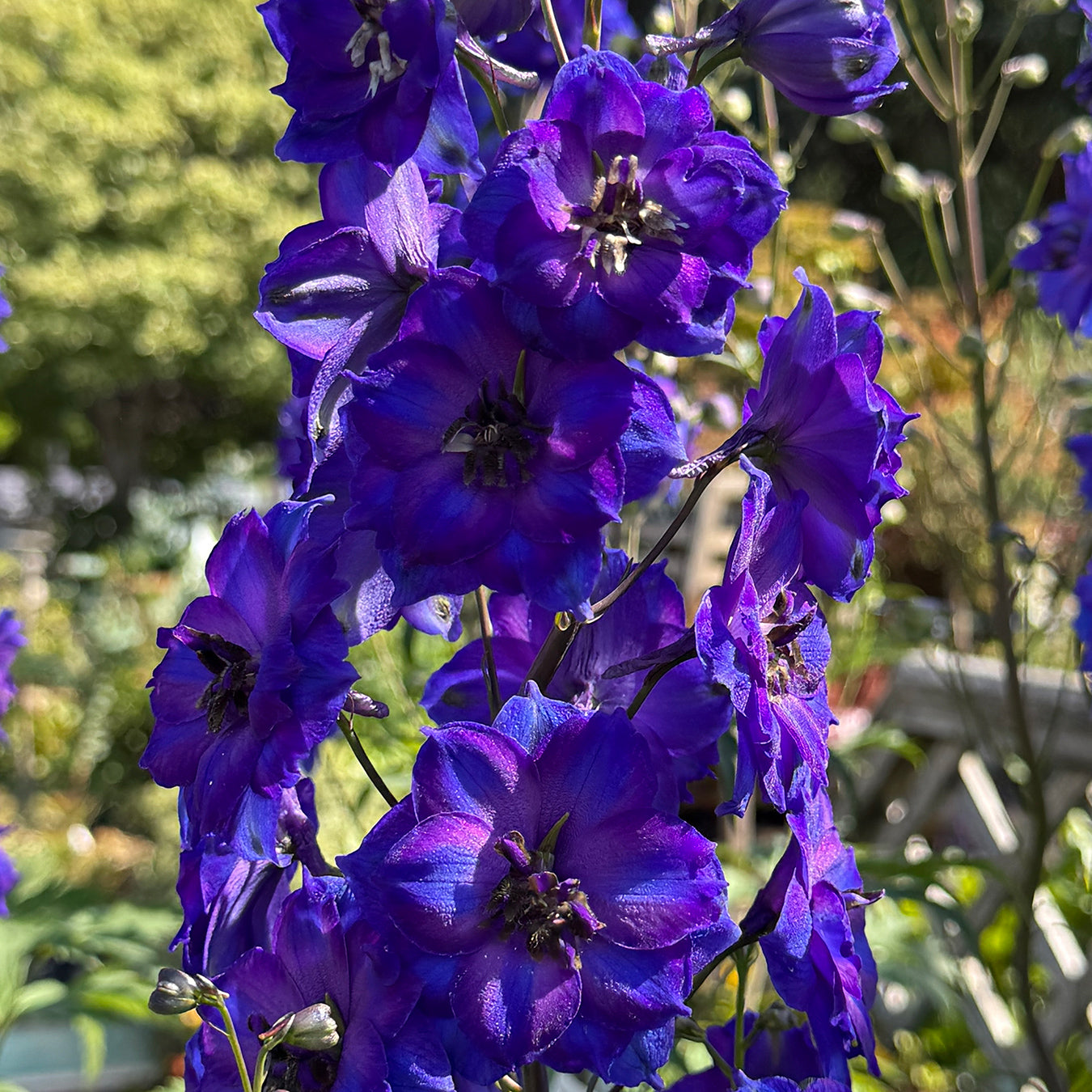
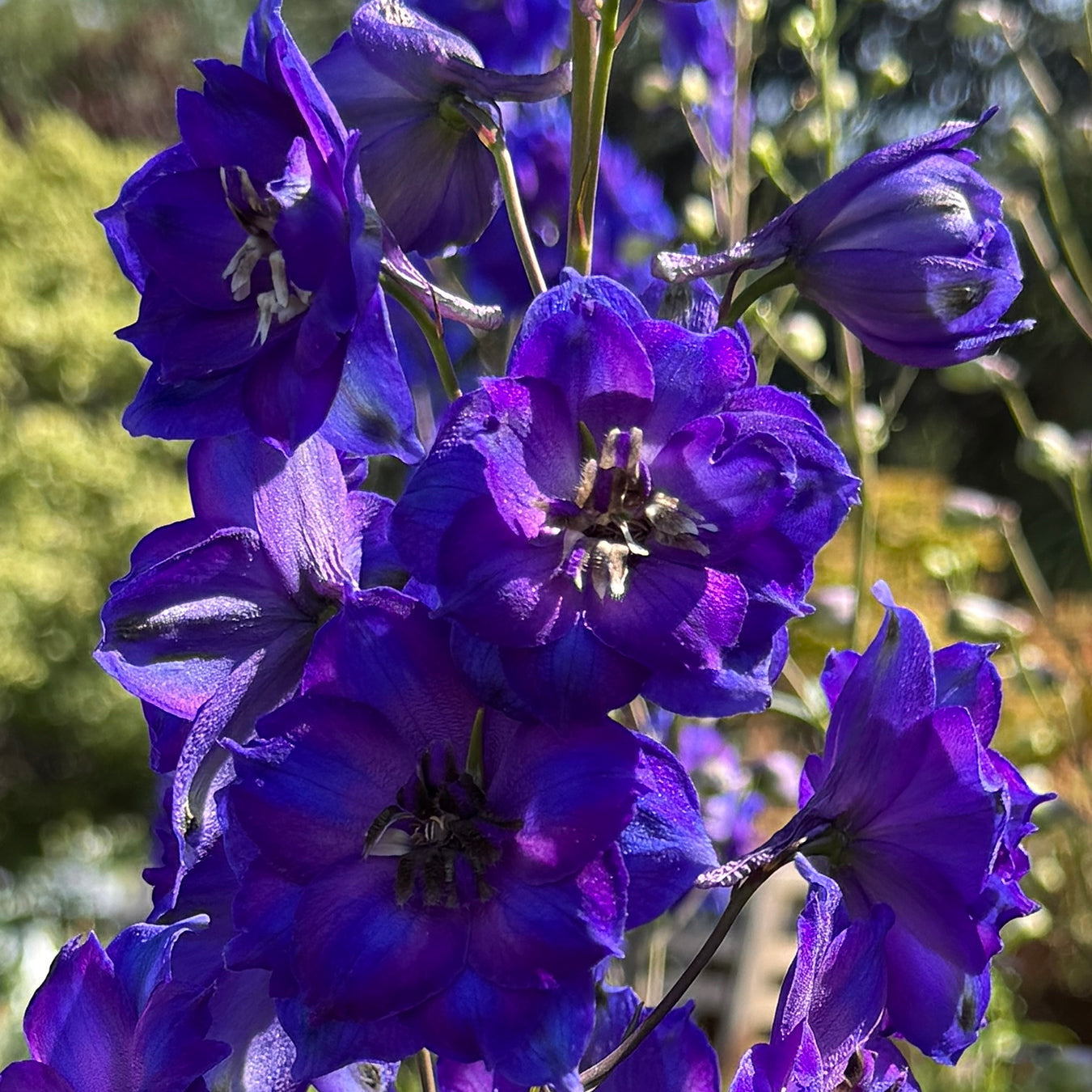
Towering purple spires with a white eye
-
Description
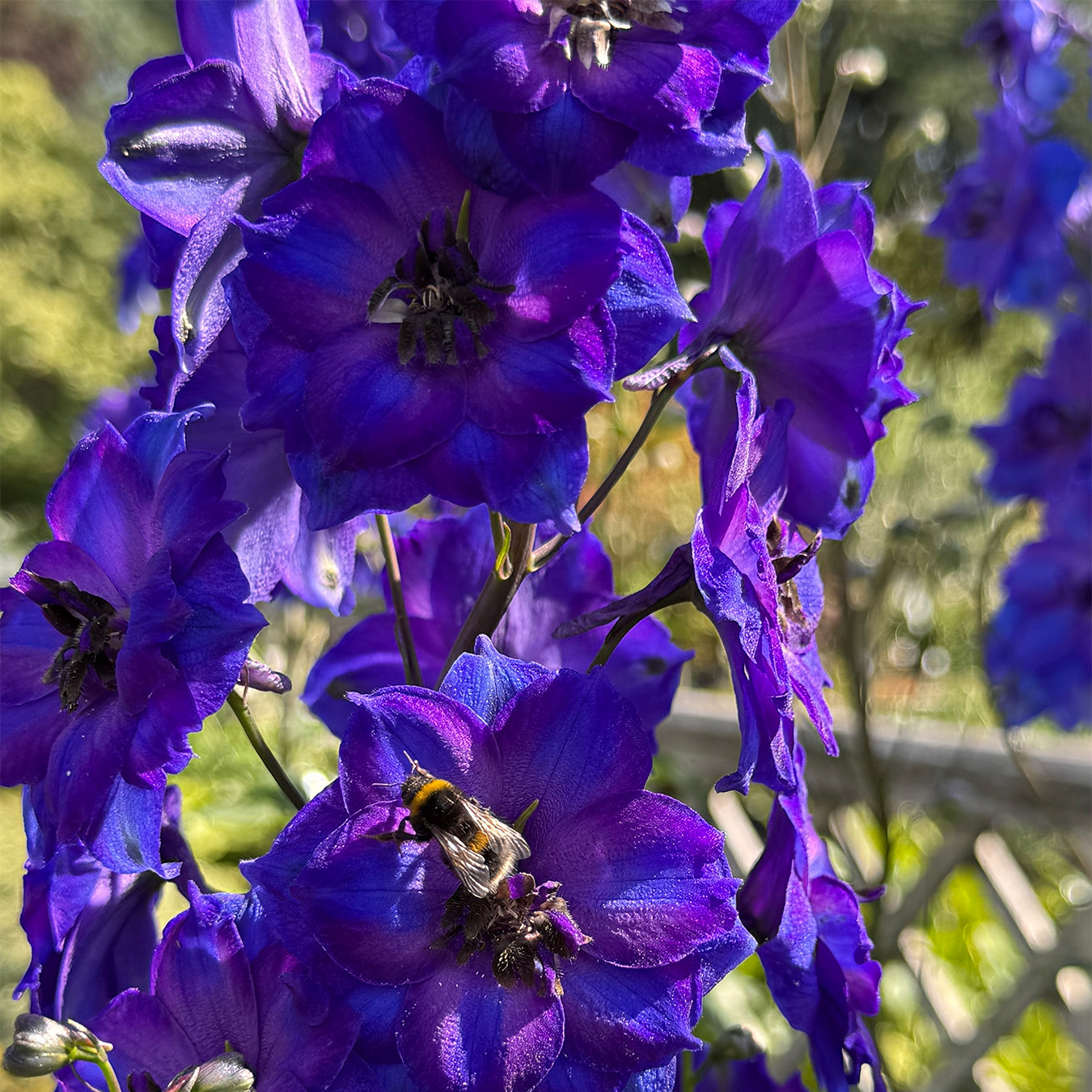
Delphinium 'Pagan Purples' is a stately, upright perennial bearing tall, sturdy spires densely packed with semi-double, intense purple-blue flowers, each set off by a contrasting white or dark "bee" at its centre. Rising from a mound of deeply divided green leaves in early summer, the dramatic spikes bring real architectural height and drama to the back of a border, and often repeat with lighter secondary spikes later in the season. Part of the vigorous, strong-stemmed New Millennium series, it is a magnet for bumblebees and a superb cut flower.
-
Why we like it
Key features
What makes it special
Good for cutting
Loved by bees & pollinators
Specs & details
The particulars
- Botanical name
- Delphinium 'Pagan Purples'
- Common name
- Larkspur
- Supplied as
- 3 litre pot
- Flower colour
- Purple
- Eventual height
- 1.2-1.5m
- Eventual spread
- 50-60cm
- Flowering period
- Summer
- Habit
- Tall, upright, clump-forming perennial
- Life cycle
- Herbaceous perennial
- Hardiness
- Fully hardy in most parts of the UK.
- Aspect
- Full sun to partial shade
- Soil type
- Loam, sand, chalk
- Moisture
- Moist but well-drained
- Position
- Back of border, cottage garden, cutting garden
- Plant spacing
- Space around 50 to 60cm apart, ideally in groups for the best impact.
- Growing skill
- Moderate
Plant calendar
When to plant, when it performs
Planting & care
Help it thrive
Planting guide
Plant in spring or early autumn into fertile, humus-rich, moist but well-drained soil in full sun, in a spot sheltered from strong winds. Delphiniums are hungry plants, so dig in plenty of well-rotted manure or compost before planting, and set the crown at soil level to avoid rot. Put stakes or supports in place early, before the spikes grow tall. Water in well and space around 50 to 60cm apart.
Care tips
Water regularly, especially in dry spells, keeping water off the foliage to limit mildew, and feed generously through the growing season, as delphiniums are heavy feeders. Stake the tall, hollow stems early to prevent wind and rain damage. Cut spent spikes back to encourage a second, lighter flush. Protect emerging shoots from slugs and snails in spring. All parts are harmful if eaten, so site with pets and children in mind and wear gloves when handling.
Winter care
Fully hardy, needing no winter protection. Cut the flowered stems and foliage down to ground level in autumn once they fade, and apply a mulch of compost or bark around the crown to protect it and conserve moisture. Slugs and snails love the emerging spring shoots, so protect new growth as it appears. Where crowns rot in cold, wet soil, sharp drainage helps.