



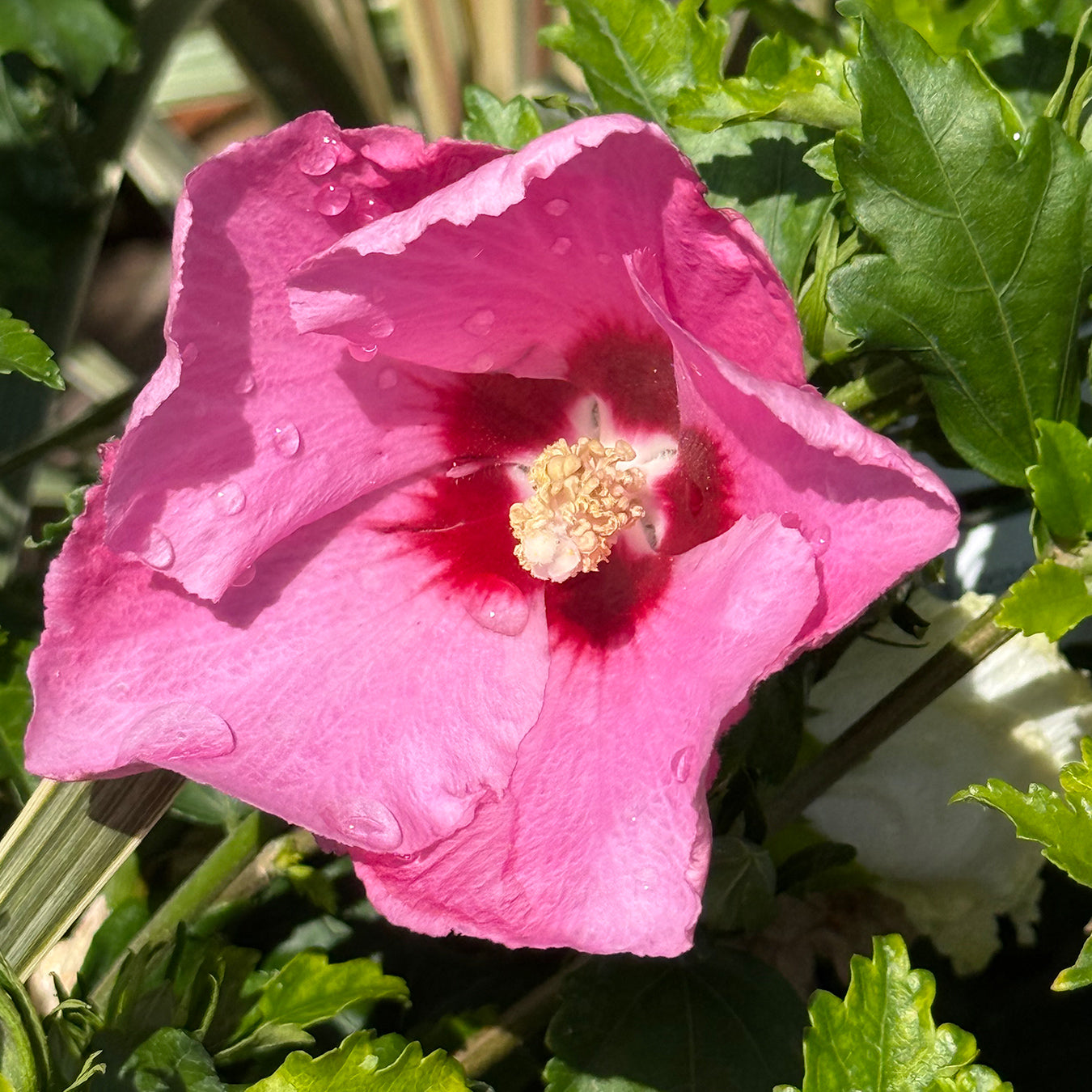
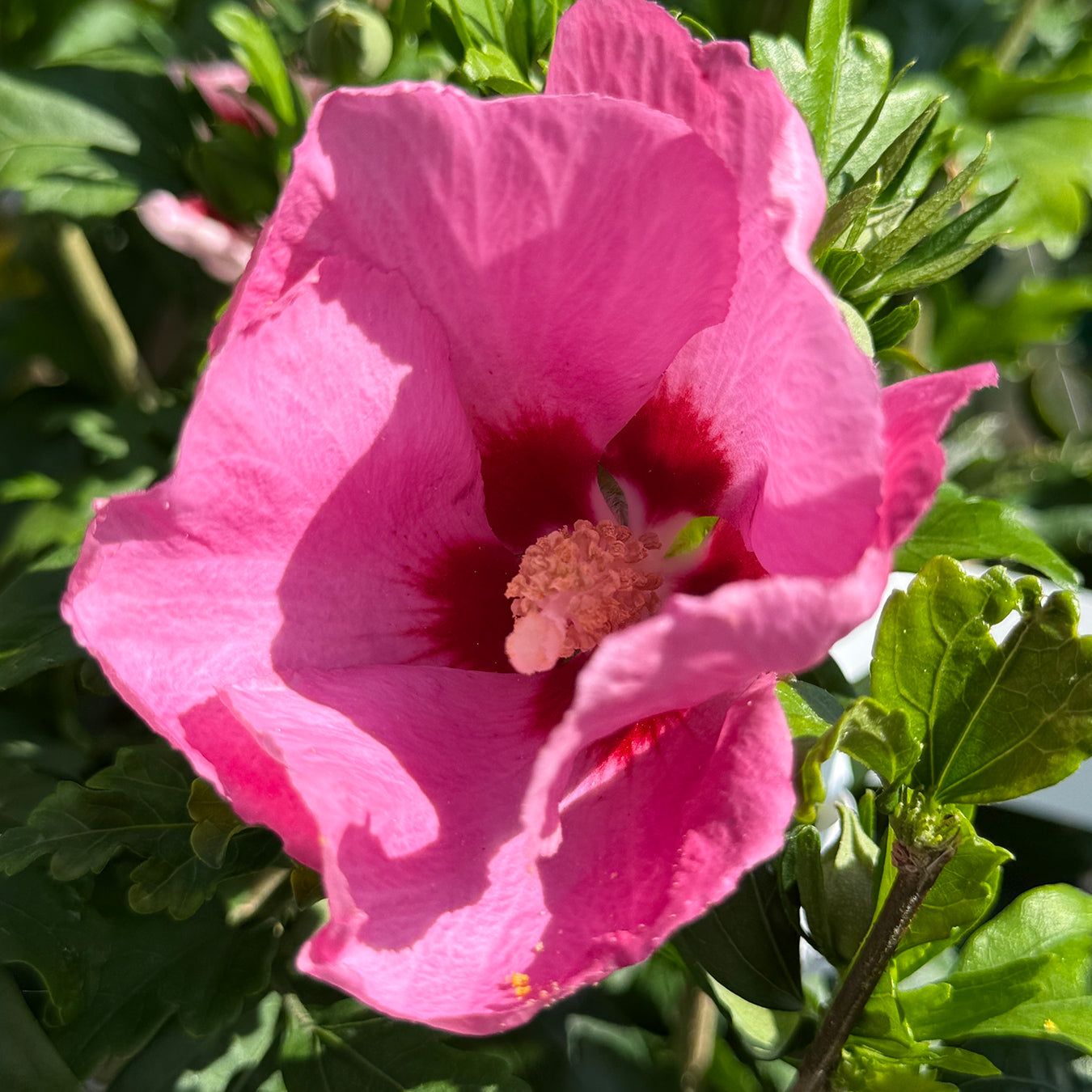
Hibiscus syriacus 'Russian Violet'
Rose of Sharon
Couldn't load pickup availability
Supplied as an established plant in a 3 litre pot
Aspect
Full sun
Hardiness
Fully hardy
Flowers
Late summer, autumn
Soil
Loam, moist but well-drained soil
About this plant
Late colour, striking violet blooms
-
Description
Hibiscus syriacus 'Russian Violet' is an upright, deciduous shrub grown for its large, showy violet flowers, produced from late summer into autumn. It flowers at a time when many shrubs have finished for the year, and its exotic-looking blooms attract bees and other pollinators. It is a reliable choice for a sunny, sheltered border. -
Why we like it
Key features
What makes it special
Loved by bees & pollinators
Fully hardy — comes back every year
Specs & details
The particulars
- Botanical name
- Hibiscus syriacus 'Russian Violet'
- Common name
- Rose of Sharon
- Supplied as
- 3 litre pot
- Flower colour
- Purple
- Eventual height
- 200 to 300cm
- Eventual spread
- 150 to 250cm
- Flowering period
- Late summer, autumn
- Habit
- Upright, well-branched deciduous shrub
- Life cycle
- Deciduous shrub
- Hardiness
- Fully hardy
- Aspect
- Full sun
- Soil type
- Loam, moist but well-drained soil
- Moisture
- Moist but well-drained
- Position
- Back of border, sheltered sunny spot
- Plant spacing
- 1 plant per m²
- Growing skill
- Easy to grow
Plant calendar
When to plant, when it performs
Planting & care
Help it thrive
Planting guide
Plant in a warm, sheltered, sunny spot in moist but well-drained soil, working in well-rotted organic matter before planting. Hibiscus syriacus is naturally slow to come into leaf in spring, so patience is needed, and it performs best where it gets a good baking in summer sun. Water in well after planting.
Care tips
Water regularly during the first couple of growing seasons while plants establish; once settled, they are reasonably drought tolerant. Little pruning is required, though a light shaping in late winter or early spring can help maintain a neat habit. Mulch annually in spring to help retain soil moisture.
Winter care
Fully hardy and needs no winter protection once established, though young plants benefit from a sheltered position in their first few winters. Little pruning is needed; if reshaping is required, do so in late winter or early spring before new growth begins.