



Acer palmatum 'Bloodgood'
Japanese maple
Couldn't load pickup availability
Supplied as an established plant in a 3 litre pot
Aspect
Full sun to partial shade
Hardiness
Fully hardy in most parts of the UK
Flowers
Spring
Soil
Loam, sand, clay
About this plant
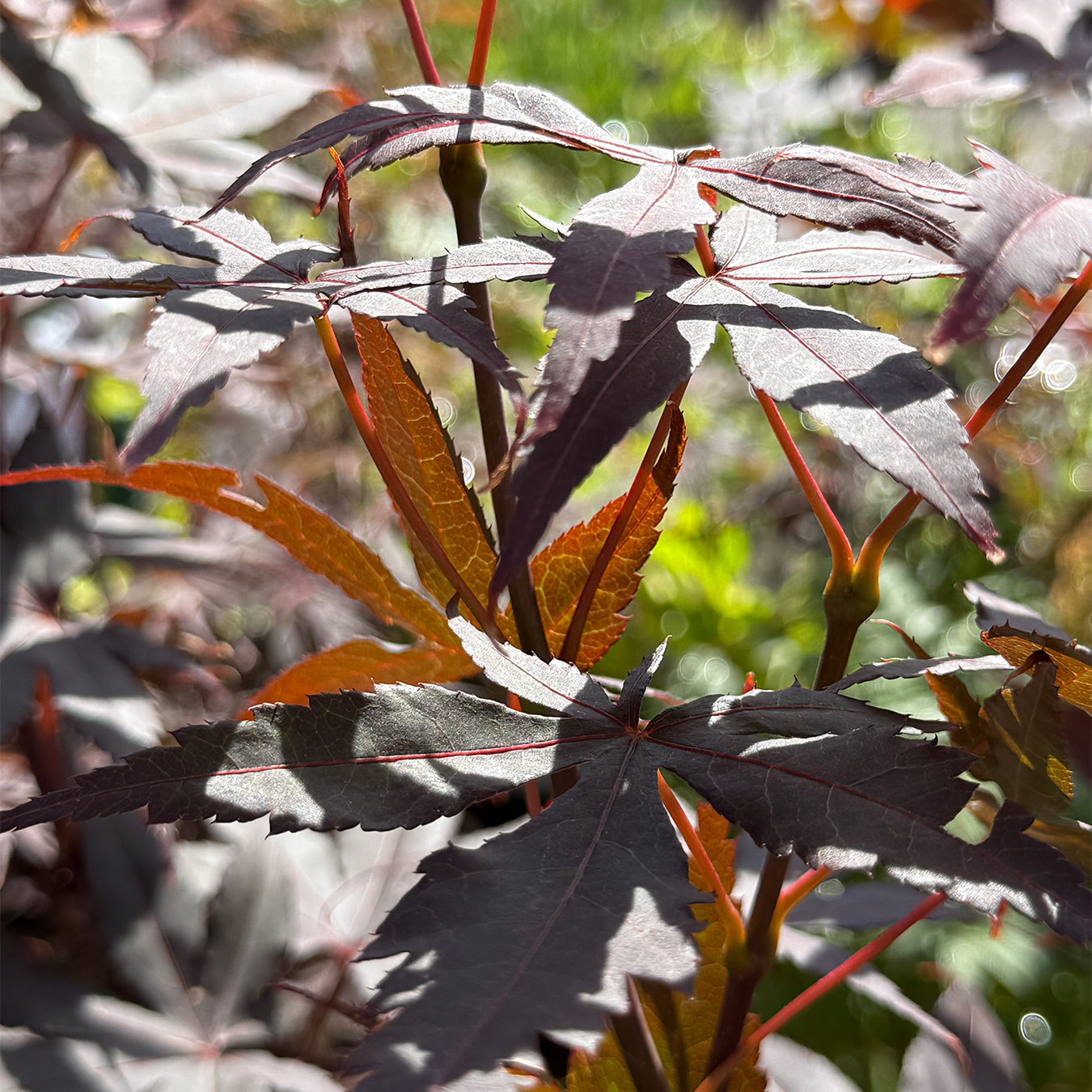
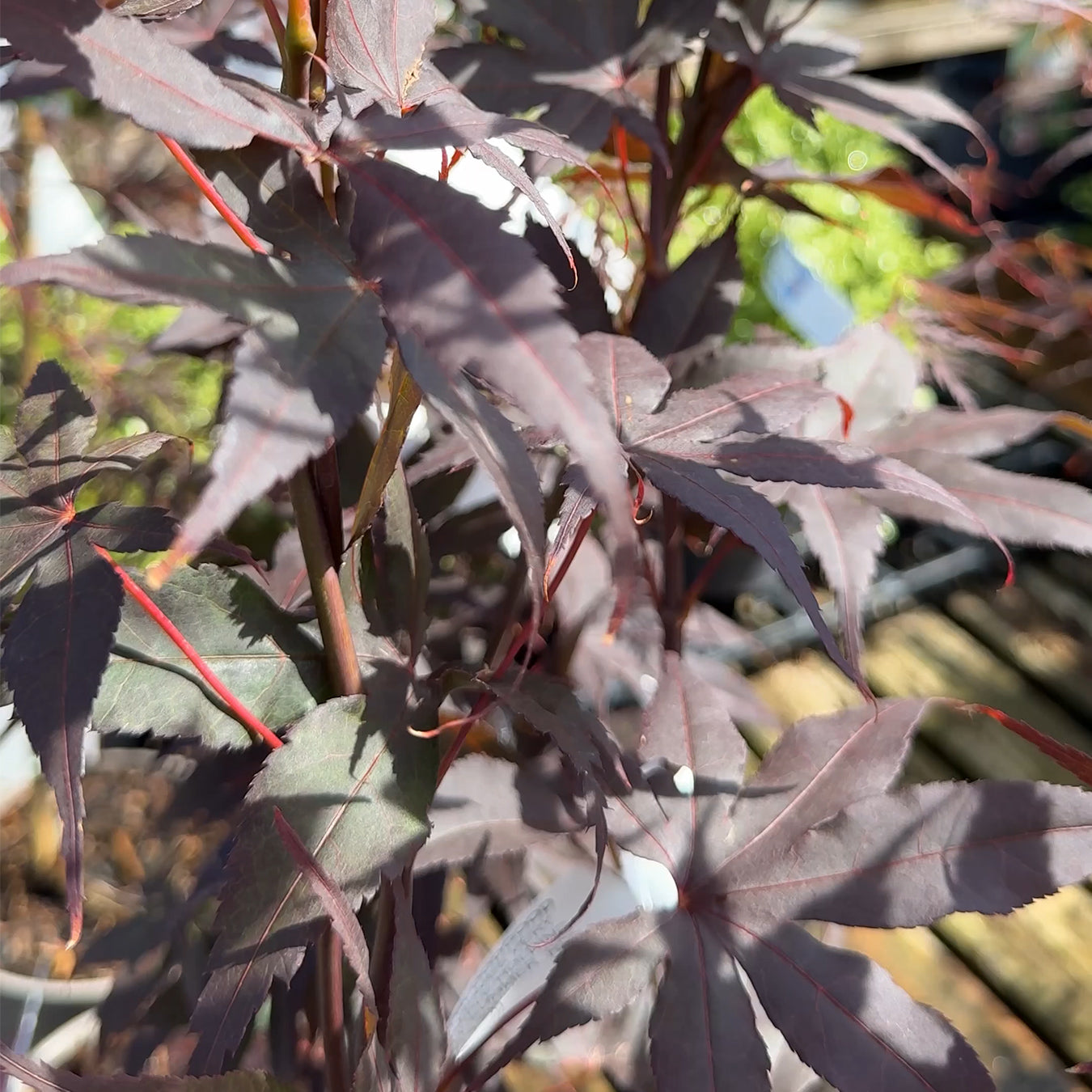
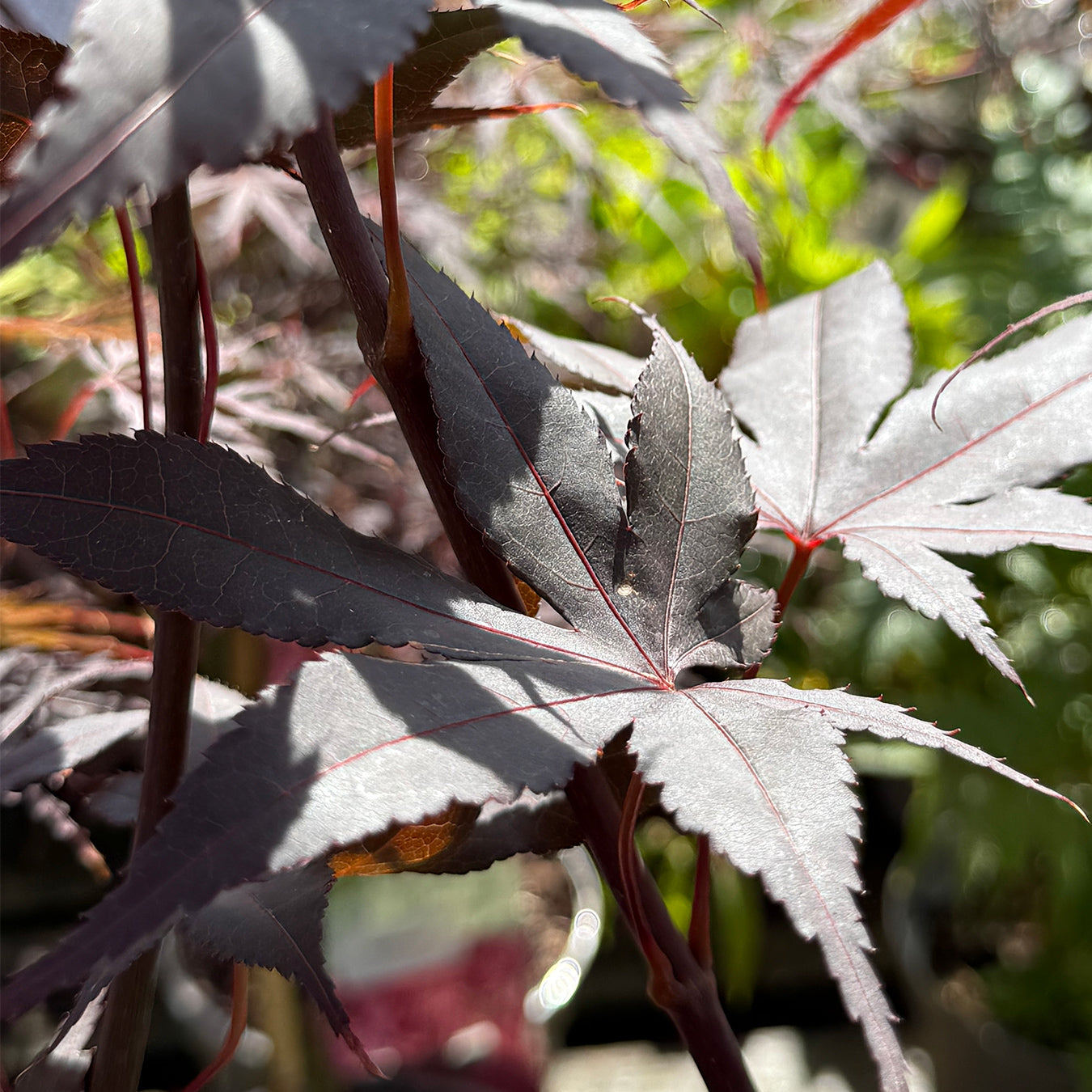
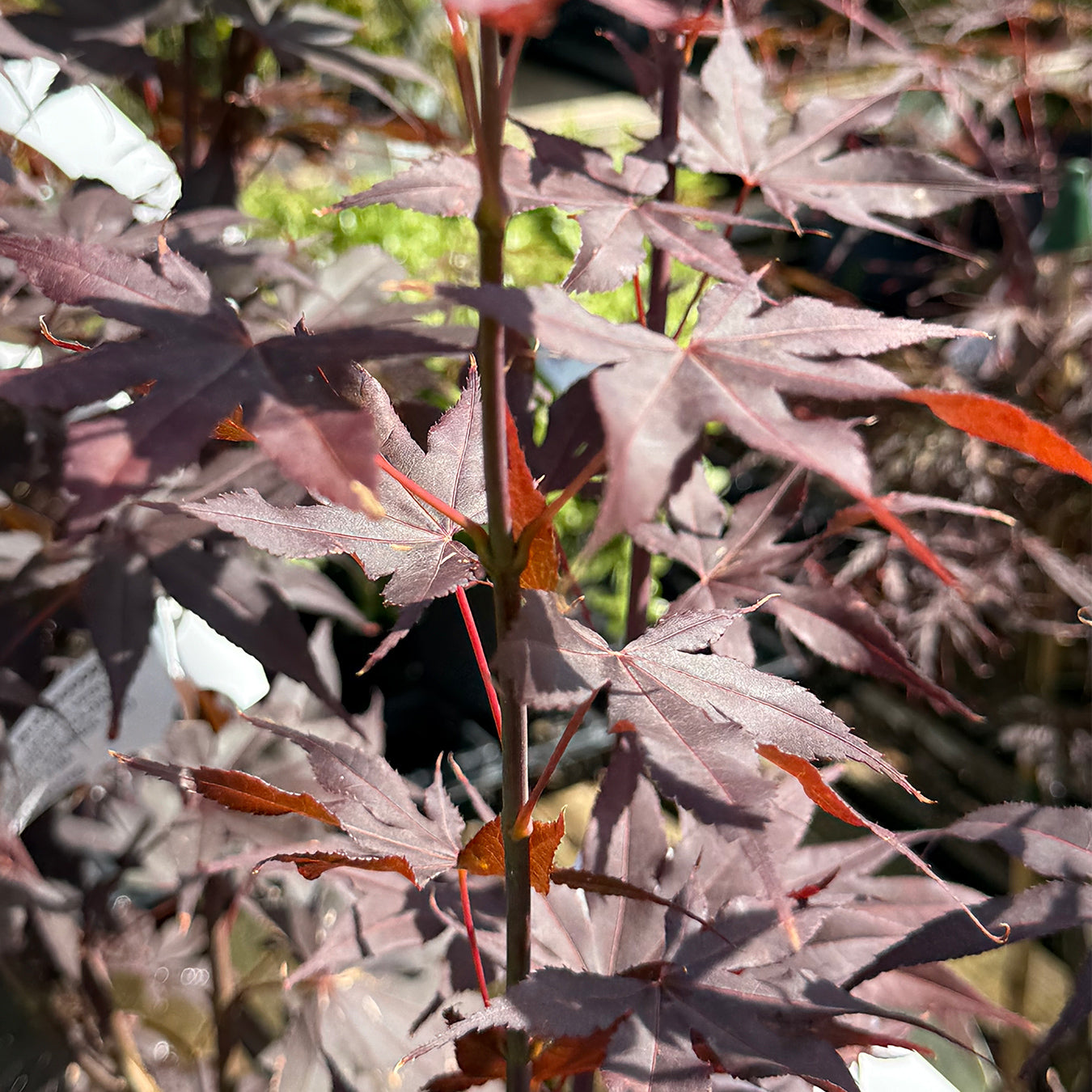
Rich burgundy foliage from spring to blazing autumn colour
-
Description
Acer palmatum 'Bloodgood' is one of the most widely grown and consistently reliable of all Japanese maples, producing deeply divided, five to seven-lobed leaves in a rich, deep burgundy-red that hold their colour well through the summer months without fading to green as many red-leaved cultivars do. In autumn the foliage intensifies to a vivid scarlet before falling to reveal an elegant, layered branch structure. It is an upright, moderately vigorous cultivar that forms a well-shaped small tree over time, and is equally at home as a border specimen or as a long-term container plant on a sheltered terrace or in a courtyard garden. -
Why we like it
Specs & details
The particulars
- Botanical name
- Acer palmatum 'Bloodgood'
- Common name
- Japanese maple
- Supplied as
- 3 litre pot
- Flower colour
- Red
- Eventual height
- 4–6 m
- Eventual spread
- 3–5 m
- Flowering period
- Spring
- Habit
- Upright, moderately vigorous deciduous tree with layered branching
- Life cycle
- Deciduous tree
- Hardiness
- Fully hardy in most parts of the UK
- Aspect
- Full sun to partial shade
- Soil type
- Loam, sand, clay
- Moisture
- Moist but well-drained
- Position
- Specimen tree, sheltered border, courtyard garden, large patio container, woodland-edge planting
- Plant spacing
- Best planted as a specimen; allow at least 3–4 m from other large plants at maturity
- Growing skill
- Easy to grow in the right conditions
Plant calendar
When to plant, when it performs
Planting & care
Help it thrive
Planting guide
Choose the most sheltered position available in full sun or partial shade, protected from cold, drying winds and the risk of late spring frosts. Avoid east-facing aspects where possible, as morning sun causes rapid thawing of frosted foliage, which is more damaging than the frost itself. Acer palmatum 'Bloodgood' tolerates a range of soils but does not perform well on thin, chalky, or waterlogged ground; improve heavy clay soils with grit and compost before planting, and on chalk soils grow in a large container of lime-free ericaceous compost instead. Plant at the same depth as in the pot, water in thoroughly, and mulch generously around the base, keeping the mulch clear of the trunk. In containers, use a large pot of ericaceous or lime-free loam-based compost with excellent drainage, and be prepared to water frequently through summer.
Care tips
Once established, Acer palmatum 'Bloodgood' requires relatively little ongoing attention. Water regularly through the first two to three growing seasons and during any prolonged dry spells thereafter. Apply a generous mulch of bark or garden compost around the base each autumn, keeping it clear of the trunk, to protect the roots and retain moisture. Avoid high-nitrogen fertilisers, which encourage soft, frost-vulnerable growth; a balanced slow-release fertiliser applied in spring is sufficient if feeding is needed at all. Keep pruning to an absolute minimum; if dead wood removal or light shaping is required, do this in midsummer or in late autumn after the leaves have fallen, never in late winter or spring when sap is rising.
Winter care
Acer palmatum 'Bloodgood' is fully hardy in most parts of the UK but benefits from a sheltered position, as the emerging spring foliage is vulnerable to damage from late frosts and cold, drying winds. No routine pruning is required or recommended; Japanese maples bleed sap if cut in late winter or spring, and pruning wounds can allow disease entry. If any shaping or removal of dead wood is necessary, carry it out in midsummer when sap flow is at its lowest, or in late autumn after leaf fall. Apply a generous mulch of bark or garden compost around the base of the tree each autumn, keeping it clear of the trunk. Container plants in very exposed or cold gardens can be moved to a sheltered spot or unheated greenhouse during the most severe winter weather, and should never be allowed to freeze solid in their pots.