



Astilbe chinensis 'Vision in Red'
Chinese astilbe
Couldn't load pickup availability
Supplied as an established plant in a 3 litre pot

Aspect
Partial shade to full shade
Hardiness
Fully hardy in most parts of the UK.
Flowers
Summer
Soil
Loam, clay
About this plant
Rich red plumes for a moist, shady spot
-
Description
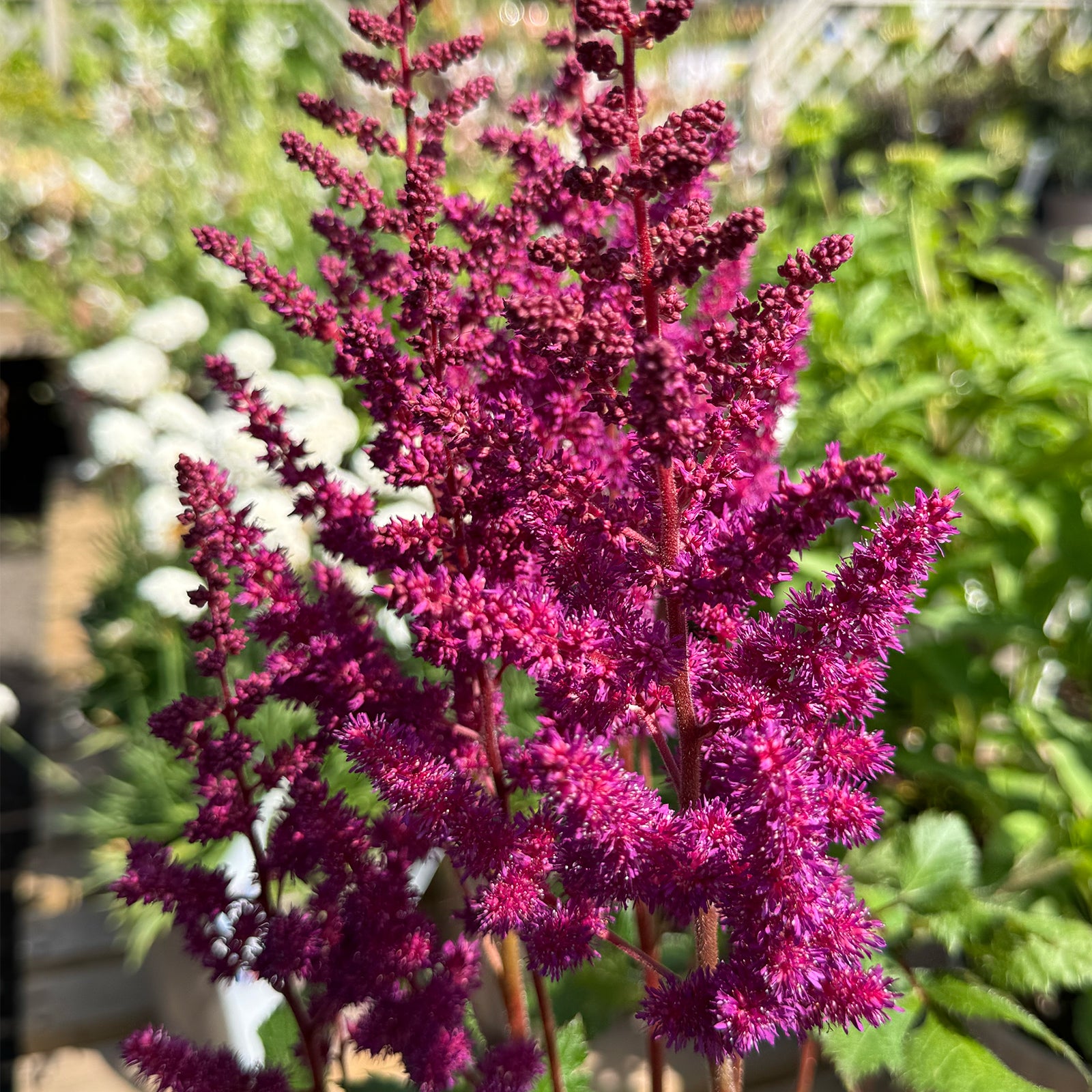
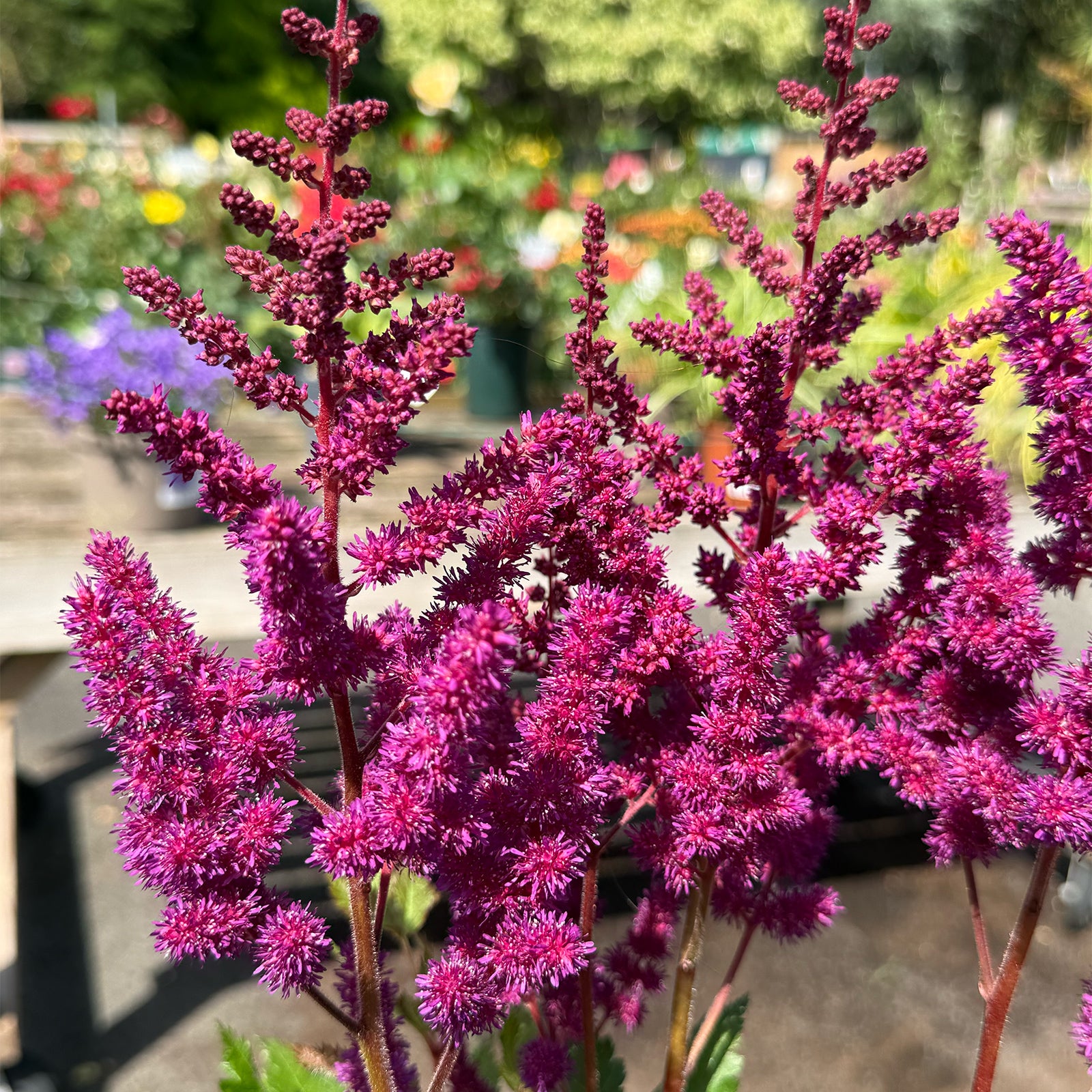
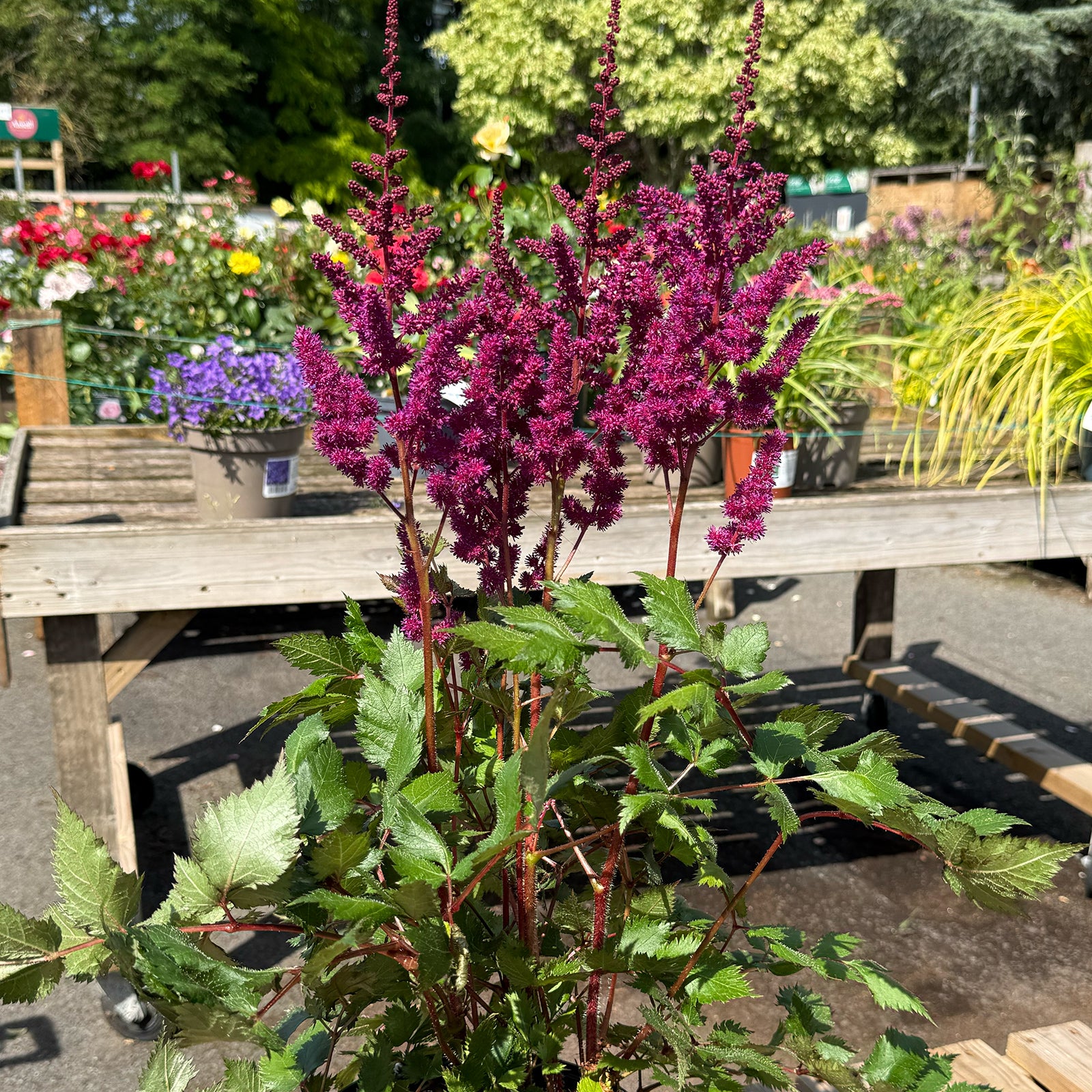
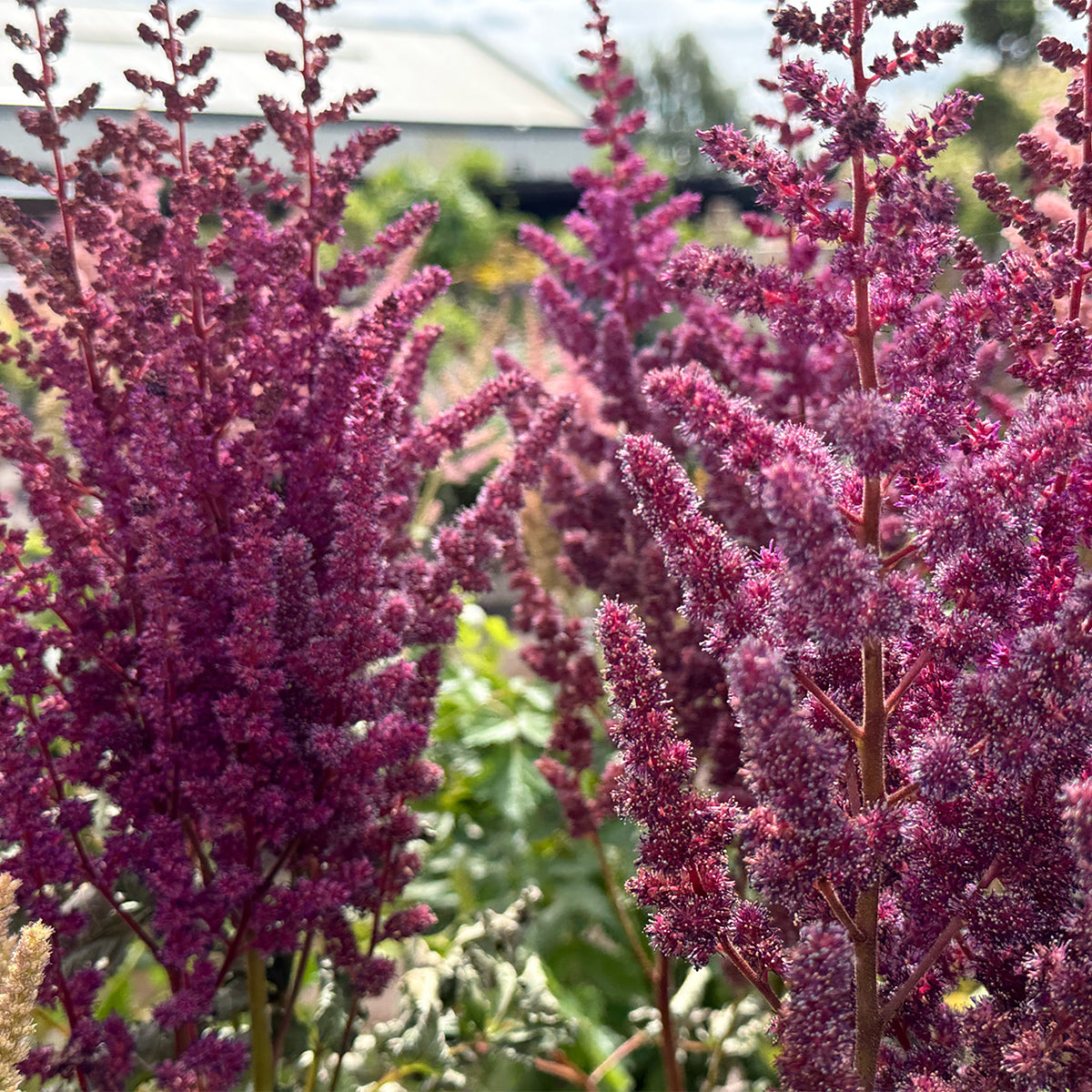
Astilbe chinensis 'Vision in Red' is a compact, clump-forming perennial grown for its dense, feathery plumes of red flowers. Deep red buds open to purple-red, held on dark red stems above a neat mound of ferny, bronze-green foliage. Flowering in mid to late summer, when many plants are fading, it brings rich colour to a shady or moist border and makes an excellent cut flower. It is one of the darker, later-flowering astilbes, and is happiest where the soil stays reliably moist.
-
Why we like it
Key features
What makes it special
Blooms into late summer
Good for cutting
Compact, clump-forming habit
WATCH
30 second portraits
Astilbe: feathery colour for damp, shady corners
Specs & details
The particulars
- Botanical name
- Astilbe chinensis 'Vision in Red'
- Common name
- Chinese astilbe
- Supplied as
- 3 litre pot
- Flower colour
- Red
- Eventual height
- 40-60cm
- Eventual spread
- 30-45cm
- Flowering period
- Summer
- Habit
- Clump-forming, upright perennial
- Life cycle
- Herbaceous perennial
- Hardiness
- Fully hardy in most parts of the UK.
- Aspect
- Partial shade to full shade
- Soil type
- Loam, clay
- Moisture
- Moist but well-drained
- Position
- Mid-border, waterside, shady border or container
- Plant spacing
- Space around 35cm apart (approximately 7 plants per m²)
- Growing skill
- Easy to grow
Plant calendar
When to plant, when it performs
Planting & care
Help it thrive
Planting guide
Plant in spring or autumn into rich, humus-rich, reliably moist soil in partial or full shade. Improve the soil with plenty of organic matter before planting, and add a thick mulch to lock in moisture. It will tolerate more sun only if the soil never dries out. Space plants around 35cm apart, and water in well.
Care tips
Keep the soil consistently moist at all times, as astilbe resent drying out and the foliage will brown and crisp at the edges if they do. Water generously through summer, especially in sunnier spots or containers. Deadheading is not essential, as the dried plumes give lasting interest. Divide congested clumps every three to four years in spring to keep them flowering well.
Winter care
A herbaceous perennial, so it dies back to the crown each winter and regrows from the base in spring. You can leave the dried plumes standing for winter interest, then cut the old growth back to ground level in early spring before new shoots appear. Take care not to disturb the crown in late winter when it can be hard to see, and keep the soil from drying out.