



Astrantia major 'Roma'
Masterwort
Couldn't load pickup availability
Supplied as an established plant in a 3 litre pot
Aspect
Full sun to partial shade
Hardiness
Fully hardy
Flowers
Summer, autumn
Soil
Loam, clay, moist humus-rich soil
About this plant
Delicate pink, quietly elegant
-
Description
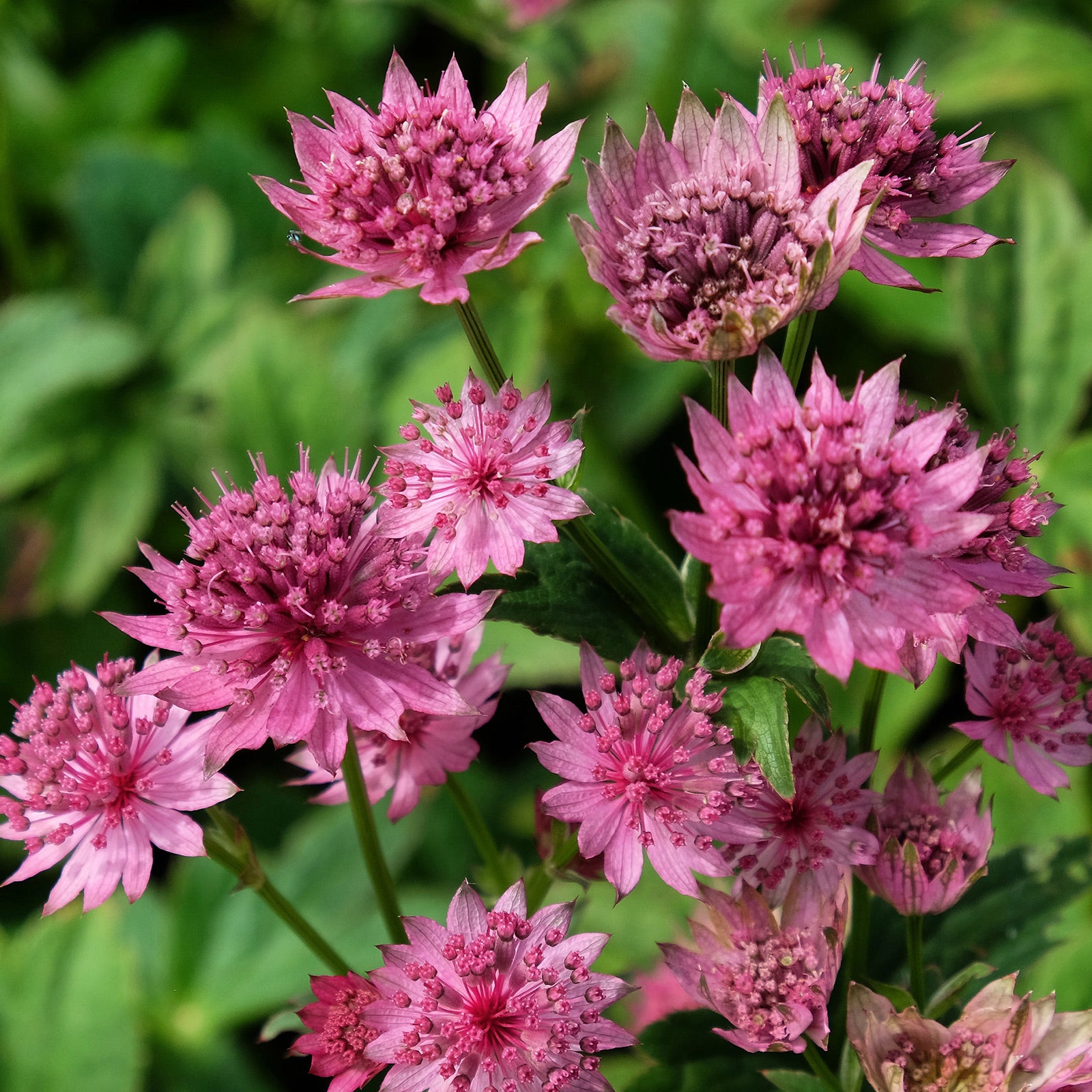
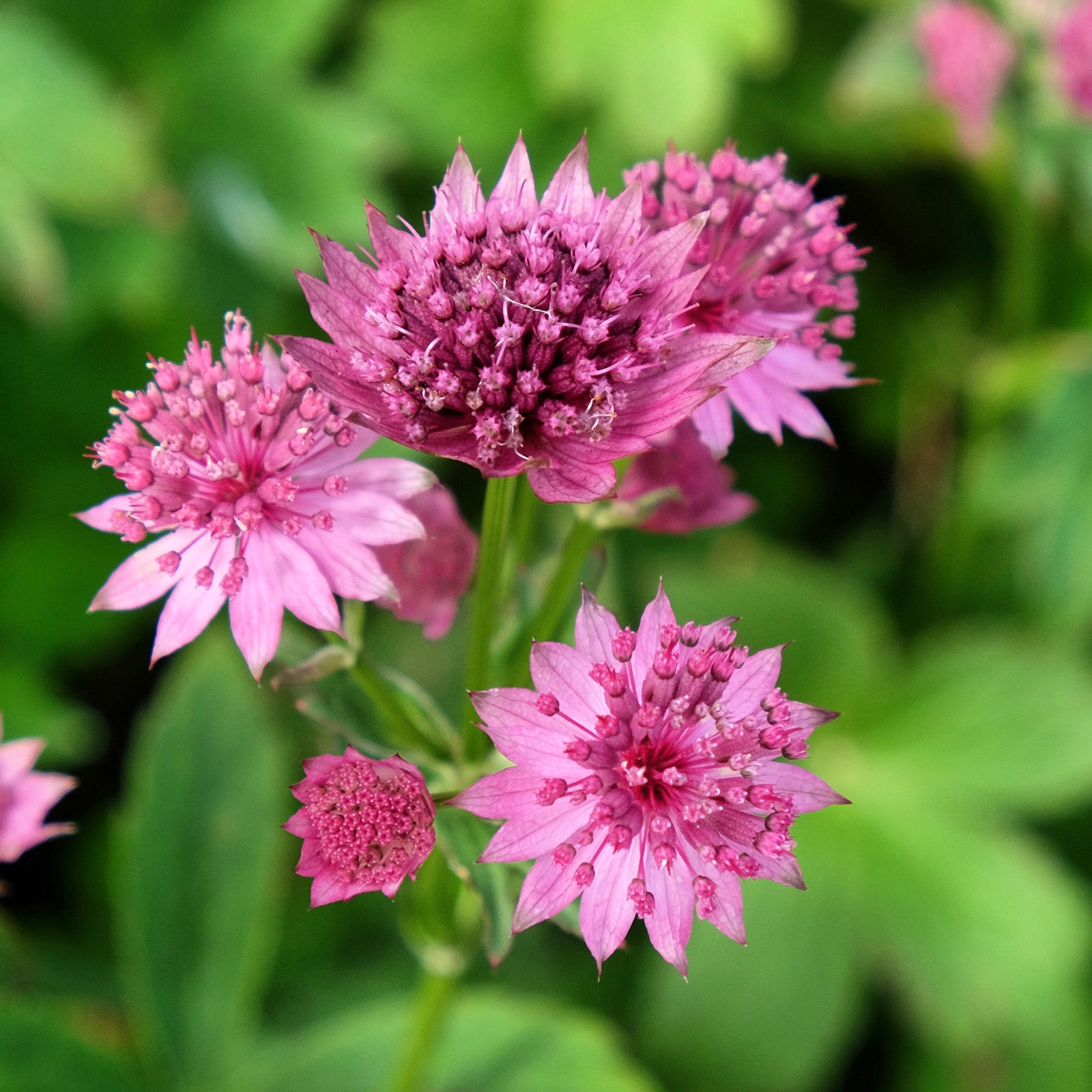
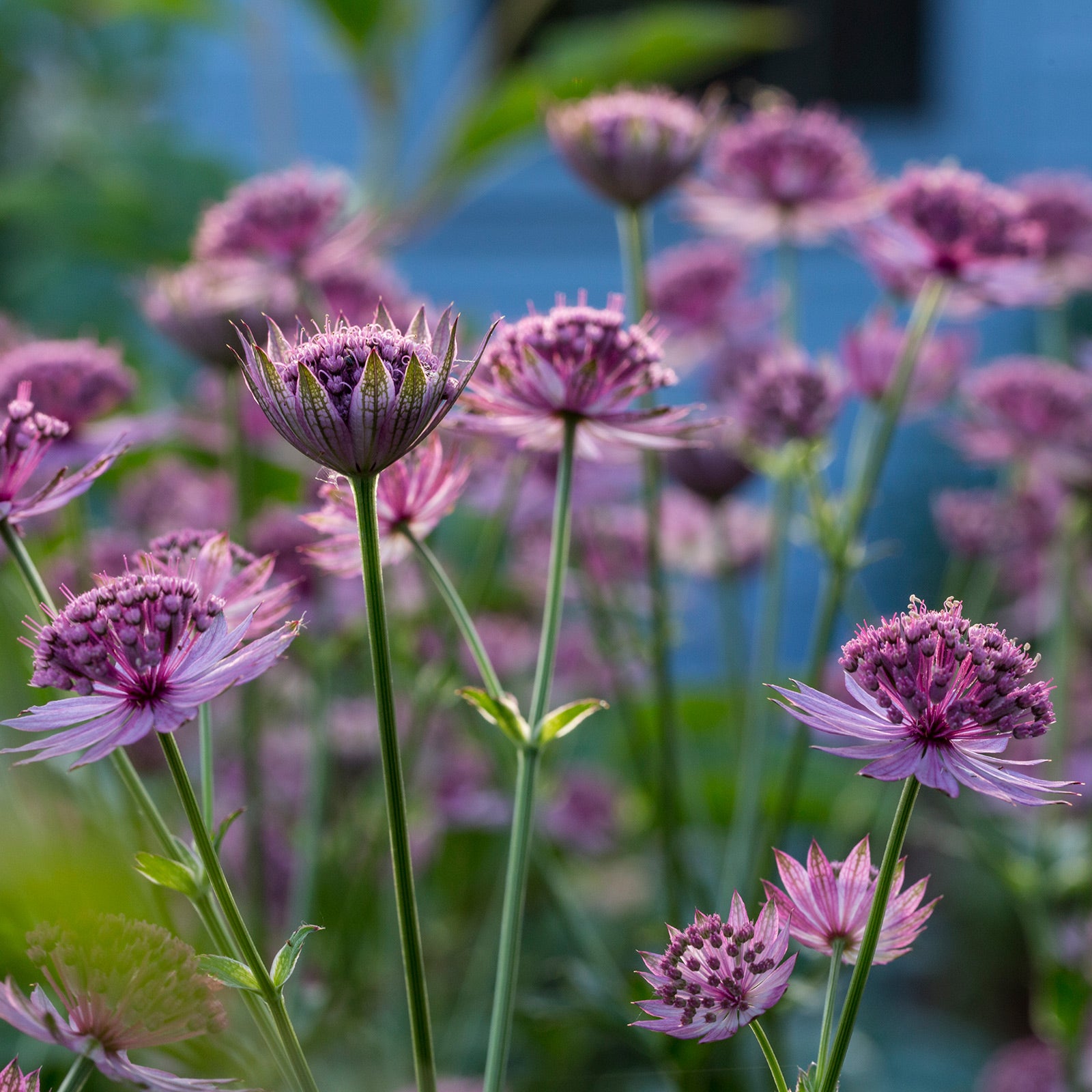
Astrantia major 'Roma' is an elegant perennial with intricate, pincushion-like flowers in a clear soft pink, surrounded by a papery collar of bracts, held above deeply lobed green foliage. It flowers over a long season from early summer into autumn and is a valuable nectar source for bees, hoverflies and other pollinators. It suits cottage garden borders and light shade beneath trees or shrubs. -
Why we like it
Key features
What makes it special
Good for cutting
Loved by bees & pollinators
Long flowering, late spring into summer
Fully hardy — comes back every year
Specs & details
The particulars
- Botanical name
- Astrantia major 'Roma'
- Common name
- Masterwort
- Supplied as
- 3 litre pot
- Flower colour
- Pink
- Eventual height
- 60 to 75cm
- Eventual spread
- 40 to 50cm
- Flowering period
- Summer, autumn
- Habit
- Upright, clump-forming perennial
- Life cycle
- Herbaceous perennial
- Hardiness
- Fully hardy
- Aspect
- Full sun to partial shade
- Soil type
- Loam, clay, moist humus-rich soil
- Moisture
- Moist but well-drained
- Position
- Mid-border, woodland edge, cottage garden planting
- Plant spacing
- 5 to 6 plants per m²
- Growing skill
- Easy to grow
Plant calendar
When to plant, when it performs
Planting & care
Help it thrive
Planting guide
Plant in reliably moist, humus-rich soil in full sun or partial shade, working in well-rotted organic matter before planting on lighter soils. Astrantia performs best where the soil does not dry out completely in summer. Water well after planting until established.
Care tips
Water during dry spells, particularly in the first growing season, as astrantia prefers soil that does not dry out for long periods. Deadhead regularly to prolong flowering, or leave some flowers to set seed for gentle self-seeding around the garden. Divide congested clumps every three to four years in spring or autumn.
Winter care
Fully hardy and needs no winter protection. Cut back flowered stems and foliage in autumn once flowering has finished, or leave standing over winter for structure, then clear away in early spring before new growth begins.