



Dahlia 'Moonfire'
Dahlia
Couldn't load pickup availability
Supplied as an established plant in a 3 litre pot
Aspect
Full sun
Hardiness
Half hardy. Lift tubers or mulch heavily over winter.
Flowers
Summer, Autumn
Soil
Loam, sand, chalk, clay
About this plant
Golden flowers on dark foliage, July to the frosts
-
Description
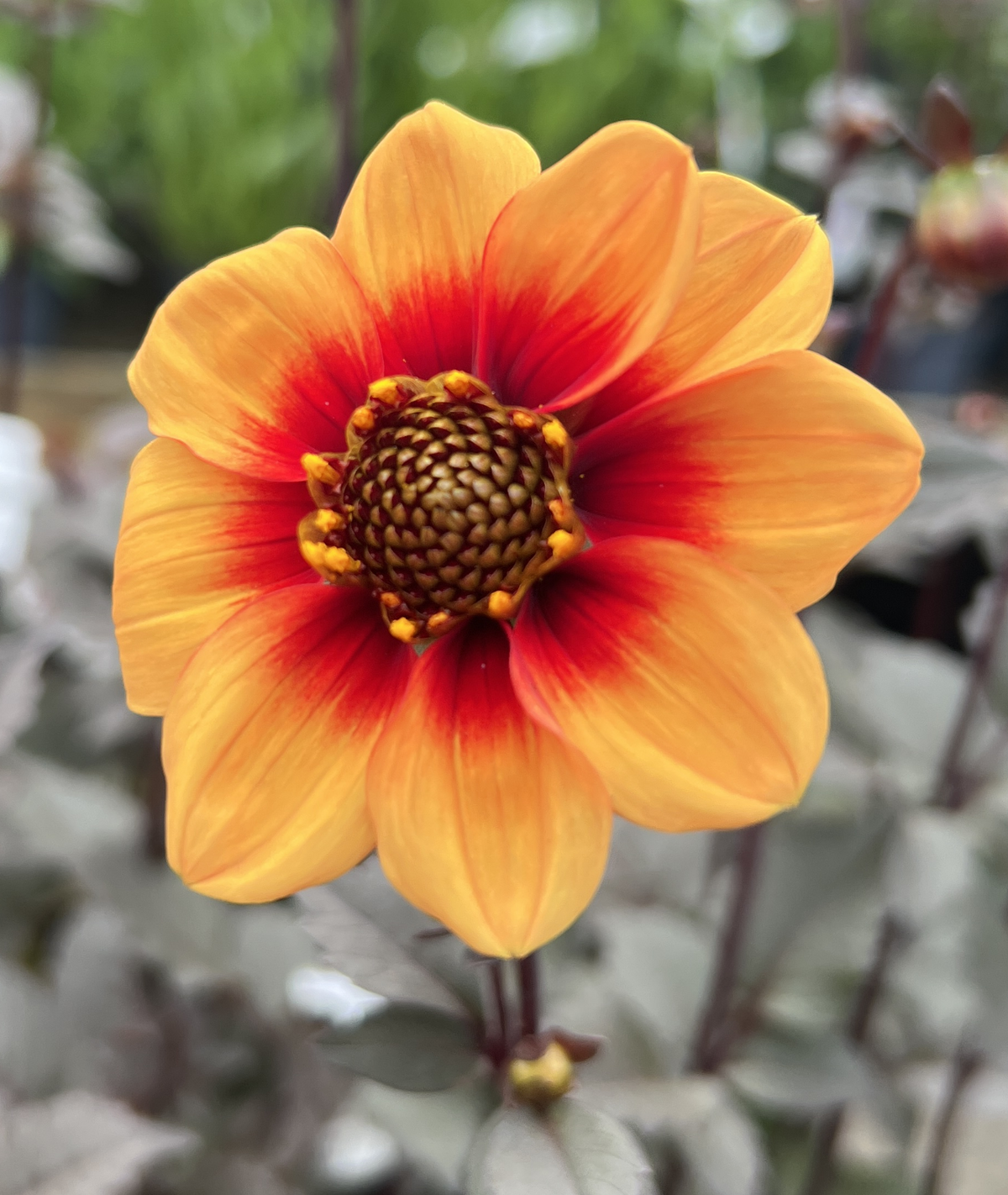
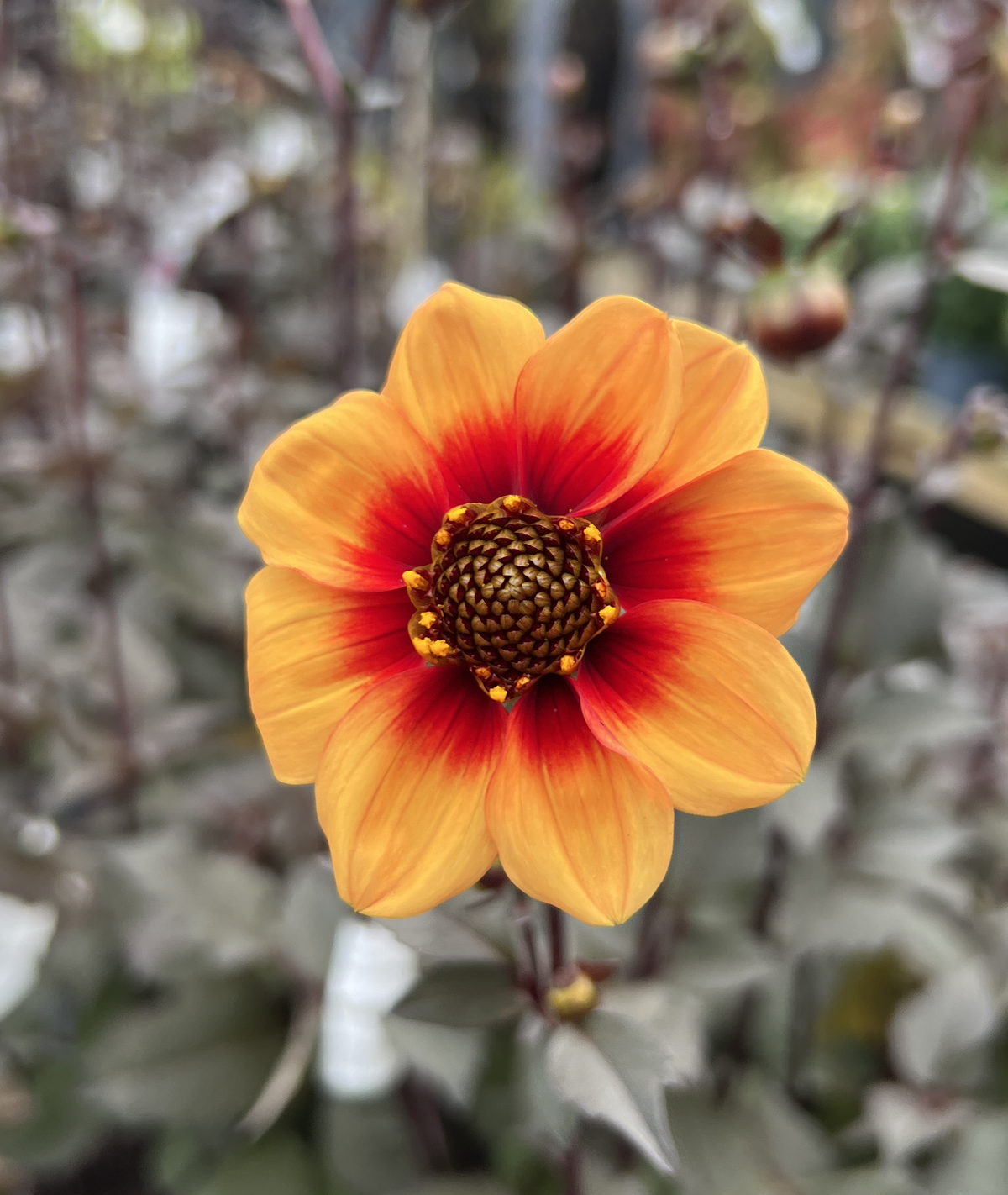
Dahlia 'Moonfire' is a compact single-flowered dahlia with golden-yellow petals, each flushed orange-red at the base around a dark central eye. The flowers sit above very dark bronze foliage, which gives the plant a warm, almost tropical look from midsummer until the first frosts. The open centres are easy for bees and butterflies to reach, making it one of the better dahlias for pollinators.
-
Why we like it
Key features
What makes it special
Loved by bees & pollinators
Good for cutting
Long-lasting blooms that persist for months
Specs & details
The particulars
- Botanical name
- Dahlia 'Moonfire'
- Common name
- Dahlia
- Supplied as
- 3 litre pot
- Flower colour
- Yellow
- Eventual height
- 60-80cm
- Eventual spread
- 40-50cm
- Flowering period
- Summer, Autumn
- Habit
- Bushy, upright tuberous perennial
- Life cycle
- Tuberous perennial
- Hardiness
- Half hardy. Lift tubers or mulch heavily over winter.
- Aspect
- Full sun
- Soil type
- Loam, sand, chalk, clay
- Moisture
- Moist but well-drained
- Position
- Front or mid-border, patio container
- Plant spacing
- 4 plants per m²
- Growing skill
- Easy to grow
Plant calendar
When to plant, when it performs
Planting & care
Help it thrive
Planting guide
Plant into fertile, well-drained soil in full sun, adding garden compost or well-rotted manure before planting. Set the plant at the same depth it sat in its pot and water well. Space around 45cm apart. In containers, use a good multi-purpose compost and a pot at least 30cm wide.
Care tips
Deadhead regularly to keep the flowers coming. Pinch out the growing tips early in the season for a bushier plant, and add a short cane in exposed spots. Watch for slugs on new growth in spring.
Winter care
Not reliably frost hardy. Once the first frosts blacken the foliage, cut the stems back to around 10cm. In colder gardens, lift the tubers, let them dry, then store them in trays of barely moist compost or sand somewhere cool and frost free until spring. In milder, well-drained gardens you can leave them in the ground under a thick layer of dry mulch. Plants in containers can be moved into a frost-free shed or greenhouse.