


Eucalyptus 'Baby Blue'
Eucalyptus
Couldn't load pickup availability
Supplied as an established plant in a 3 litre pot
Aspect
Full sun
Hardiness
Fully hardy
Flowers
Late winter through spring
Soil
Loam, sand, chalk
About this plant
Silvery foliage, fast growth, a florist's favourite
-
Description
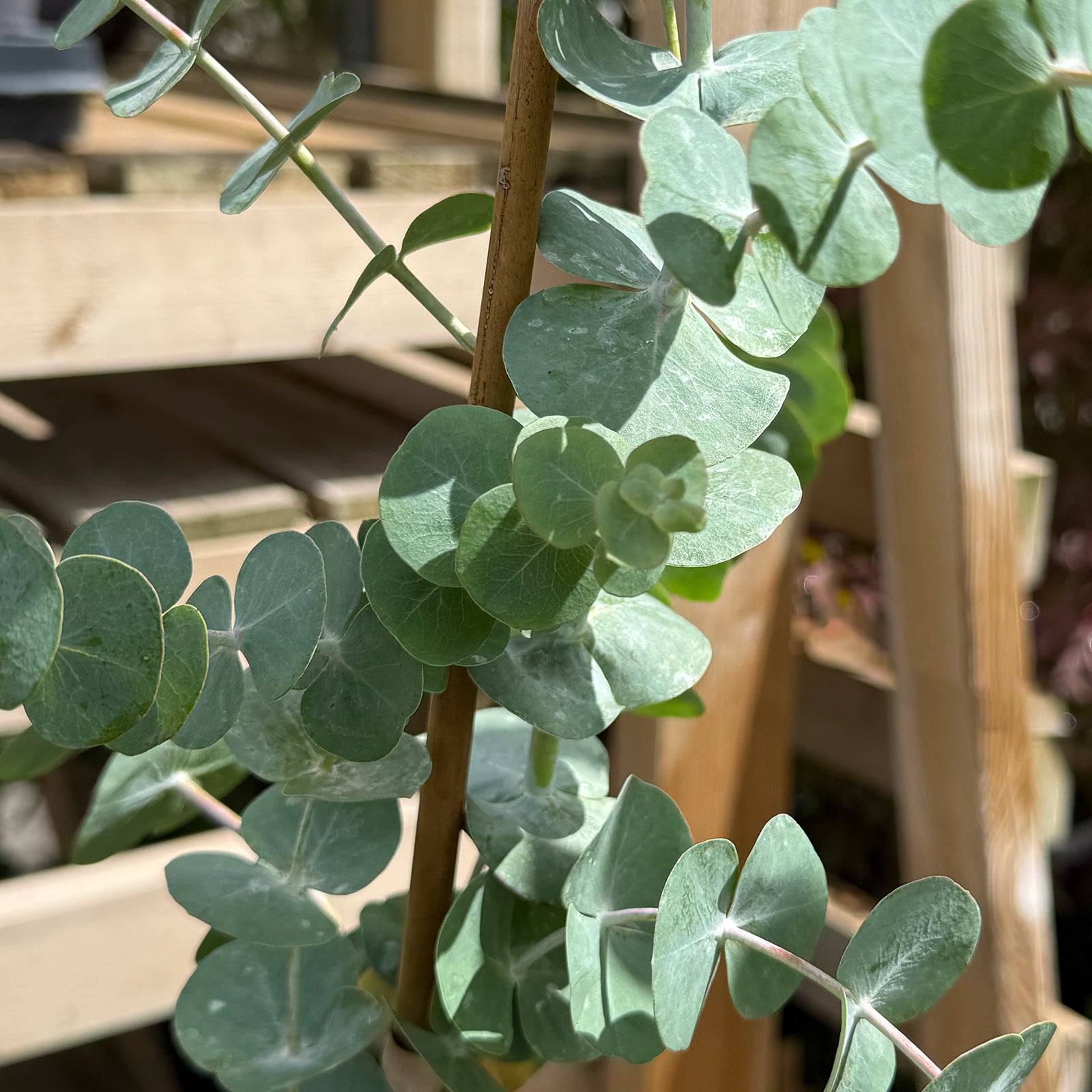
Eucalyptus 'Baby Blue' is a fast-growing, evergreen tree or large shrub valued for its small, rounded, intensely silver-blue juvenile foliage, which it retains for considerably longer than many eucalyptus species, making it especially useful for foliage and cut-flower work. Aromatic when crushed, the foliage provides year-round structure and colour, and the plant has a naturally bushy, well-branched habit when grown as a shrub or pruned regularly, though it will develop into a substantial tree if left unchecked. It is widely grown both as a striking specimen plant and, when cut back hard annually, as a more compact foliage shrub for borders and large containers, and its silvery leaves are a popular choice for flower arranging. -
Why we like it
Specs & details
The particulars
- Botanical name
- Eucalyptus 'Baby Blue'
- Common name
- Eucalyptus
- Supplied as
- 3 litre pot
- Flower colour
- Green
- Eventual height
- 300–600 cm if grown as a tree
- Eventual spread
- 200–400 cm if grown as a tree
- Flowering period
- Late winter through spring
- Habit
- Fast-growing evergreen tree, or bushy multi-stemmed shrub if pruned hard annually
- Life cycle
- Evergreen tree or large shrub
- Hardiness
- Fully hardy
- Aspect
- Full sun
- Soil type
- Loam, sand, chalk
- Moisture
- Well-drained
- Position
- Specimen tree, mid-border (if pruned hard), cutting garden, large patio container (young plants only)
- Plant spacing
- Best grown as a specimen
- Growing skill
- Easy to grow, though regular hard pruning is needed to maintain a compact shrub habit and the best juvenile foliage
Plant calendar
When to plant, when it performs
Planting & care
Help it thrive
Planting guide
Choose a sheltered, sunny position with well-drained soil; Eucalyptus 'Baby Blue' does not tolerate waterlogged conditions, particularly while young. Plant in late spring, once the risk of frost has passed, to give the plant the maximum possible time to establish a strong root system before its first winter; this is more important for eucalyptus than for many other shrubs and trees, as poorly established plants are considerably more vulnerable to winter losses. Stake young plants loosely for the first year or two if grown in an exposed position, as the fast top growth can make them susceptible to wind rock before the roots are well anchored. Water in thoroughly and keep consistently moist through the first one to two growing seasons. If you intend to grow this as a compact, hard-pruned shrub for cutting, decide on this approach early, as the pruning regime should begin once the plant is well established rather than being introduced to an already mature specimen.
Care tips
If growing 'Baby Blue' as a specimen tree, little pruning is required beyond removing any dead, damaged, or crossing growth. If growing as a compact, bushy shrub for the best display of juvenile foliage and a manageable size, cut all the previous season's growth back hard each spring, to within 15–30 cm of the base, once new growth is just beginning to show; this hard annual pruning is what keeps the plant compact and ensures a continuous supply of the prized small, rounded juvenile leaves rather than the longer, more sickle-shaped mature foliage that develops on unpruned growth. Water young plants regularly through their first two growing seasons; established plants are drought-tolerant and need little supplementary watering. No routine feeding is necessary on reasonable soils. For cut foliage, harvest stems at any point through the growing season; the foliage is long-lasting in a vase, fresh or dried.
Winter care
Eucalyptus 'Baby Blue' is fully hardy in most parts of the UK once established, though young plants in their first one to two winters benefit from some protection in colder or more exposed gardens. A dry mulch around the base in autumn helps protect the roots through the first winter or two. No pruning is necessary for winter protection, as eucalyptus are evergreen and do not require the same autumn tidying as deciduous plants. If grown as a hard-pruned coppiced shrub, the main pruning is carried out in spring rather than autumn, so the plant retains its foliage through winter for interest before being cut back as new growth begins.