



Ficus carica 'Brown Turkey'
Fig
Couldn't load pickup availability
Supplied as an established plant in a 3 litre pot
Aspect
Full sun
Hardiness
Fully hardy
Flowers
Summer
Soil
Loam, sand, chalk
About this plant
Bold foliage, sweet figs, surprisingly easy to grow
-
Description
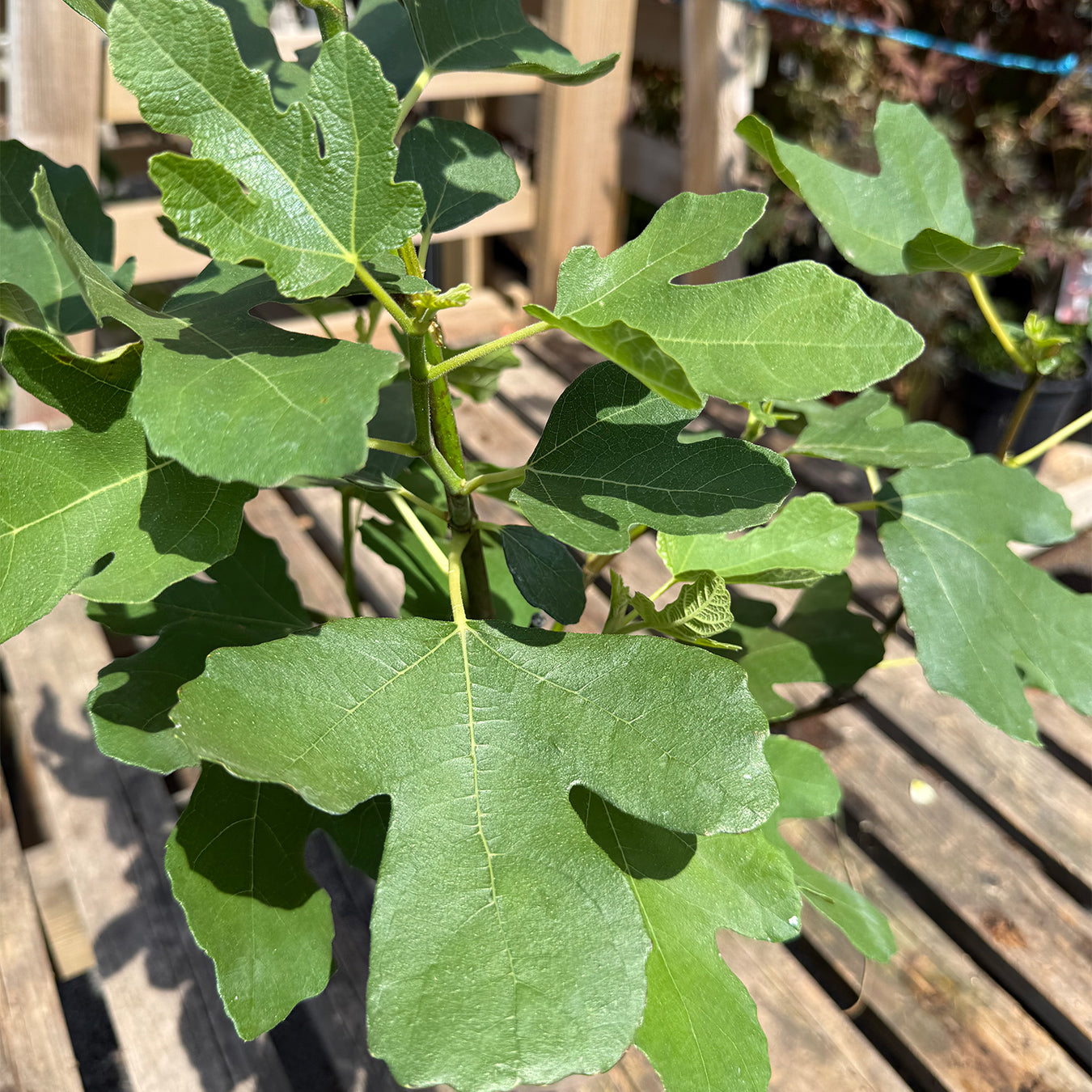
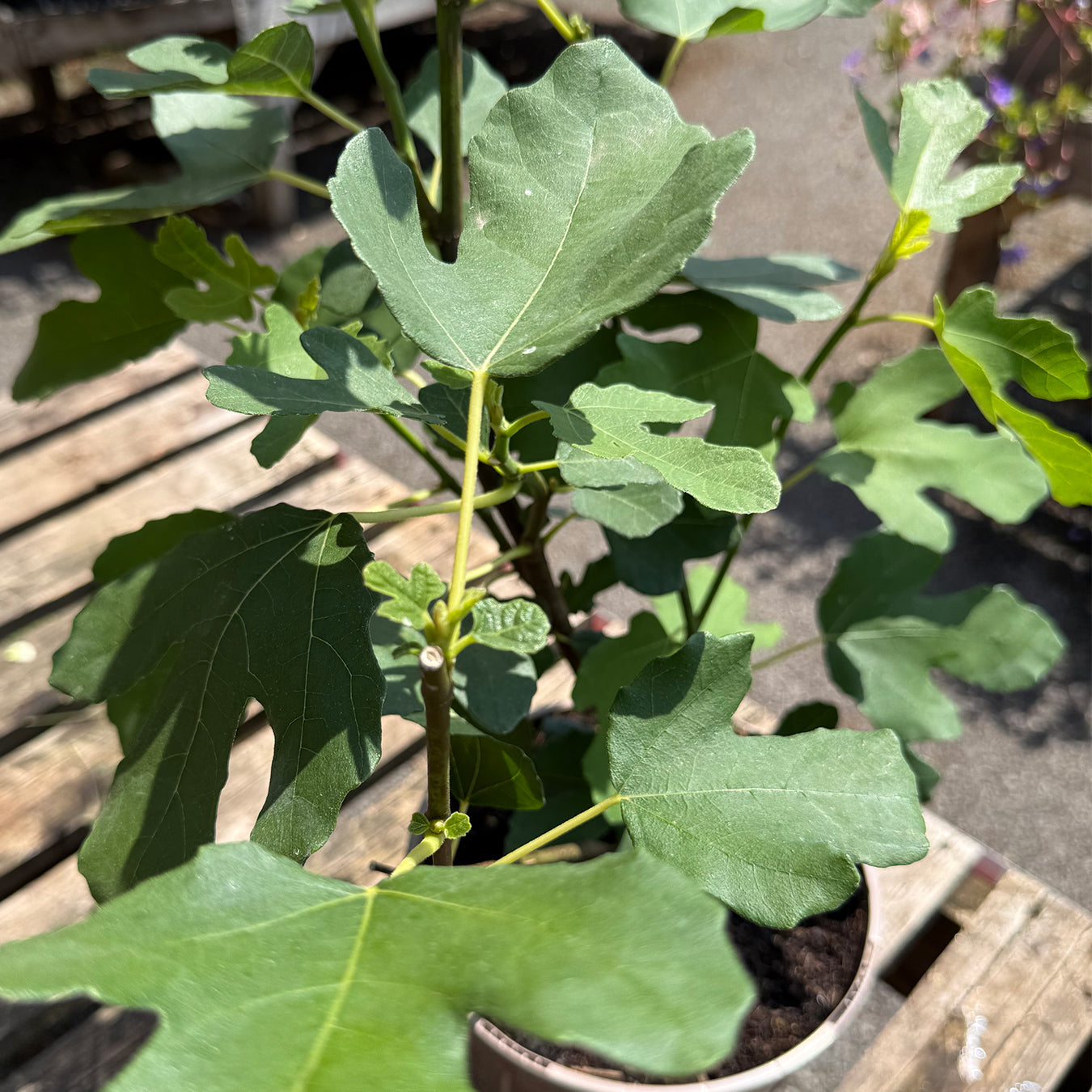
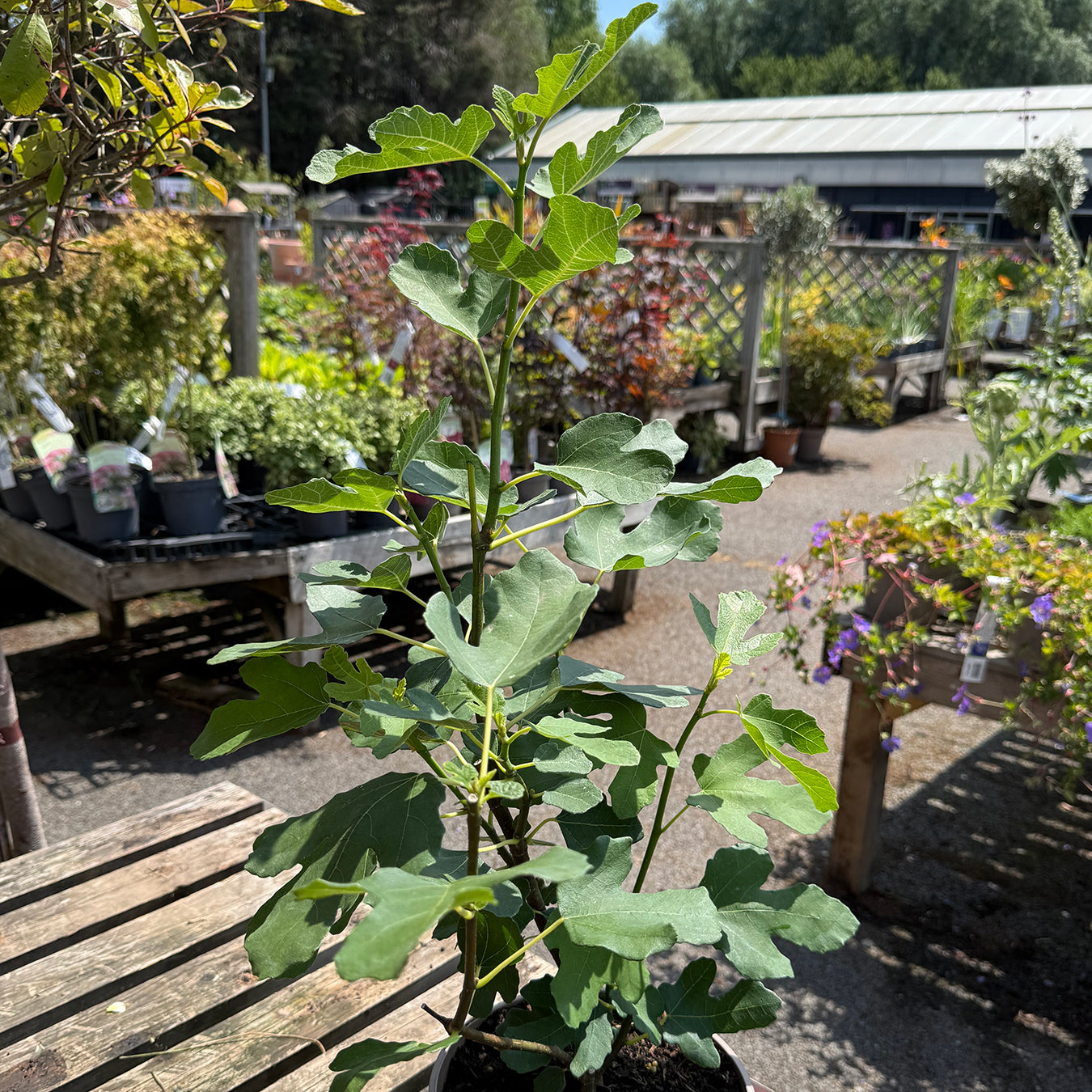
Ficus carica 'Brown Turkey' is a vigorous, deciduous tree or large shrub grown for its sweet, richly flavoured purple-brown figs as well as its handsome, deeply lobed foliage, which provides a strongly architectural, almost tropical presence in the garden through summer. One of the most reliable and widely grown fig cultivars for UK conditions, it produces a main crop of figs in early autumn, and in a warm, sheltered position can also produce a smaller early crop in midsummer from fruit that formed the previous autumn. It is well suited to growing against a warm wall, in a large container, or as a specimen plant in a sheltered, sunny garden, and is valued as much for its bold foliage and garden presence as for its fruit. -
Why we like it
Key features
What makes it special
Drought tolerant
Specs & details
The particulars
- Botanical name
- Ficus carica 'Brown Turkey'
- Common name
- Fig
- Supplied as
- 3 litre pot
- Flower colour
- Green
- Eventual height
- 250–400 cm
- Eventual spread
- 250–400 cm
- Flowering period
- Summer
- Habit
- Vigorous, spreading, multi-stemmed deciduous tree or large shrub
- Life cycle
- Deciduous tree or large shrub
- Hardiness
- Fully hardy
- Aspect
- Full sun
- Soil type
- Loam, sand, chalk
- Moisture
- Well-drained
- Position
- Specimen plant, warm wall, sheltered courtyard, large patio container
- Plant spacing
- Best grown as a specimen
- Growing skill
- Easy to grow, though root restriction is recommended to encourage fruiting over excessive vegetative growth
Plant calendar
When to plant, when it performs
Planting & care
Help it thrive
Planting guide
Figs fruit best when their roots are restricted, as unrestricted root growth encourages excessive leafy growth at the expense of fruit. When planting in the open ground, dig a planting pit roughly 60 cm × 60 cm × 60 cm and line the sides and base with paving slabs or a similar barrier, leaving the bottom open or with rubble for drainage, then backfill with soil; this contains the roots and encourages fruiting. Alternatively, grow in a large container of at least 40–45 cm diameter filled with a loam-based compost, which achieves the same root-restricting effect with even less effort. Choose the warmest, most sheltered position available, ideally against a south- or west-facing wall, where reflected heat significantly improves the ripening of fruit. Water in thoroughly after planting and keep consistently moist through the first growing season.
Care tips
Pruning is best carried out in spring to remove any dead, damaged, or crossing branches and to maintain an open, well-spaced framework that allows light to reach the developing fruit. A second, lighter prune in midsummer, pinching out the growing tips of the current season's shoots once they have produced five or six leaves, encourages the plant to focus energy on ripening fruit and helps initiate the embryonic figs that will become next year's early crop. Do not remove the small pea-sized embryonic figs visible at the shoot tips in autumn, as these are essential for the following summer's early crop. Water container-grown and root-restricted plants regularly through the growing season, as restricted roots dry out more quickly. Feed with a balanced fertiliser in spring, and a potassium-rich tomato feed through summer to support fruit development.
Winter care
Ficus carica 'Brown Turkey' is fully hardy in most parts of the UK once established, though young plants and those in colder or more exposed gardens benefit from some winter protection in their first few years. In autumn, the small embryonic figs that will form next year's early crop are visible at the tips of the shoots; these should be left in place over winter, as they are what produces the midsummer crop the following year. In cold or exposed gardens, wrap these embryonic figs and the shoot tips loosely with horticultural fleece in late autumn to protect them from hard frost, removing the fleece in spring. Established plants grown against a warm wall rarely need this protection. Container-grown plants in very cold regions can be moved to a sheltered position or unheated greenhouse for the coldest part of winter.