



Geum 'Scarlet Tempest'
Avens
Couldn't load pickup availability
Supplied as an established plant in a 3 litre pot




Aspect
Full sun to partial shade
Hardiness
Fully hardy across the UK
Flowers
May – July
Soil
Loam, sandy, well-drained soils
About this plant
A storm of scarlet, from May to July
-
Description
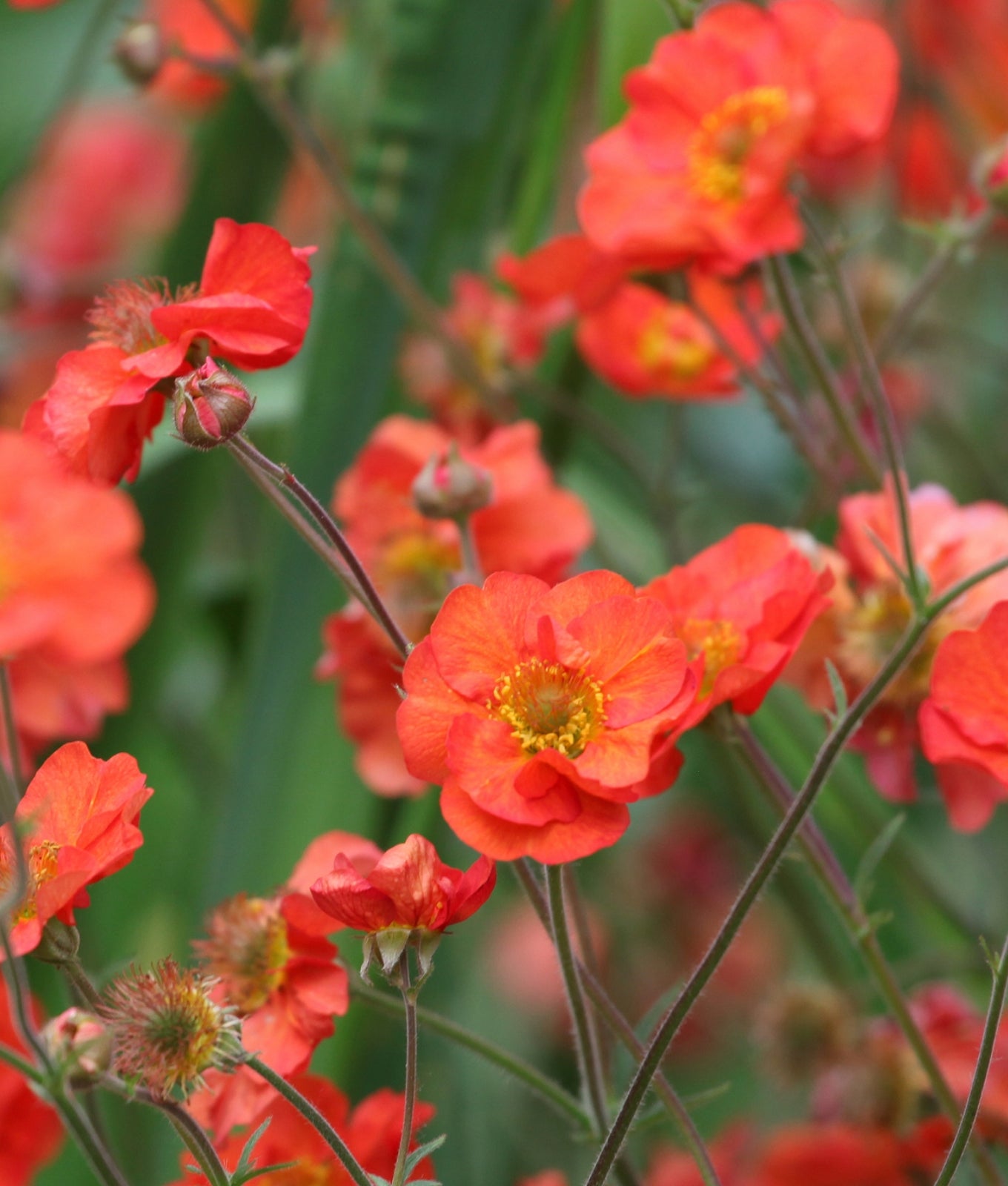
A vibrant and free-flowering perennial, Geum 'Scarlet Tempest' produces masses of semi-double scarlet-red blooms that dance above fresh green foliage. It brings a lively splash of colour to borders and containers from late spring into summer.
-
Why we like it
Key features
What makes it special
Bright scarlet-red semi-double flowers
Loved by bees & pollinators
Long flowering, late spring into summer
Good for cutting
Easy to grow & low maintenance
Compact, clump-forming habit
Fully hardy — comes back every year
Ideal for naturalistic planting
WATCH
30 second portraits
Geums in thirty seconds
Specs & details
The particulars
- Botanical name
- Geum 'Scarlet Tempest'
- Common name
- Avens
- Supplied as
- 3 litre pot
- Flower colour
- Red
- Eventual height
- 40–60cm
- Eventual spread
- 30 – 45cm
- Flowering period
- May – July
- Habit
- Clump-forming perennial
- Life cycle
- Herbaceous perennial
- Hardiness
- Fully hardy across the UK
- Aspect
- Full sun to partial shade
- Soil type
- Loam, sandy, well-drained soils
- Moisture
- Moist but well-drained
- Position
- Front or mid-border
- Plant spacing
- 5 plants per m²
- Growing skill
- Easy to grow
Plant calendar
When to plant, when it performs
Planting & care
Help it thrive
Planting guide
Plant in spring or autumn in fertile, well-drained soil. Choose a sunny or lightly shaded position. Space plants to allow air movement and reduce the risk of mildew. Deadhead regularly to encourage more blooms and extend the flowering period.
Care tips
Deadhead spent flowers to prolong blooming. Water during dry spells, especially in the first season. Divide clumps every few years in spring to maintain vigour. Avoid overly wet conditions in winter.
Winter care
Cut back faded foliage in late autumn or leave until early spring for added protection. Apply a light mulch around the crown to guard against cold and wet conditions. Ensure good drainage over winter to prevent rot.