



Hibiscus syriacus 'Red Heart'
Rose of Sharon
Couldn't load pickup availability
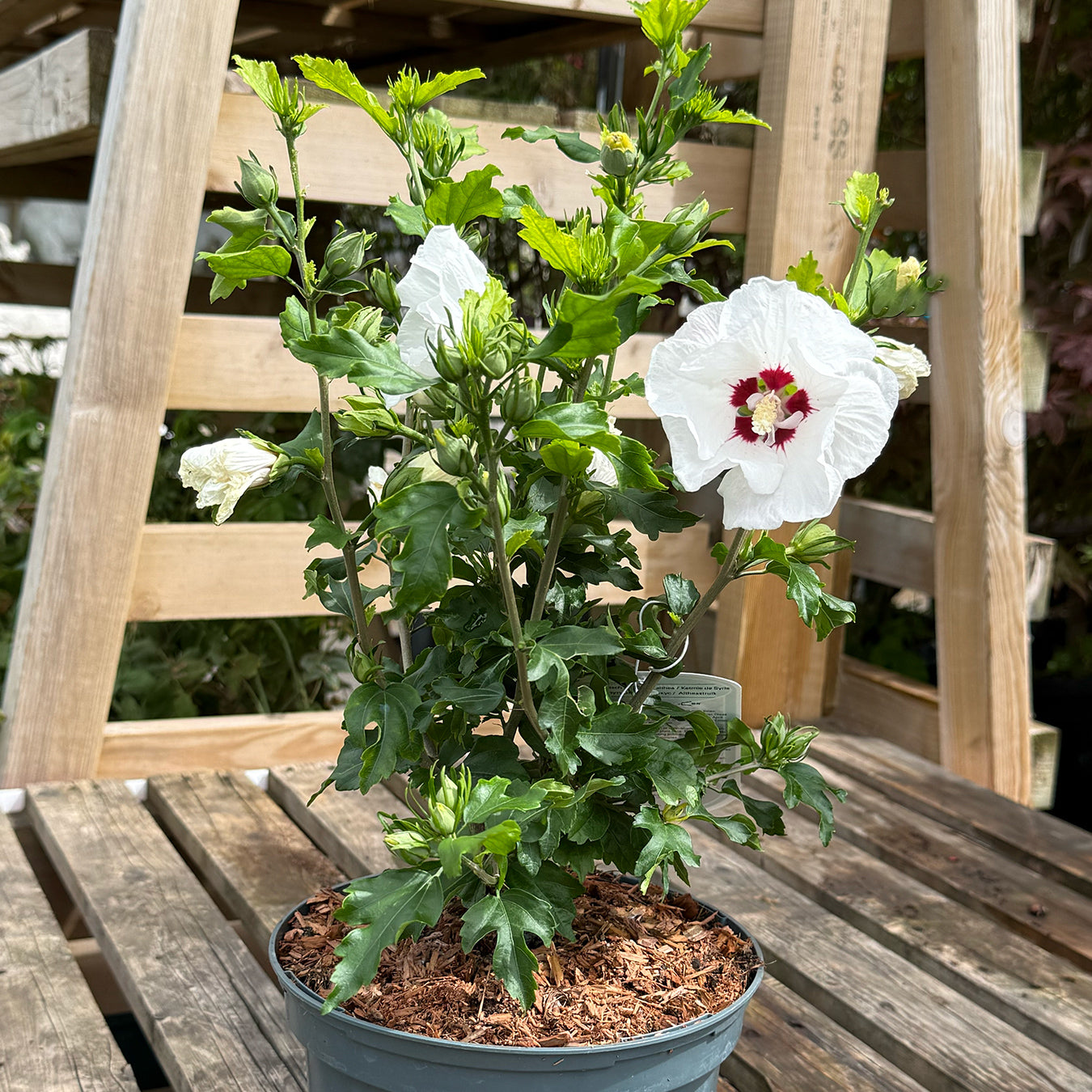
Supplied as an established plant in a 3 litre pot
Aspect
Full sun to partial shade
Hardiness
Fully hardy in most parts of the UK.
Flowers
Summer
Soil
Loam, clay, sand, chalk
About this plant
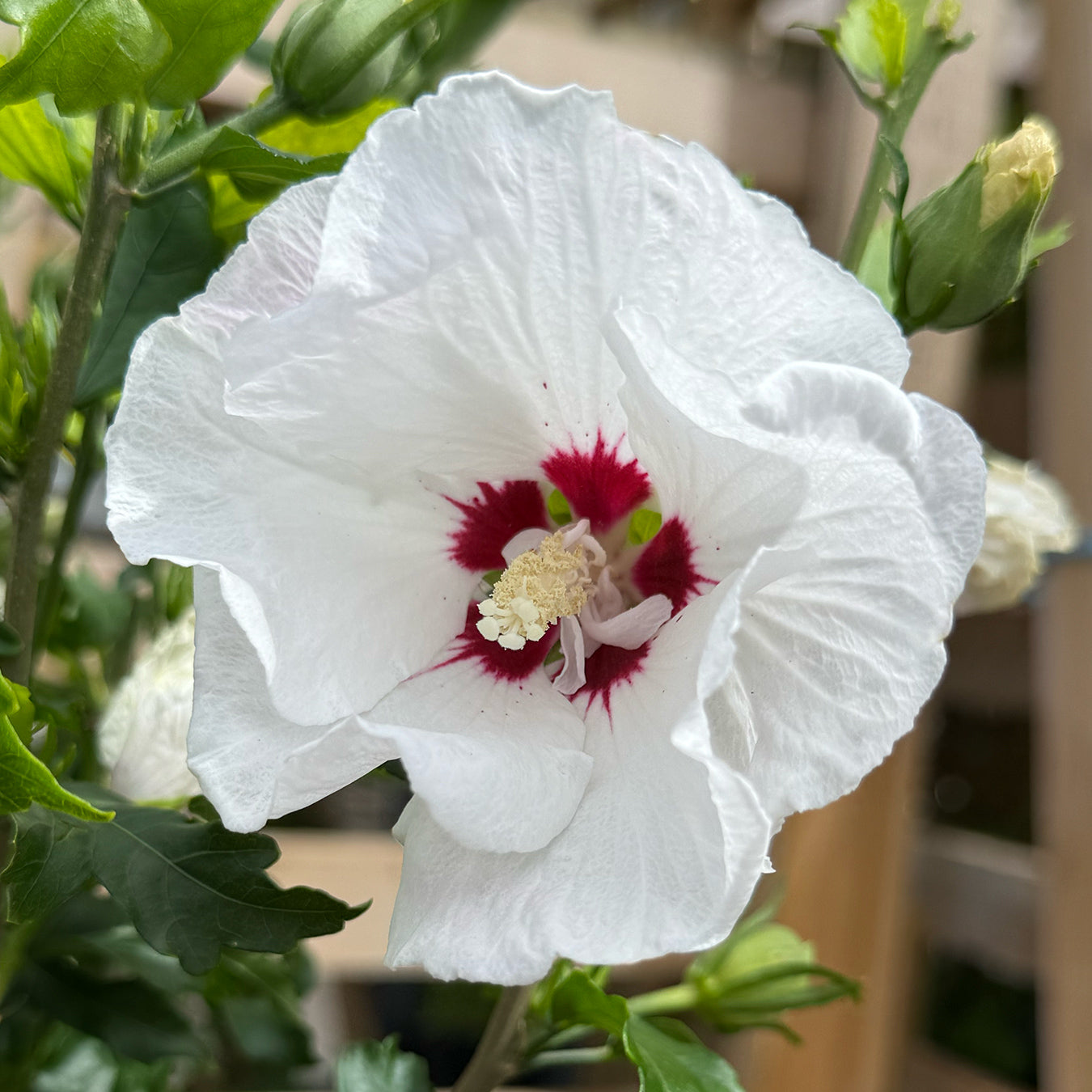
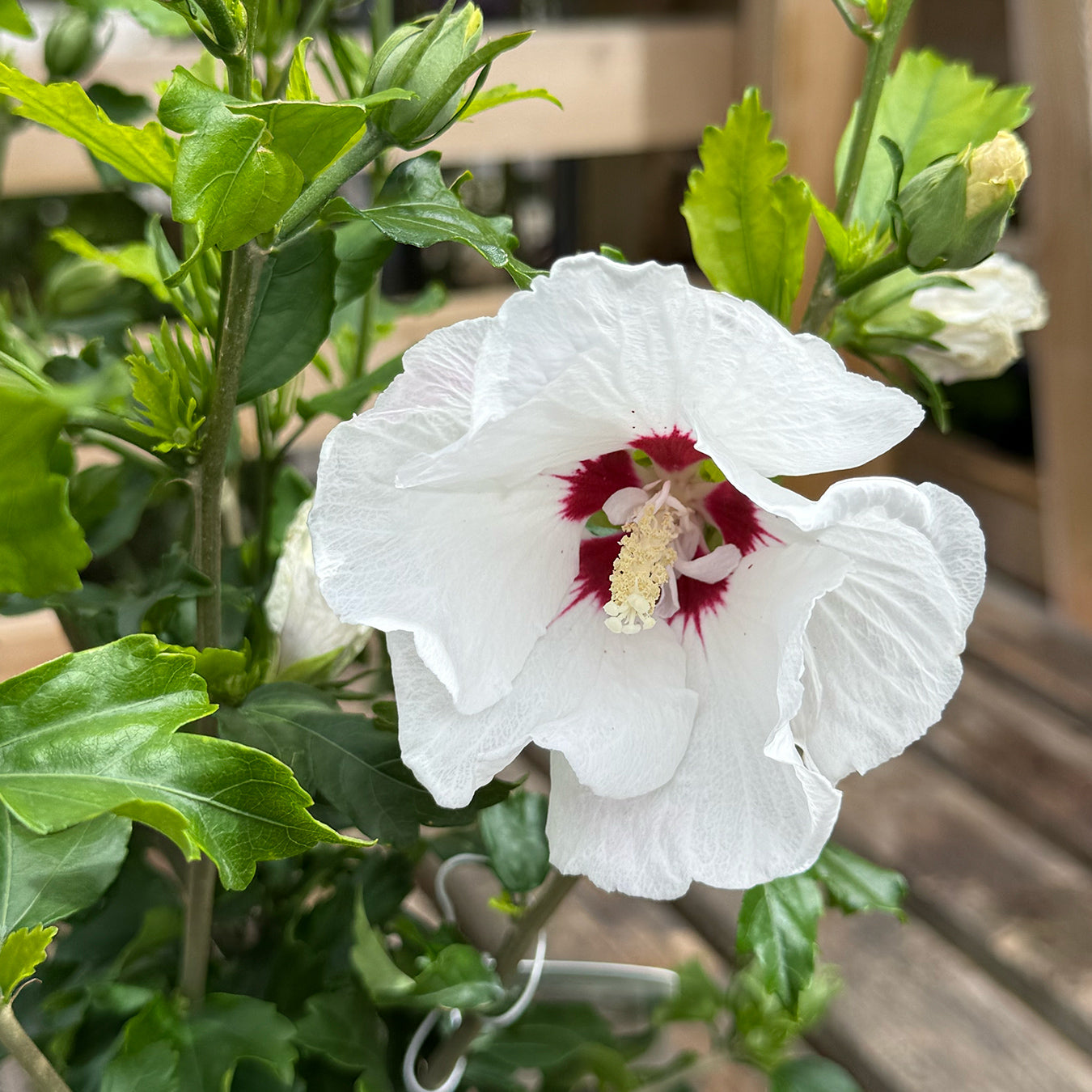
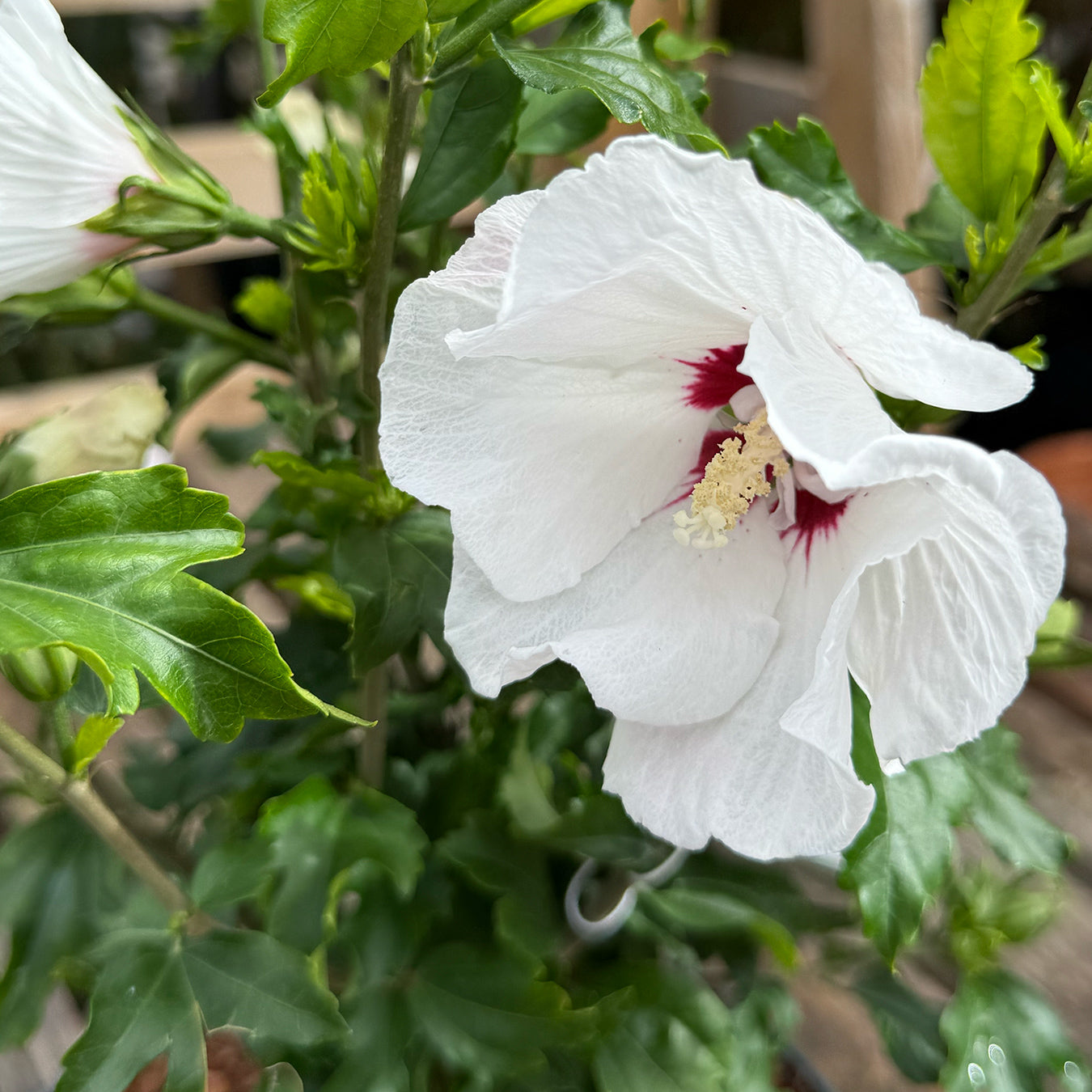
Exotic white blooms with a ruby heart, all summer
-
Description
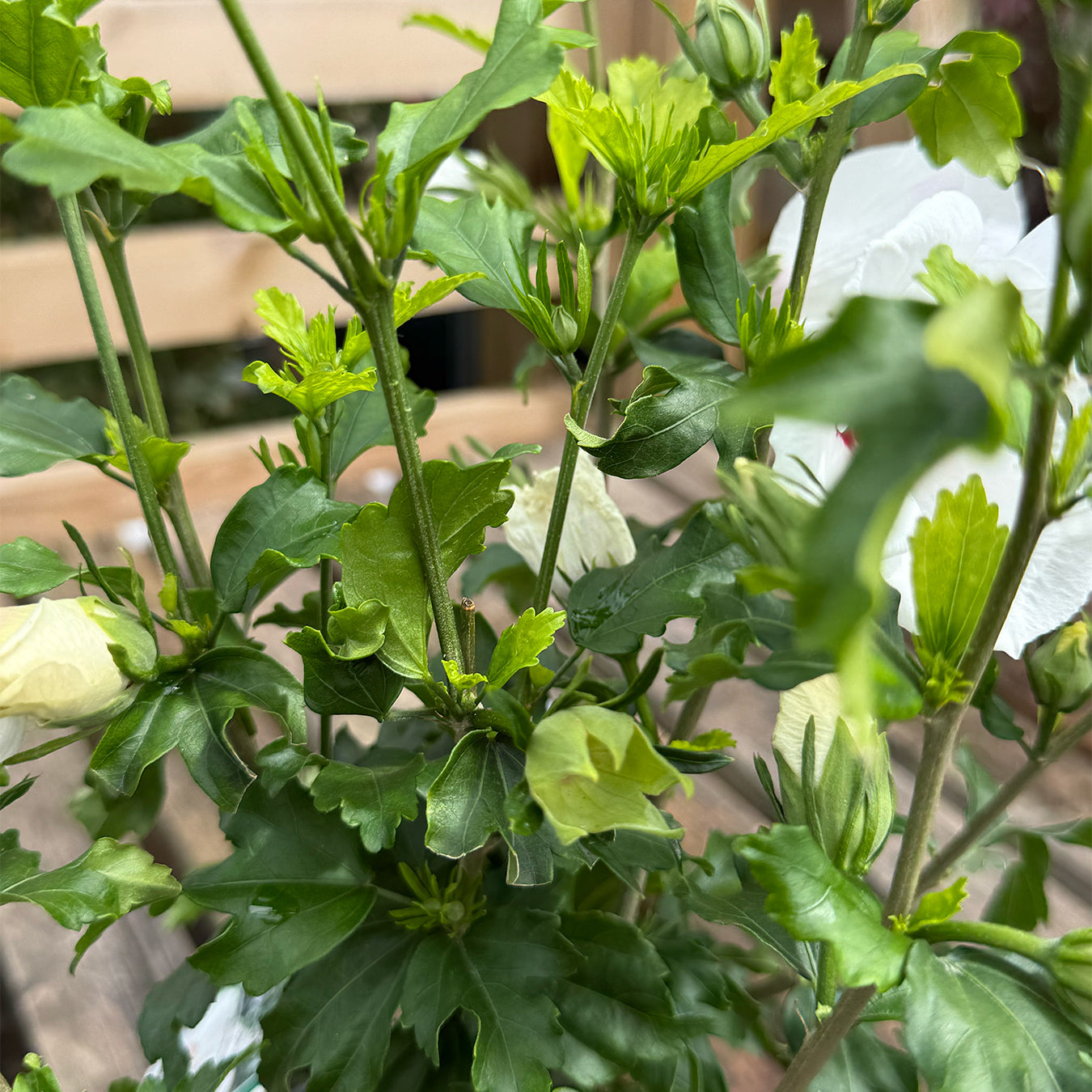
Hibiscus syriacus 'Red Heart' is a hardy, deciduous shrub grown for its large, single, pure white flowers, each marked with a bold ruby-red centre around a creamy stamen. Borne in succession from mid to late summer into autumn, the trumpet-shaped blooms bring an exotic, almost tropical look to a fully hardy plant. Upright and vase-shaped, it makes a striking specimen, a late-summer flowering hedge, or a container plant for a sunny spot, and its late-season nectar is valuable for bees and butterflies.
-
Why we like it
Key features
What makes it special
Loved by bees & pollinators
Long flowering, late spring into summer
Fully hardy — comes back every year
Exotic, tropical look
Specs & details
The particulars
- Botanical name
- Hibiscus syriacus 'Red Heart'
- Common name
- Rose of Sharon
- Supplied as
- 3 litre pot
- Flower colour
- White
- Eventual height
- 2-2.5m (up to 3m; can be kept smaller by pruning)
- Eventual spread
- 1.5-2.5m
- Flowering period
- Summer
- Habit
- Upright, vase-shaped deciduous shrub
- Life cycle
- Deciduous shrub
- Hardiness
- Fully hardy in most parts of the UK.
- Aspect
- Full sun to partial shade
- Soil type
- Loam, clay, sand, chalk
- Moisture
- Moist but well-drained
- Position
- Back or mid-border, specimen, hedge or large container
- Plant spacing
- Usually grown as a specimen, allowing around 1.5 to 2m of space. For a hedge, plant about 1m apart.
- Growing skill
- Easy to grow
Plant calendar
When to plant, when it performs
Planting & care
Help it thrive
Planting guide
Plant in spring or autumn into moist but well-drained, fertile soil in full sun to partial shade. It is unfussy about soil and tolerates most types, but dislikes both waterlogging and complete drought, either of which can cause bud drop. Full sun gives the best flowering. Water in well and keep watered through the first season. Give it room to reach its full size, or prune to keep it smaller. In containers, use a loam-based compost.
Care tips
Water regularly while establishing and in dry spells, as the flower buds can drop if the plant dries out completely or sits too wet. It flowers on new growth, so prune in late winter or early spring, shortening the previous year's stems to shape the shrub and encourage larger blooms. Deadheading is not needed. If grafted, remove any shoots arising from below the graft union.