



Hydrangea paniculata 'Little Lime'
Panicle hydrangea
Couldn't load pickup availability
Supplied as an established plant in a 3 litre pot
Aspect
Full sun to partial shade
Hardiness
Fully hardy in most parts of the UK.
Flowers
Summer to autumn
Soil
Loam, sand, clay, chalk
About this plant
From lime-green to burgundy; a shrub for all seasons
-
Description
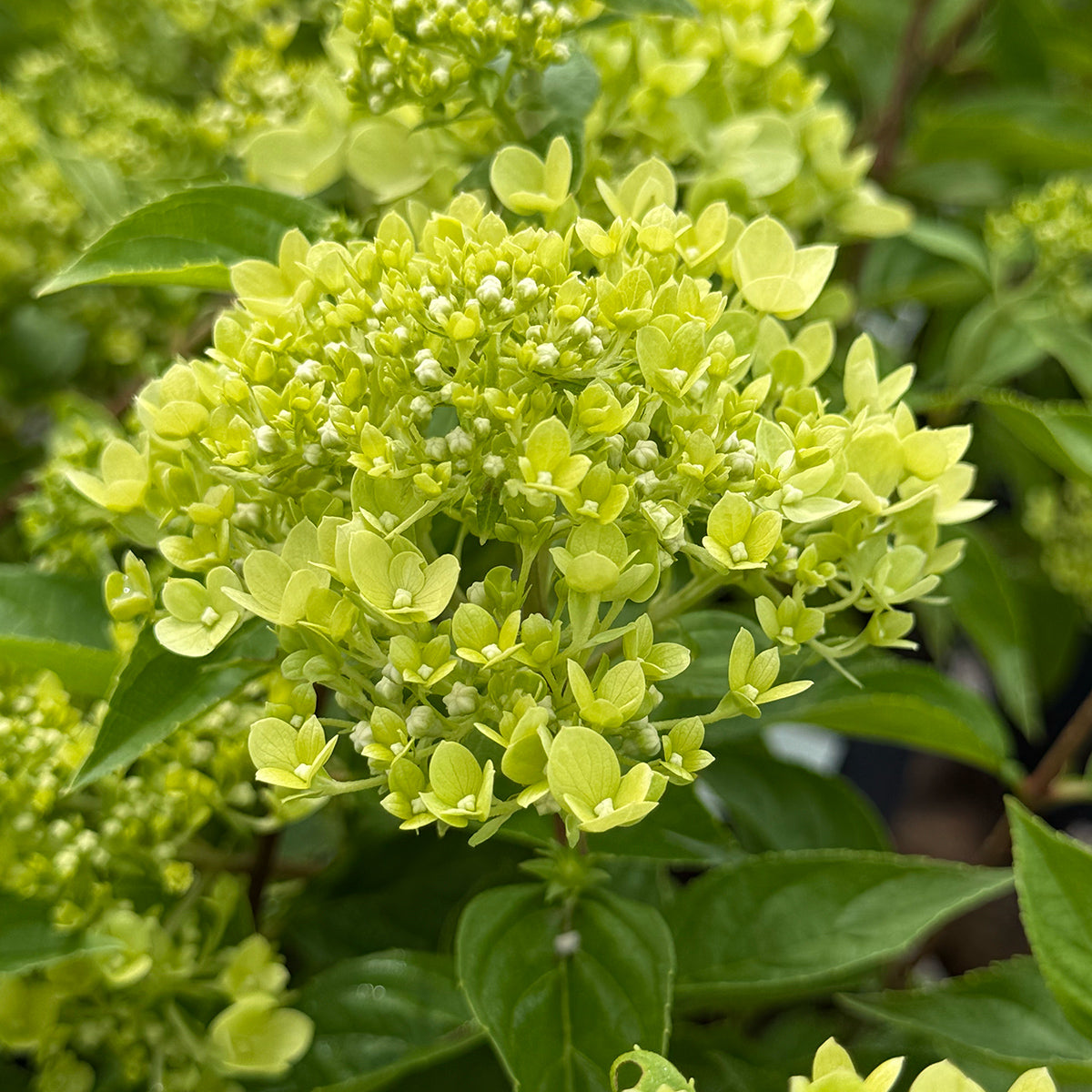
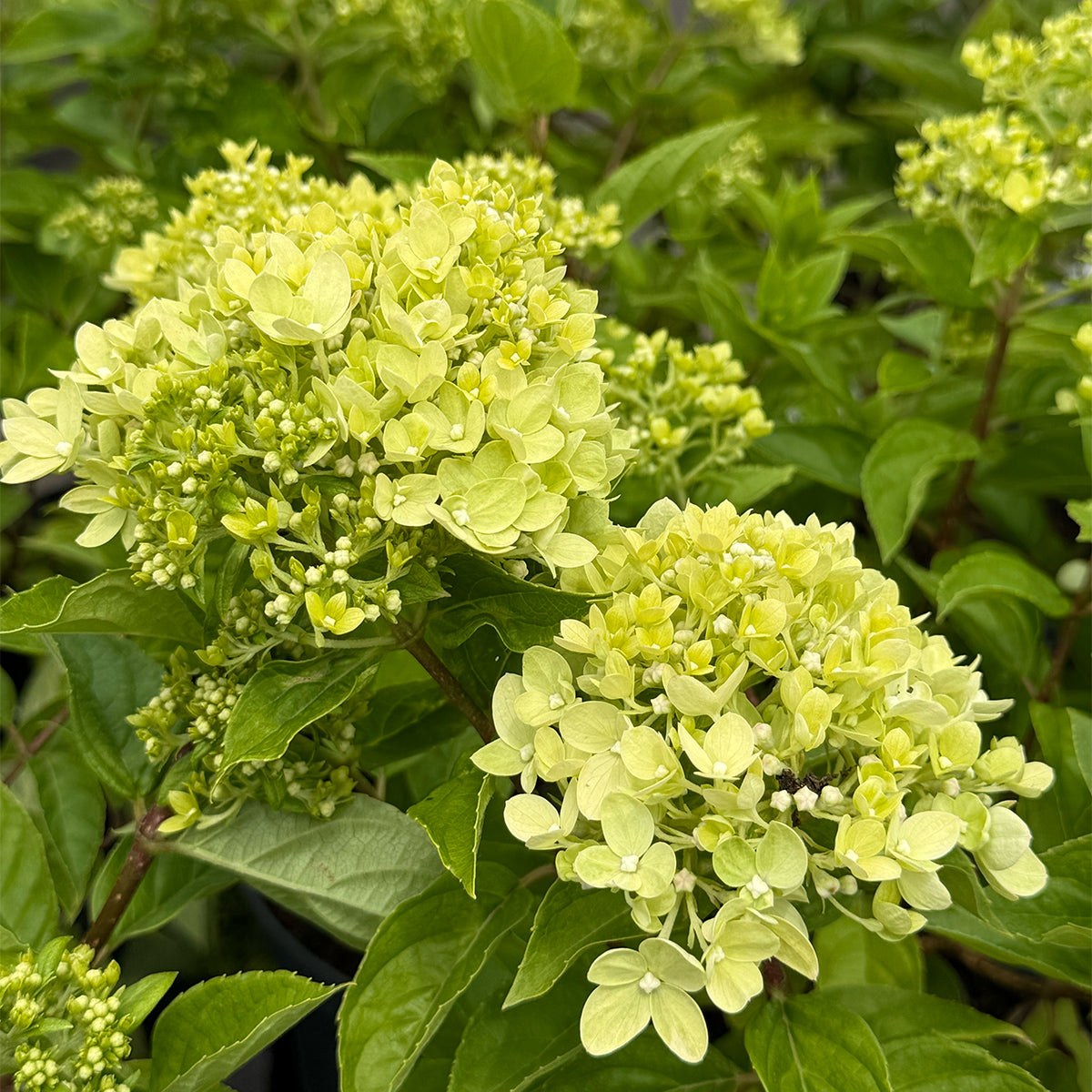
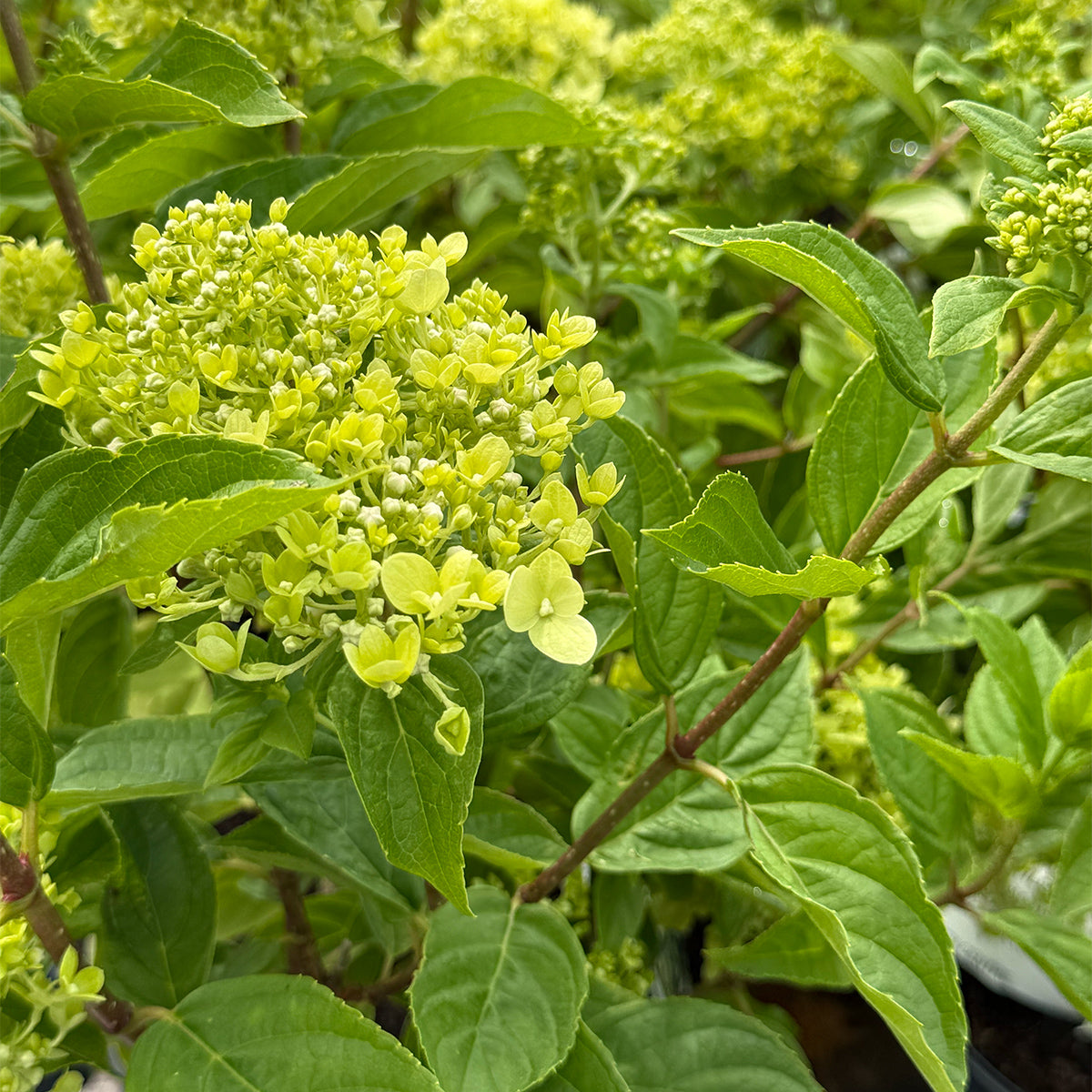
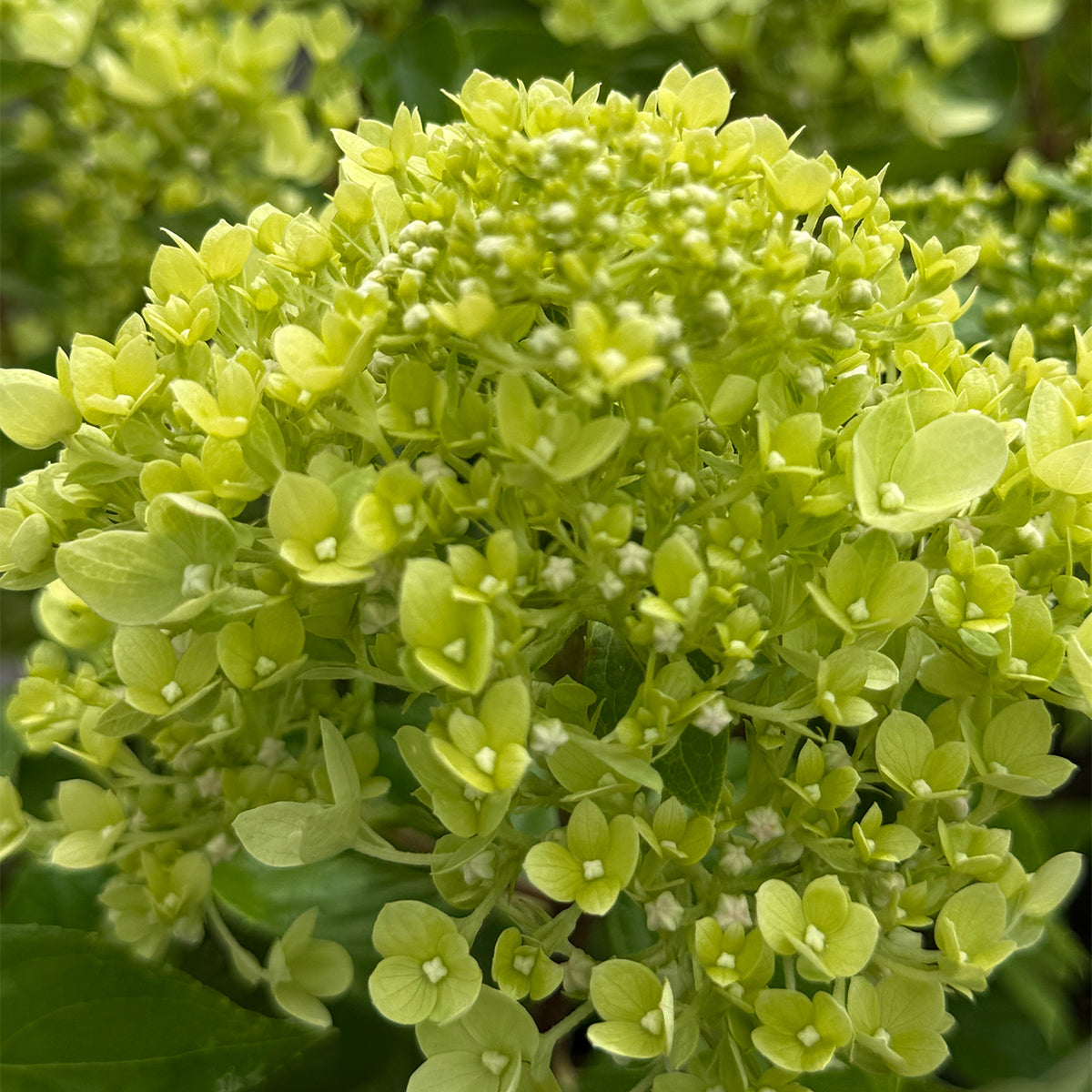
Hydrangea paniculata 'Little Lime' is a compact, deciduous shrub producing large, conical flowerheads that open in a fresh lime-green in midsummer before maturing through creamy white to soft pink and warm burgundy tones as the season advances. It offers one of the longest seasons of interest of any hardy shrub, with the dried flowerheads remaining ornamental well into winter. More restrained in size than many paniculata hydrangeas, it fits comfortably into smaller gardens and mixed borders while flowering just as freely, and it makes an impressive specimen in a large container on a sheltered patio or terrace. -
Why we like it
Specs & details
The particulars
- Botanical name
- Hydrangea paniculata 'Little Lime'
- Common name
- Panicle hydrangea
- Supplied as
- 3 litre pot
- Flower colour
- Green
- Eventual height
- 100–150 cm
- Eventual spread
- 100–120 cm
- Flowering period
- Summer to autumn
- Habit
- Compact upright-branching deciduous shrub
- Life cycle
- Deciduous shrub
- Hardiness
- Fully hardy in most parts of the UK.
- Aspect
- Full sun to partial shade
- Soil type
- Loam, sand, clay, chalk
- Moisture
- Moist but well-drained
- Position
- Mid-border, specimen shrub, large patio container
- Plant spacing
- 1 plant per m²; or allow 100–120 cm between plants
- Growing skill
- Easy to grow
Plant calendar
When to plant, when it performs
Planting & care
Help it thrive
Planting guide
Hydrangea paniculata 'Little Lime' is tolerant of a wide range of soils provided they are reasonably moisture-retentive and do not dry out severely in summer. Improve thin, sandy soils by incorporating plenty of garden compost or well-rotted manure before planting to help retain moisture. Plant at the same depth as in the pot and water in thoroughly. Space at least 100 cm from neighbouring plants to allow for the mature spread. In containers, use a large pot with a minimum diameter of 45 cm filled with a good loam-based compost; top-dress annually with fresh compost and feed regularly through the growing season. Mulching around the base of the plant after planting helps retain moisture and suppress weeds.
Care tips
The single most important task for Hydrangea paniculata 'Little Lime' is the annual spring prune. Each year in early spring, cut all the previous season's stems back hard to a pair of plump, healthy buds low on the woody framework, leaving a structure of roughly 30–45 cm. This keeps the shrub compact and channels the plant's energy into producing fewer, larger flowerheads. Skipping or reducing the pruning leads to a larger plant with progressively smaller flowers over time. Water well during dry spells in the first two seasons of establishment; mature plants are more resilient but will still benefit from watering during extended drought. Apply a balanced fertiliser in spring after pruning, and mulch around the base each year to retain moisture and feed the soil. No deadheading is needed; leave the flowerheads to dry on the plant for winter interest.
Winter care
Hydrangea paniculata 'Little Lime' is fully hardy and needs no winter protection in any part of the UK. Leave the spent flowerheads on the plant through autumn and winter; in their dried state they remain highly decorative and provide some protection to the buds developing beneath them. In early spring, once the worst of the cold has passed and new buds are beginning to swell, cut the previous year's stems back hard to a pair of healthy buds low on the woody framework. This annual hard pruning is what maintains the compact habit and produces the largest, most impressive flowerheads each season. Do not prune in autumn.