



Phygelius 'Funfare Wine'
Cape fuchsia
Couldn't load pickup availability
Supplied as an established plant in a 3 litre pot
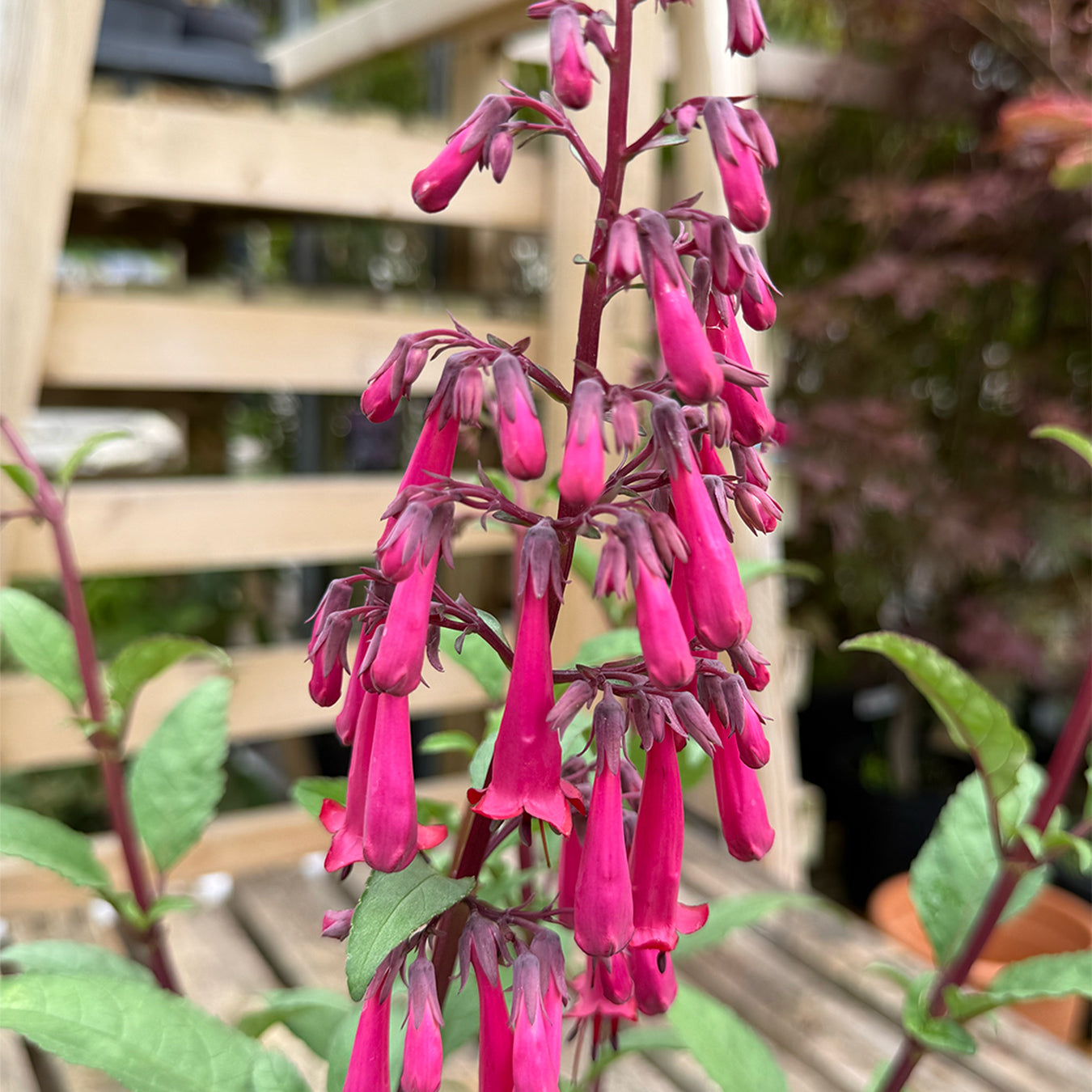
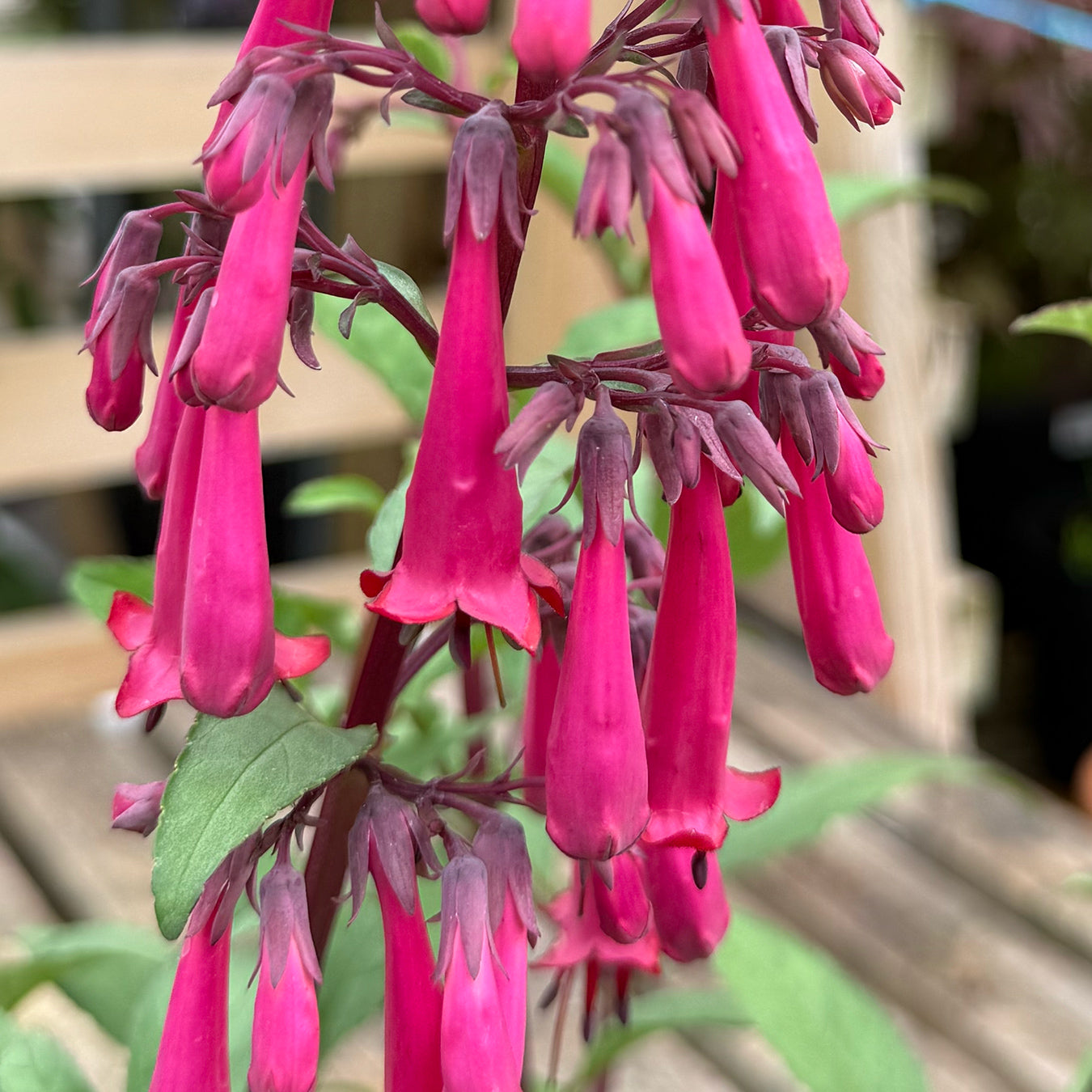
Aspect
Full sun
Hardiness
Not fully hardy
Flowers
Summer to autumn
Soil
Loam, sand, chalk
About this plant
Deep wine-red flowers for the late summer border
-
Description
Phygelius 'Funfare Wine' is a compact, bushy shrubby perennial producing upright panicles of pendent, tubular flowers in a deep wine-red to burgundy shade over a long season from midsummer into autumn. The foliage is mid-green, oval, and neatly arranged on well-branched stems that give the plant a tidy, self-supporting habit suitable for the front or middle of a sunny, sheltered border. A South African plant by origin, it is more compact than older phygelius cultivars and provides rich, warm colour at a time of year when the border benefits from it most. It is attractive to long-tongued bees and bumblebees throughout its flowering season. -
Why we like it
Specs & details
The particulars
- Botanical name
- Phygelius 'Funfare Wine'
- Common name
- Cape fuchsia
- Supplied as
- 3 litre pot
- Flower colour
- Red
- Eventual height
- 45–75 cm
- Eventual spread
- 40–60 cm
- Flowering period
- Summer to autumn
- Habit
- Compact bushy shrubby perennial
- Life cycle
- Shrubby perennial
- Hardiness
- Not fully hardy
- Aspect
- Full sun
- Soil type
- Loam, sand, chalk
- Moisture
- Well-drained
- Position
- Mid-border, front of border, patio container, sunny terrace
- Plant spacing
- 3–4 plants per m²; or allow 45–60 cm between plants
- Growing skill
- Easy to grow
Plant calendar
When to plant, when it performs
Planting & care
Help it thrive
Planting guide
Choose a warm, sheltered position in full sun with good drainage; Phygelius 'Funfare Wine' will not perform well in cold, exposed sites or in heavy, waterlogged soils. On clay, incorporate generous quantities of grit and compost before planting to improve drainage. Set plants at the same depth as they were in their pot, spacing around 50 cm apart to allow for the bushy mature spread. A position against a south- or west-facing wall provides additional warmth and shelter that will extend both the flowering season and the plant's chances of surviving winter. In containers, use a free-draining loam-based compost mixed with extra grit, and ensure the pot has unobstructed drainage holes. Mulch generously around newly planted specimens before the first autumn frosts.
Care tips
Phygelius 'Funfare Wine' is straightforward to maintain through the growing season. Deadhead spent panicles regularly to encourage the next flush of flowers and keep the plant looking tidy. Do not cut back hard in autumn; leave the woody stems in place as frost protection for the crown and delay all pruning until spring, when new growth at the base confirms which stems have survived the winter. In spring, cut back to just above the lowest healthy shoots. Feed with a balanced fertiliser in spring as growth resumes, and apply a potassium-rich liquid feed such as a tomato fertiliser in midsummer to support continued flowering. Water container plants regularly through summer; established border plants need only occasional watering during prolonged dry spells.
Winter care
Phygelius 'Funfare Wine' is not fully hardy and will not reliably survive a cold UK winter without some protection. In mild, sheltered gardens in the south and west it may come through an average winter if the woody base is left intact and the crown is protected with a deep, dry mulch of bark, straw, or bracken applied before the first hard frosts. Do not cut the plant back hard in autumn; the old stems provide some frost protection to the crown and should be left until spring. In spring, once new growth is visible at the base, cut back to just above the lowest healthy shoots. In colder or more exposed gardens, taking semi-ripe cuttings in late summer and overwintering them under glass is strongly recommended as insurance. Container plants should be moved into a frost-free greenhouse or cool conservatory before the first frosts.