


Schizostylis coccinea 'Major'
Kaffir lily
Couldn't load pickup availability
Supplied as an established plant in a 3 litre pot
Aspect
Full sun to partial shade
Hardiness
Fully hardy
Flowers
Late summer to autumn
Soil
Loam, clay
About this plant
Crimson flowers when the border needs them most
-
Description
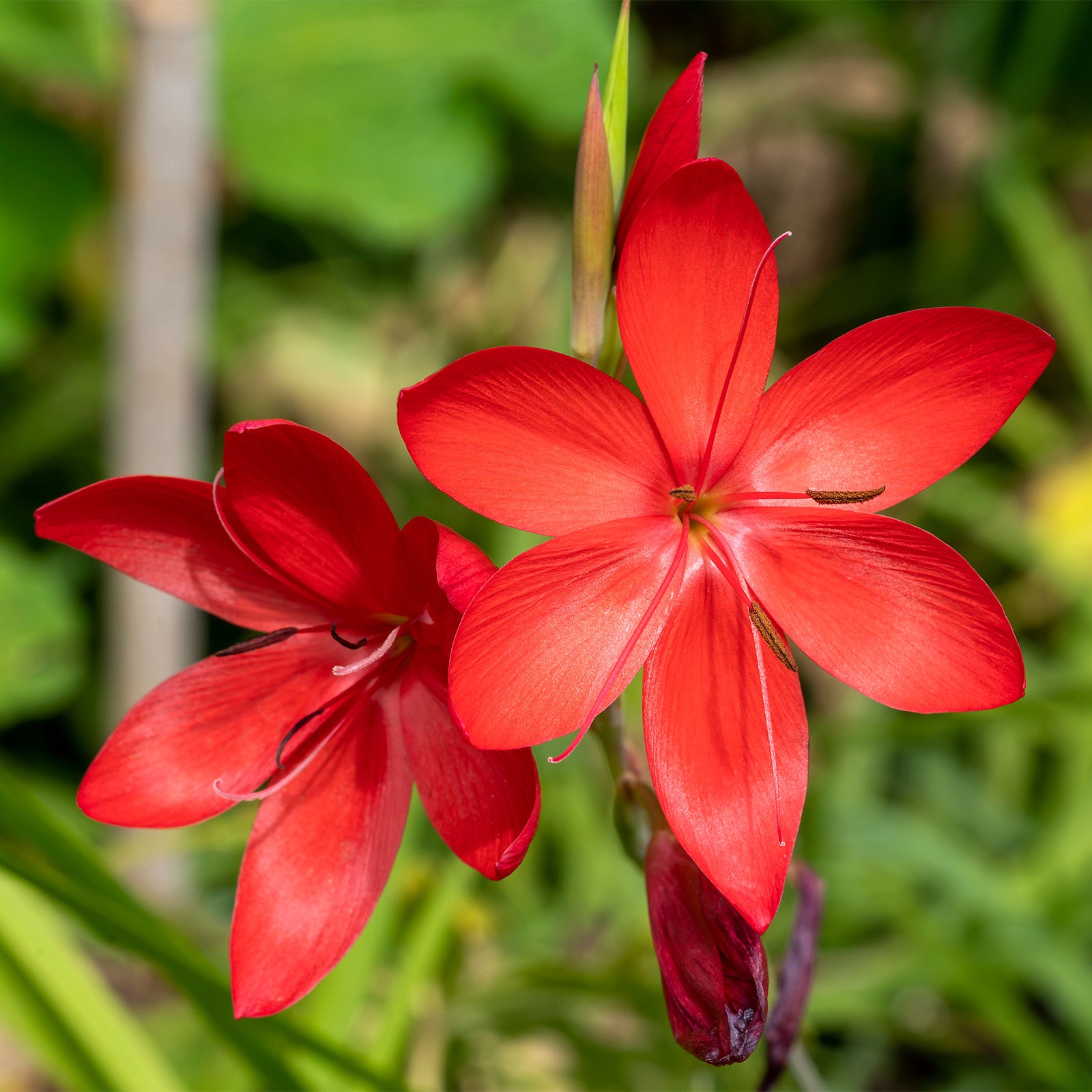
Schizostylis coccinea 'Major' is a vigorous, clump-forming perennial producing upright, sword-like leaves and slender stems bearing a succession of large, open, rich crimson flowers that closely resemble small gladioli. It blooms from late summer through to late autumn, often continuing well into November, making it one of the most valuable plants for bringing colour to the border when most other perennials have finished. It is a good cut flower and will naturalise readily in a moist, sheltered spot. -
Why we like it
Specs & details
The particulars
- Botanical name
- Schizostylis coccinea 'Major'
- Common name
- Kaffir lily
- Supplied as
- 3 litre pot
- Flower colour
- Red
- Eventual height
- 60–80 cm
- Eventual spread
- 30–45 cm
- Flowering period
- Late summer to autumn
- Habit
- Upright clump-forming rhizomatous perennial
- Life cycle
- Rhizomatous perennial
- Hardiness
- Fully hardy
- Aspect
- Full sun to partial shade
- Soil type
- Loam, clay
- Moisture
- Moist but well-drained to moist
- Position
- Mid-border, waterside planting, pond margin
- Plant spacing
- 5–6 plants per m²
- Growing skill
- Easy to grow
Plant calendar
When to plant, when it performs
Planting & care
Help it thrive
Planting guide
Schizostylis coccinea 'Major' thrives in a moisture-retentive soil in full sun or partial shade and does particularly well alongside streams, ponds, or in any border that holds moisture through summer. Avoid thin, dry, or sharply draining soils, where it will struggle and flower poorly. Plant the rhizomes shallowly, just below the soil surface, in spring after the worst of the frost has passed, spacing plants around 40 cm apart. On heavier soils it will establish and spread readily with little further attention. Incorporate garden compost at planting on lighter soils to improve moisture retention.
Care tips
Once established, Schizostylis coccinea 'Major' is a low-maintenance plant provided it has adequate moisture through the growing season. Water regularly during dry spells in summer, as drought stress will reduce flowering significantly. Apply a mulch of garden compost or bark in late autumn to protect the crown and conserve moisture. Cut back old stems and any tatty foliage in early spring as new growth appears. Division is the key maintenance task: lift and divide congested clumps every two to three years in spring, replanting the younger outer sections and discarding the woody central portions. This keeps the plant vigorous and free-flowering.
Winter care
Schizostylis coccinea 'Major' is hardy in most parts of the UK but benefits from a light protective mulch of bark or garden compost over the crown in late autumn, particularly in colder or more exposed gardens. The foliage is semi-evergreen and provides some ground-level interest through winter. Cut back old and tatty stems in early spring as new growth begins to emerge. Divide congested clumps every two to three years in spring to maintain free flowering; neglected clumps can become tight and woody at the centre and flower less reliably.