



Stachys officinalis
Betony
Couldn't load pickup availability
Supplied as an established plant in a 3 litre pot
Aspect
Full sun to full shade
Hardiness
Fully hardy in most parts of the UK.
Flowers
Summer
Soil
Loam, clay, sand, chalk
About this plant
Native purple spikes, alive with bees
-
Description
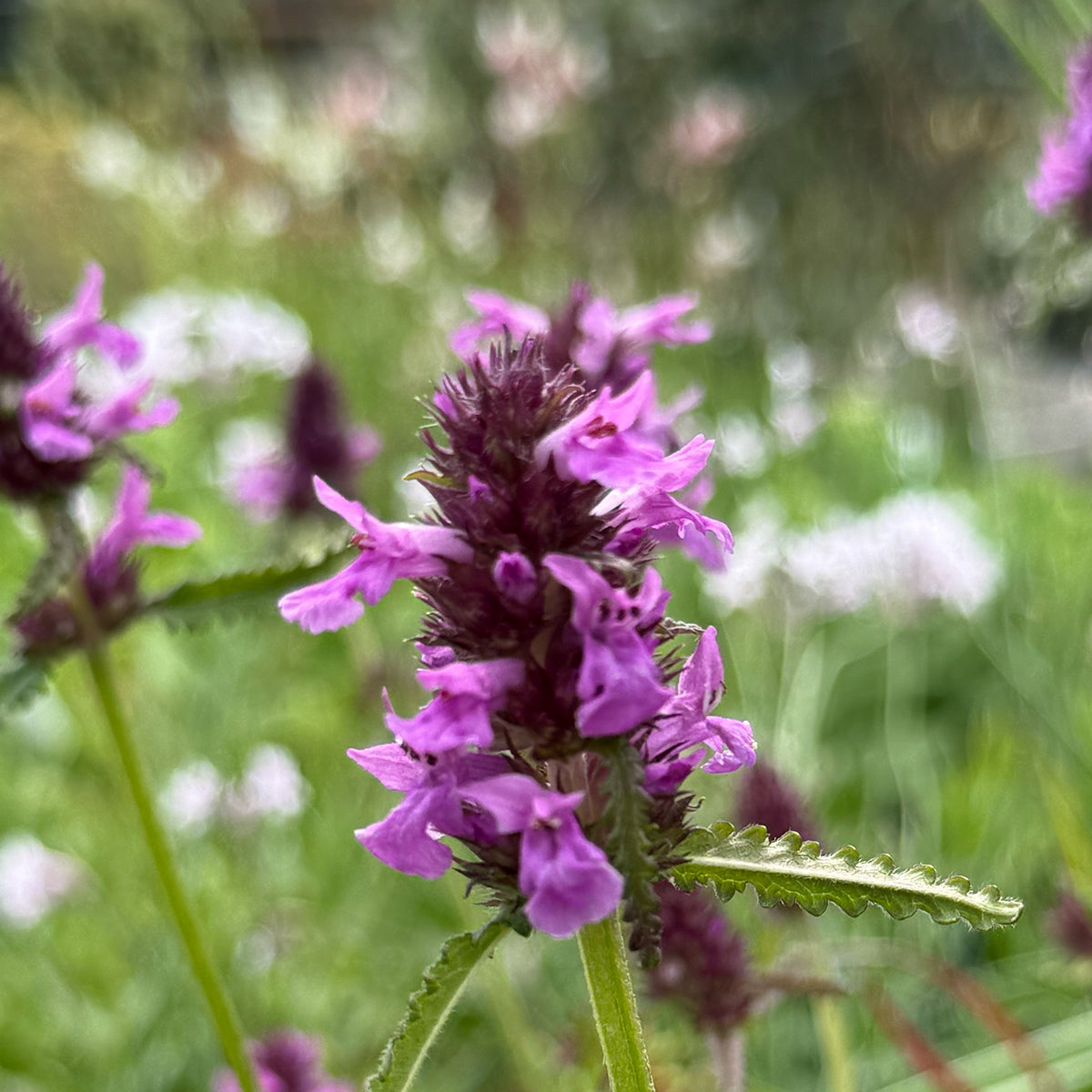
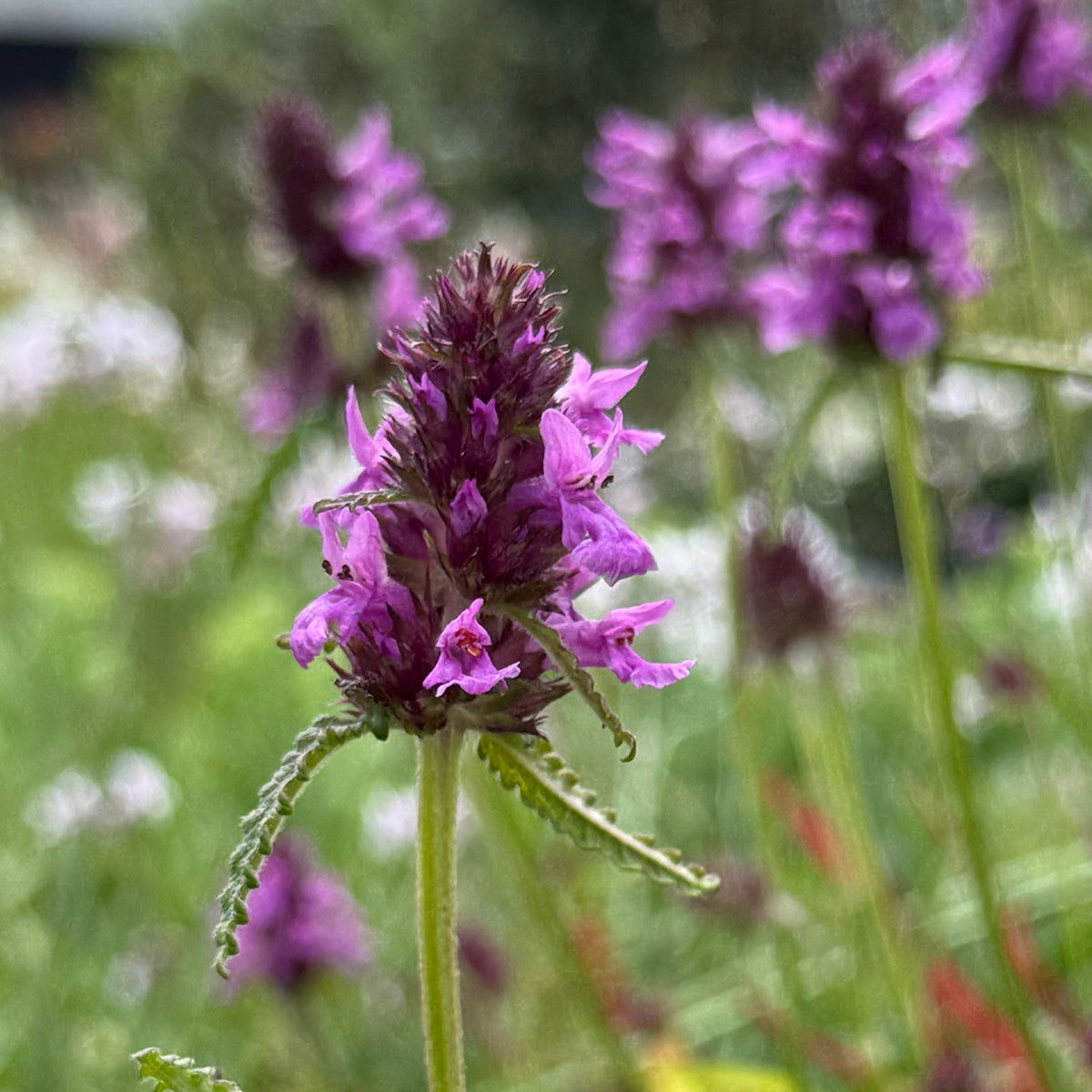
Stachys officinalis, or betony, is a British native perennial wildflower grown for its upright spikes of reddish-purple flowers held above neat rosettes of dark green, crinkled foliage. Flowering through summer, the nectar-rich blooms are a magnet for bees and butterflies, and the square stems mark it out as a member of the mint family. Tough, long-lived and happy in sun or shade, it is ideal for wildflower borders, meadows and pollinator planting, as well as more traditional garden schemes.
-
Why we like it
Key features
What makes it special
Loved by bees & pollinators
Specs & details
The particulars
- Botanical name
- Stachys officinalis
- Common name
- Betony
- Supplied as
- 3 litre pot
- Flower colour
- Purple
- Eventual height
- 40-60cm
- Eventual spread
- 30-45cm
- Flowering period
- Summer
- Habit
- Clump-forming perennial
- Life cycle
- Herbaceous perennial
- Hardiness
- Fully hardy in most parts of the UK.
- Aspect
- Full sun to full shade
- Soil type
- Loam, clay, sand, chalk
- Moisture
- Moist but well-drained
- Position
- Mid-border, wildflower area, edging
- Plant spacing
- Space around 30cm apart (approximately 7 plants per m²)
- Growing skill
- Easy to grow
Plant calendar
When to plant, when it performs
Planting & care
Help it thrive
Planting guide
Plant in spring or autumn into moist but well-drained soil in full sun to partial shade. It is unfussy about soil and copes with clay, but dislikes waterlogging. Water in well and keep young plants watered through their first season. Space plants around 30cm apart. Plants raised from plugs may not flower until their second year.
Care tips
Very low maintenance. Water in dry spells while establishing, then it largely fends for itself. Deadhead to prolong flowering and to limit self-seeding, or leave some seedheads for wildlife and winter interest. Lift and divide congested clumps every few years in spring or autumn to keep them vigorous.
Winter care
A hardy, low-maintenance perennial. Cut the old flowering stems back in autumn, or leave them standing over winter for structure and seed, then tidy in early spring. The low basal foliage is semi-evergreen and largely looks after itself. It self-seeds readily, so remove the seedheads before they scatter if you want to limit its spread.