



Tulbaghia violacea
Society garlic
Couldn't load pickup availability
Supplied as an established plant in a 3 litre pot
Aspect
Full sun
Hardiness
Borderline hardy
Flowers
Summer to autumn
Soil
Loam, sand, chalk
About this plant
Elegant, long-flowering and loved by bees
-
Description
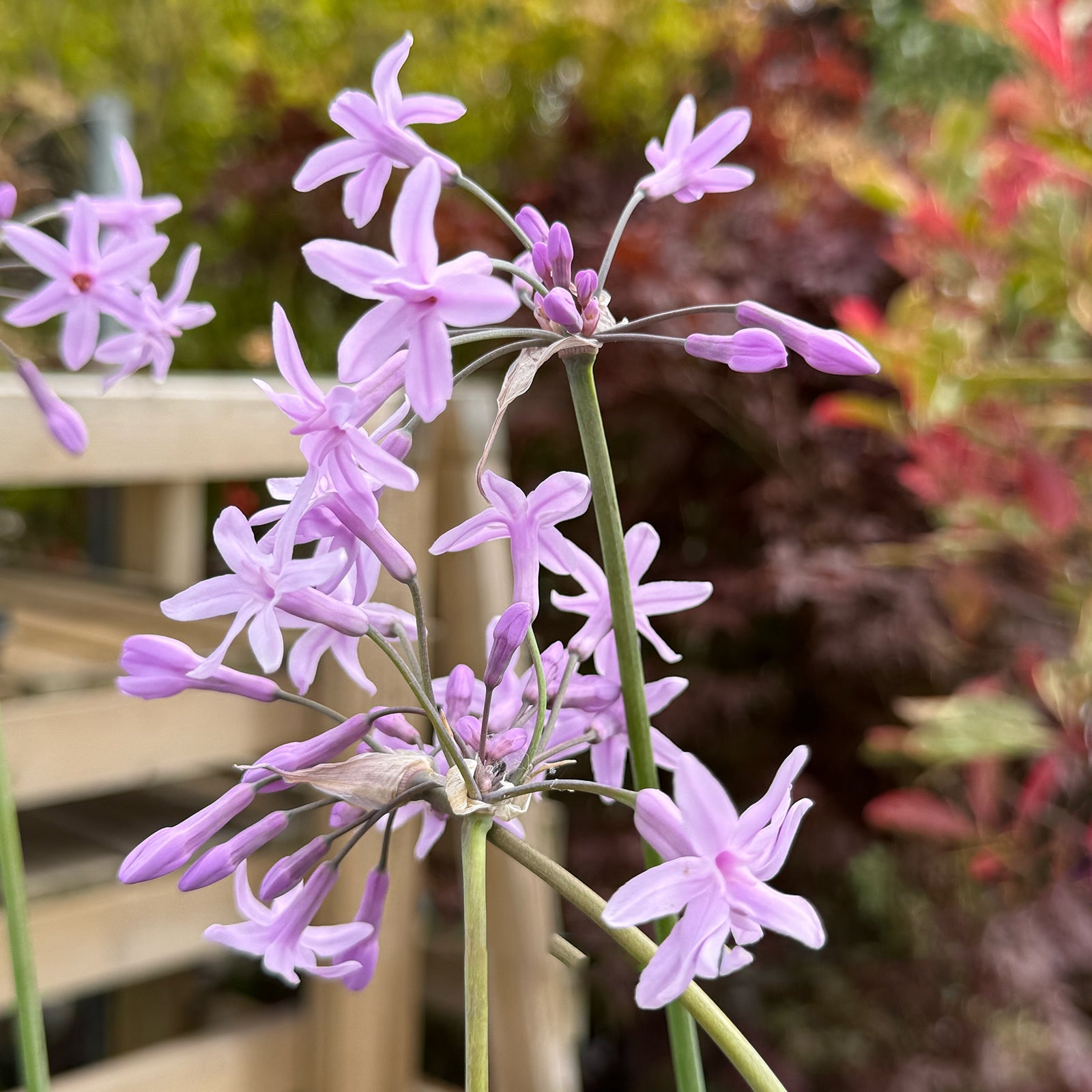
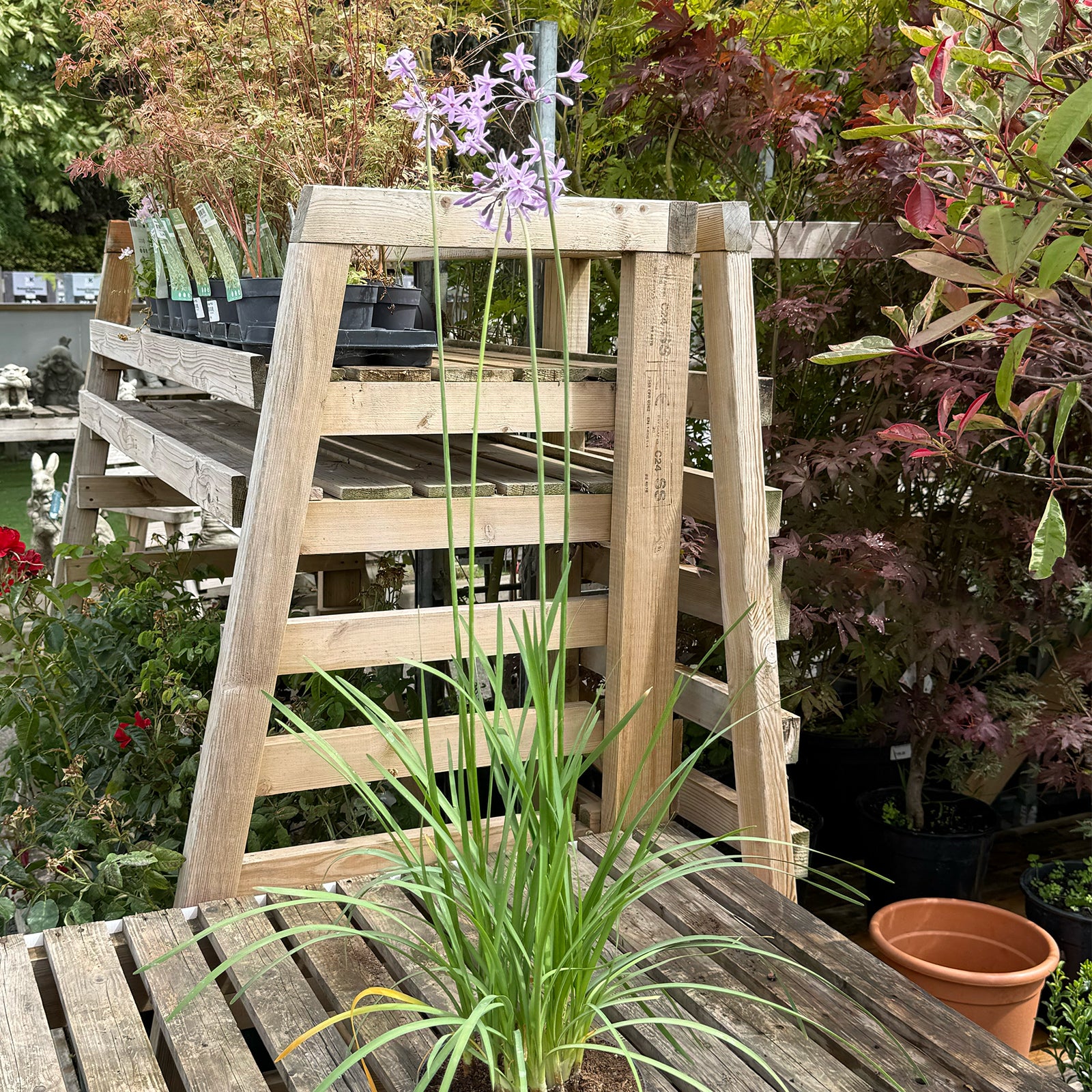
Tulbaghia violacea is a clump-forming, semi-evergreen perennial from South Africa, producing slender, grey-green, strap-like leaves that carry a mild garlic scent when bruised. From early summer well into autumn, it sends up wiry stems topped with dainty clusters of tubular, soft lilac-purple flowers. It is a reliable pollinator plant, particularly attractive to bees and hoverflies, and its long flowering season makes it one of the most useful front-of-border plants for a sunny, well-drained spot. -
Why we like it
Specs & details
The particulars
- Botanical name
- Tulbaghia violacea
- Common name
- Society garlic
- Supplied as
- 3 litre pot
- Flower colour
- Purple
- Eventual height
- 45–60 cm
- Eventual spread
- 30–40 cm
- Flowering period
- Summer to autumn
- Habit
- Compact clump-forming perennial
- Life cycle
- Semi-evergreen perennial
- Hardiness
- Borderline hardy
- Aspect
- Full sun
- Soil type
- Loam, sand, chalk
- Moisture
- Well-drained
- Position
- Front of border, patio container, sunny terrace
- Plant spacing
- 5–6 plants per m²
- Growing skill
- Easy to grow
Plant calendar
When to plant, when it performs
Planting & care
Help it thrive
Planting guide
Choose a spot in full sun with sharp drainage; Tulbaghia violacea will not thrive in wet or waterlogged conditions. Improve heavy clay soils by incorporating plenty of grit or sharp sand before planting. Set plants at the same depth as they were in their pot, spacing them around 40 cm apart. In containers, use a free-draining compost mixed with extra grit, and ensure the pot has adequate drainage holes. Water in well after planting, then allow the soil to dry out between waterings once established.
Care tips
Once established, Tulbaghia violacea needs little attention. Water during extended dry spells in the first season; mature plants are surprisingly drought-tolerant. Deadhead spent flowerheads to encourage the next flush, or leave them on for a little longer if you prefer a more naturalistic look. Cut back tatty foliage in spring once new growth begins to show. Feed with a balanced fertiliser in spring to support the season's growth. In cold winters, mulch the crown with bark or dry straw, or lift and overwinter container plants under glass.
Winter care
Tulbaghia violacea is borderline hardy and will not reliably survive hard frosts outdoors in most of the UK. In mild, sheltered gardens in the south and west it may come through an average winter with a dry mulch over the crown. In colder areas, or during prolonged freezes, move container-grown plants under glass or into a frost-free greenhouse. For plants in the ground, apply a generous layer of dry mulch (bracken, straw or bark) over the crown in late autumn and remove it in spring once frost risk has passed.