



Tulbaghia violacea 'Purple Eye'
Society garlic
Couldn't load pickup availability
Supplied as an established plant in a 3 litre pot
Aspect
Full sun
Hardiness
Not reliably hardy across most of the UK.
Flowers
Spring to autumn
Soil
Loam, Sand
About this plant
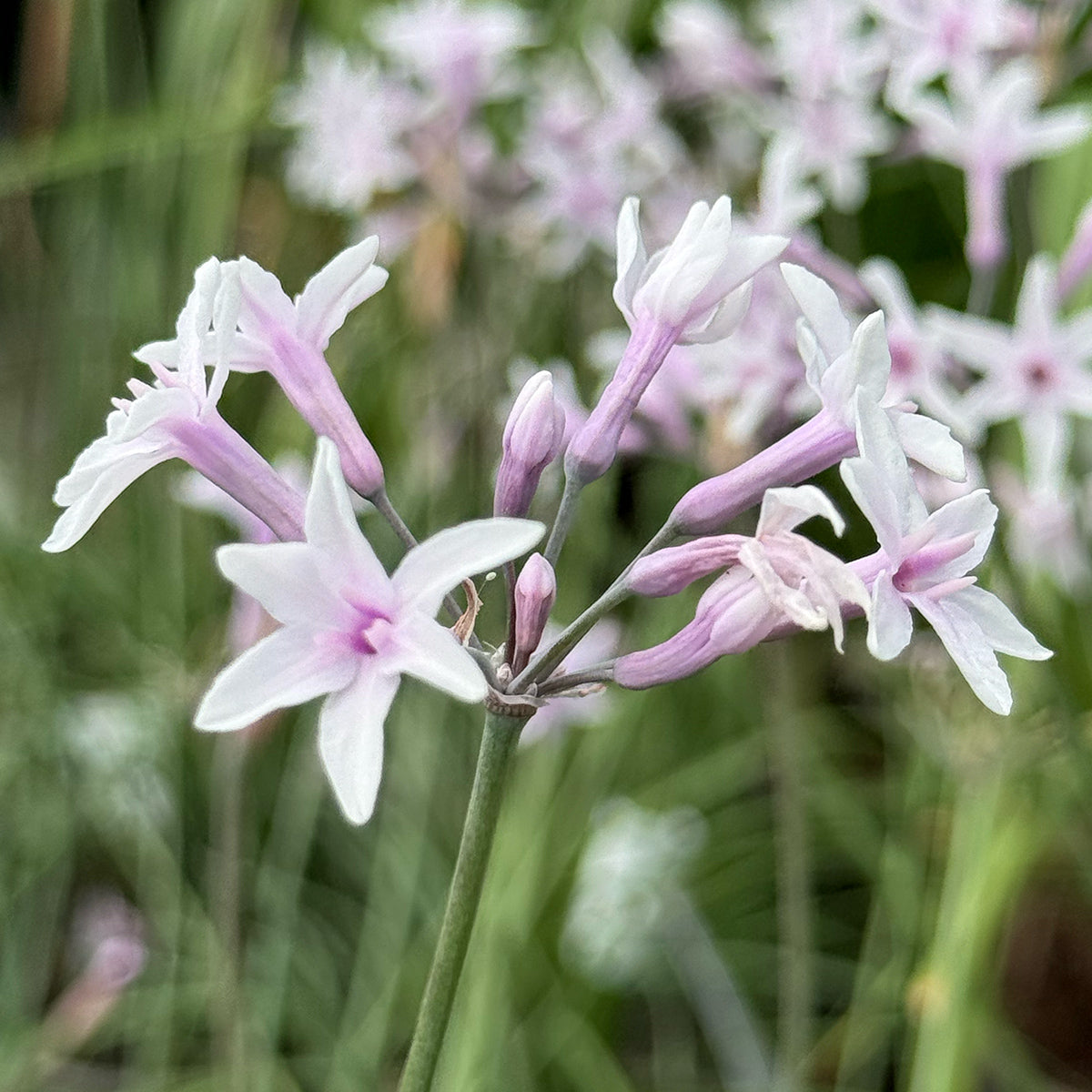
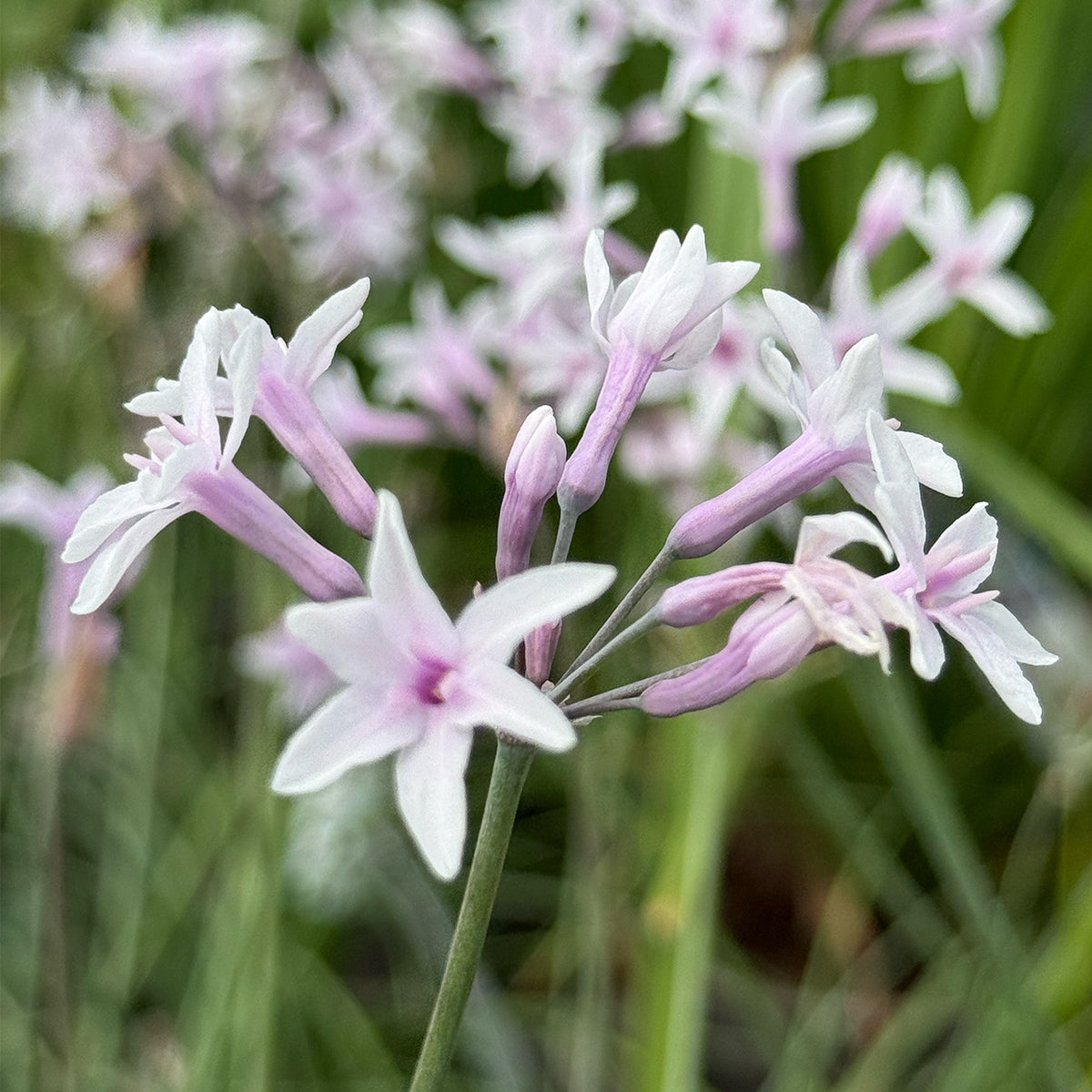
Starry flowers with a purple heart
-
Description
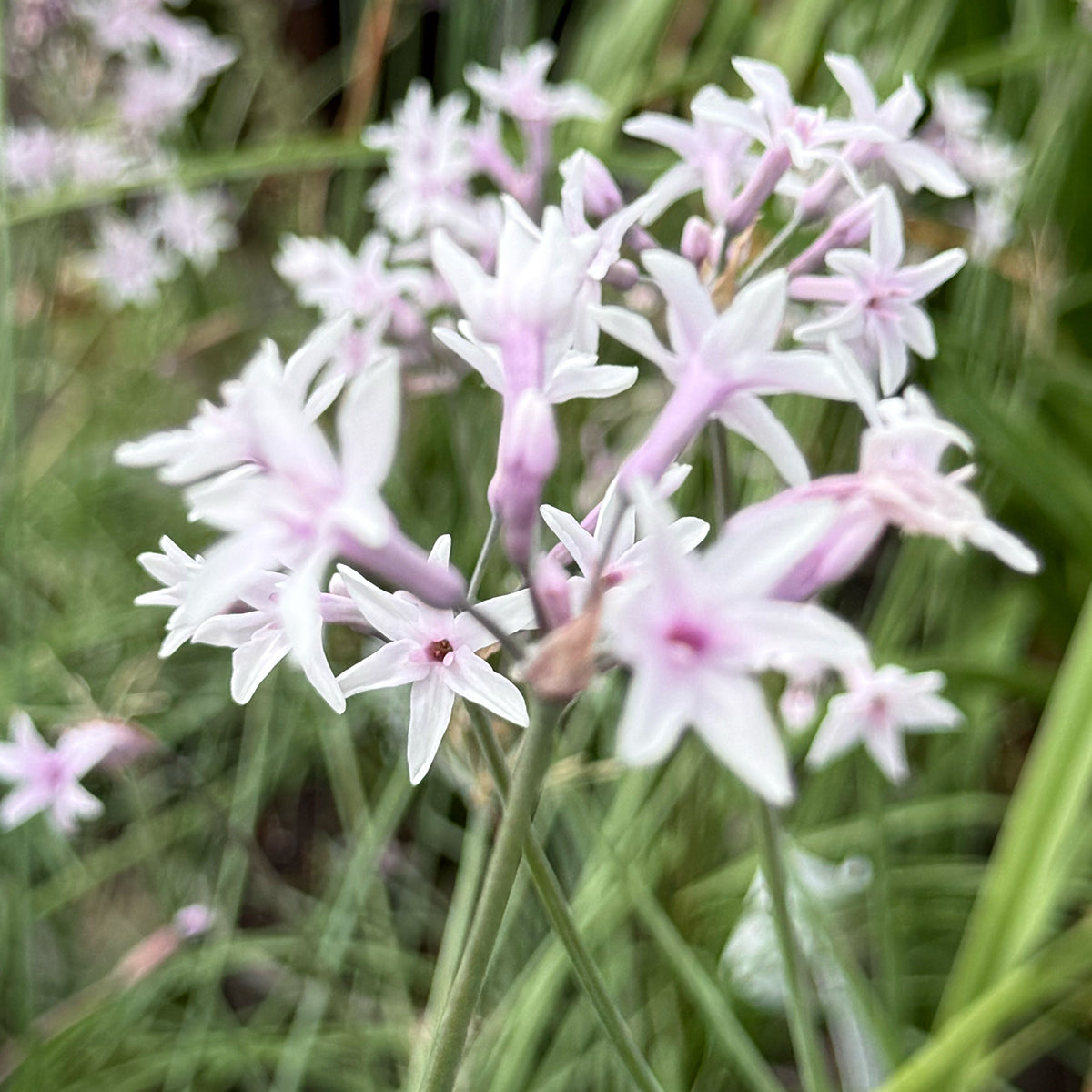
A graceful, clump-forming rhizomatous perennial bearing slender umbels of starry, pale lilac flowers, each with a distinctive deep purple centre, held above narrow grey-green foliage from spring through to autumn. The leaves carry a mild garlic scent when brushed or crushed. Bees are reliably drawn to the nectar-rich blooms, making it a useful pollinator plant through the summer and into early autumn. -
Why we like it
Specs & details
The particulars
- Botanical name
- Tulbaghia violacea 'Purple Eye'
- Common name
- Society garlic
- Supplied as
- 3 litre pot
- Flower colour
- Purple
- Eventual height
- 30–50 cm
- Eventual spread
- 25–40 cm
- Flowering period
- Spring to autumn
- Habit
- Compact clump-forming perennial
- Life cycle
- Rhizomatous perennial
- Hardiness
- Not reliably hardy across most of the UK.
- Aspect
- Full sun
- Soil type
- Loam, Sand
- Moisture
- Well-drained to moist but well-drained
- Position
- Front of border, gravel garden, patio container
- Plant spacing
- 3 plants per m²
- Growing skill
- Easy to grow
Plant calendar
When to plant, when it performs
Planting & care
Help it thrive
Planting guide
Choose a warm, sheltered spot in full sun with well-drained or even sandy soil; 'Purple Eye' dislikes sitting in cold, wet conditions. Dig in a little grit or coarse sand on heavier soils to improve drainage before planting. Set the crown at or just above soil level and water in well. Space plants around 30–35 cm apart in borders, or pot individually into terracotta or other well-drained containers using a loam-based compost with extra grit added. In colder gardens, containers are the safer option as they can be easily moved under cover for winter.
Care tips
Deadhead spent flower stems regularly throughout the season to encourage continuous flowering. At the end of autumn, cut back tired foliage and remove old stems. Apply a balanced general fertiliser in spring as growth resumes. Divide congested clumps in spring every few years to maintain vigour. Keep watering moderate during the growing season, allowing the soil to dry out a little between waterings, and reduce water significantly once flowering slows in autumn.
Winter care
Not fully hardy across most of the UK. In mild, sheltered gardens, apply a deep dry mulch over the crown in autumn to protect the rhizomes from frost. In colder regions, grow in containers and move to a frost-free but cool place for winter, or lift plants and overwinter them in a light, frost-free shed or greenhouse. Cut back tired foliage and remove old flower stems at the end of the season.